
China’s Belt and Road Expansion in Africa and Latin America 2026: Global Influence and Economic Implications
In 2026, China’s Belt and Road Initiative (BRI) continues to reshape global economic and geopolitical landscapes. Initially launched in 2013 to strengthen trade, infrastructure, and strategic partnerships, the BRI has expanded far beyond Asia, with Africa and Latin America emerging as key regions in Beijing’s long-term vision. This expansion is not just about roads, ports, and railways — it represents a strategic investment in influence, resources, and international leverage. This article explores the latest developments in China’s Belt and Road projects in Africa and Latin America, their economic and political implications, and the global response to this ambitious initiative.

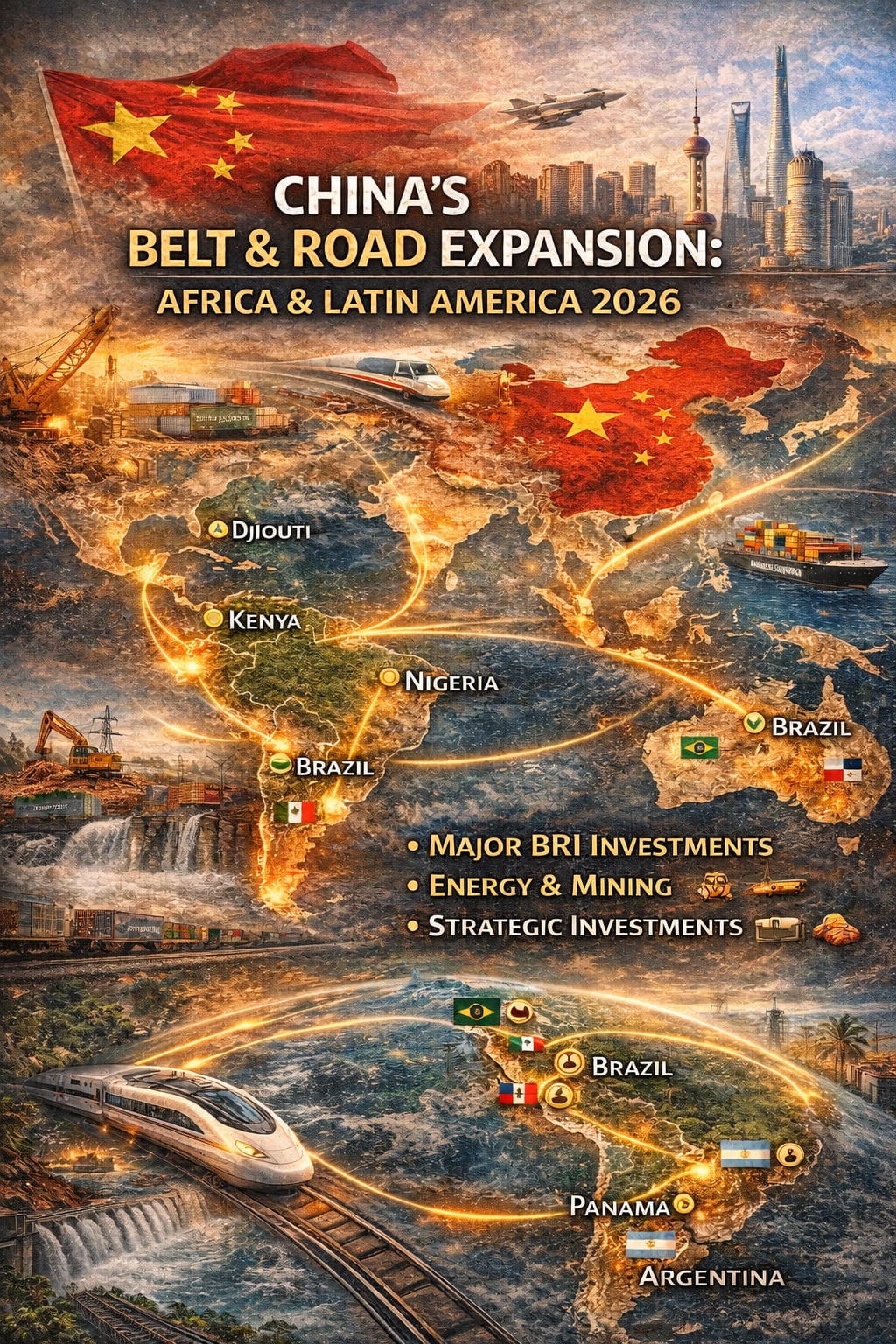
1. Overview of the Belt and Road Initiative in 2026
The Belt and Road Initiative is now active in over 140 countries, with major projects spanning infrastructure, energy, transportation, and digital networks. In 2026, China has intensified its focus on two critical regions outside Asia:
• Africa: Investments in ports, railways, industrial zones, and telecommunications.
• Latin America: Large-scale energy projects, mining operations, and logistics hubs.
The expansion into these regions serves multiple purposes: securing access to natural resources, opening new markets for Chinese goods, and cultivating diplomatic allies in international forums such as the United Nations and the World Trade Organization.
SEO Keywords: Belt and Road Initiative 2026, China Africa projects, China Latin America investment
________________________________________
2. China in Africa: Strategic Investments and Infrastructure
Key Projects
China has financed and constructed major projects in Africa, including:
• Port developments in Djibouti, Kenya, and Nigeria.
• High-speed railways connecting major economic hubs.
• Energy infrastructure, including hydroelectric dams and solar power plants.
These investments facilitate trade connectivity across Africa and link the continent to global shipping routes. Djibouti, in particular, hosts the first overseas Chinese military base, demonstrating the dual-use nature of BRI projects, which combine commercial and strategic interests.
Economic and Political Implications
• African countries benefit from improved infrastructure, foreign investment, and job creation.
• However, some nations face rising debt burdens, prompting concerns about economic dependency on Beijing.
• Diplomatically, China has strengthened ties with African governments, increasing its influence in continental organizations such as the African Union.
SEO Keywords: China Africa Belt and Road, Chinese investment Africa 2026, Africa infrastructure projects
________________________________________
3. China in Latin America: Energy, Trade, and Strategic Influence
In Latin America, China’s BRI focus has centered on:
• Energy projects: Solar and wind power, hydroelectric plants, and oil infrastructure in Brazil, Argentina, and Venezuela.
• Mining and raw materials: Securing lithium, copper, and rare earth elements vital for China’s industrial and technological growth.
• Transportation corridors: Ports and railways in Central and South America to enhance export routes.
These initiatives have strengthened economic ties, making China one of Latin America’s largest trading partners, surpassing traditional ties with the United States and Europe in certain sectors.
Geopolitical Significance
China’s presence challenges traditional U.S. influence in the region. Latin American governments are increasingly leveraging Chinese investment as a counterbalance to Western pressures, highlighting a shift toward multipolar global influence.
SEO Keywords: China Latin America Belt and Road, Chinese investment 2026, China trade Latin America
________________________________________
4. Debt Diplomacy or Win-Win Cooperation?
Critics of the BRI often raise concerns about “debt-trap diplomacy”, suggesting that China uses loans to secure leverage over recipient nations. Examples include:
• Sri Lanka (outside Africa/Latin America) — Port of Hambantota lease.
• Djibouti and African nations facing high debt-to-GDP ratios.
Proponents, however, argue that:
• Infrastructure and industrial projects foster economic development and job creation.
• Long-term trade partnerships create mutual benefits.
• China provides flexible financing and technical expertise often unavailable from Western institutions.
The debate continues, with scholars emphasizing that the BRI’s impact depends on local governance, project planning, and transparency.
SEO Keywords: Belt and Road debt diplomacy, China infrastructure loans, BRI economic impact
________________________________________
5. Environmental and Social Implications
China’s projects have environmental and social consequences:
• Large-scale infrastructure may threaten ecosystems, wildlife, and water sources.
• Mining projects in Latin America pose deforestation and pollution risks.
• Urban development projects sometimes require relocation of local communities, creating social tensions.
To mitigate these issues, China has recently pledged green and sustainable BRI projects, including solar energy, environmentally friendly railways, and carbon-neutral port operations.
SEO Keywords: BRI environmental impact, China sustainable projects, Belt and Road green initiatives
________________________________________
6. Global Reactions and Strategic Responses
China’s growing influence has prompted varied global responses:
• United States: Strengthening trade and diplomatic engagement in Africa and Latin America to counterbalance Chinese presence.
• European Union: Investing in infrastructure and economic partnerships in emerging markets as alternatives to BRI.
• Regional Governments: Countries in Africa and Latin America navigate between Chinese investment opportunities and Western diplomatic pressures.
Analysts suggest the BRI is shaping a multipolar world order, with developing nations gaining more agency and global powers adjusting strategies to maintain influence.
SEO Keywords: Global response Belt and Road, US China competition Africa, Europe Latin America China
________________________________________
7. Technology and Digital Silk Road
An emerging facet of the BRI is the Digital Silk Road, emphasizing connectivity, telecommunications, and technological integration:
• Fiber optic networks across Africa and Latin America.
• 5G and digital infrastructure development in partner countries.
• AI and smart city projects to boost urban planning and governance.
This focus on technology strengthens China’s influence in future innovation ecosystems and shapes digital norms in developing regions.
SEO Keywords: China Digital Silk Road 2026, Belt and Road technology, 5G Africa Latin America
________________________________________
8. Potential Risks and Challenges
Despite successes, the BRI faces risks:
• Geopolitical tensions with the U.S. and EU.
• Rising local opposition due to debt, environmental, or social concerns.
• Economic instability in host countries affecting repayment and project continuity.
• Supply chain disruptions from regional conflicts or natural disasters.
SEO Keywords: Belt and Road risks, China global strategy, BRI challenges 2026
________________________________________
9. Future Outlook
Looking ahead, China plans to:
• Expand BRI projects in renewable energy, digital infrastructure, and regional connectivity.
• Strengthen regional trade networks, including special economic zones in Africa and Latin America.
• Increase diplomatic engagement to consolidate political influence alongside economic investment.
If managed sustainably, the Belt and Road Initiative could redefine global trade routes, investment patterns, and geopolitical alignments in the next decade.
SEO Keywords: Future Belt and Road Initiative, China global influence 2026, BRI Africa Latin America
________________________________________
Conclusion
China’s Belt and Road expansion in Africa and Latin America in 2026 is more than an economic initiative — it is a strategic geopolitical project that reshapes trade, infrastructure, and international influence. While debates over debt and environmental risks continue, the initiative is clearly altering global dynamics, offering both opportunities and challenges for developing nations and major powers alike.
Understanding the BRI’s developments in 2026 is crucial for policymakers, investors, and the global public as they navigate a rapidly changing world of economic interdependence, strategic competition, and emerging multipolarity.
Meta Description:
"Explore China’s Belt and Road Initiative in Africa and Latin America 2026, its economic impact, strategic influence, and global implications for trade, technology, and diplomacy."
About the Creator
Keep reading
More stories from shahkar jalal and writers in Education and other communities.
Middle East Diplomatic Initiatives and Regional Conflicts in 2026: Challenges and Opportunities
1. Current Geopolitical Landscape The Middle East encompasses nations with diverse political systems, religious affiliations, and economic priorities. As of 2026, key issues shaping the region include:
By shahkar jalalabout 2 hours ago in Education
Instincts for Success: How the Hunter Mentality Shapes Strong and Resilient Entrepreneurs
Entrepreneurs face constant pressure, unpredictable environments, and demanding challenges. To thrive, they need resilience, adaptability, focus, and the mental toughness to push through setbacks. Interestingly, these same strengths are deeply rooted in the hunter mentality. Hunters survive and succeed by observing, making strategic decisions, staying patient, and acting decisively at the right moment. These qualities translate directly into the world of entrepreneurship, helping leaders build businesses that endure difficult conditions and emerge stronger over time. Understanding why hunters develop such resilience sheds light on why the hunter mindset is so valuable in business today.
By Darrell Hulsey2 days ago in Education




Comments
There are no comments for this story
Be the first to respond and start the conversation.