
The U.S. Spent $30 Billion to Ditch Textbooks for Laptops and Tablets — The Result Is the First Generation Less Cognitively Capable Than Their Parents
Billions poured into digital classrooms have coincided with declining student performance and raised questions about technology’s role in learning

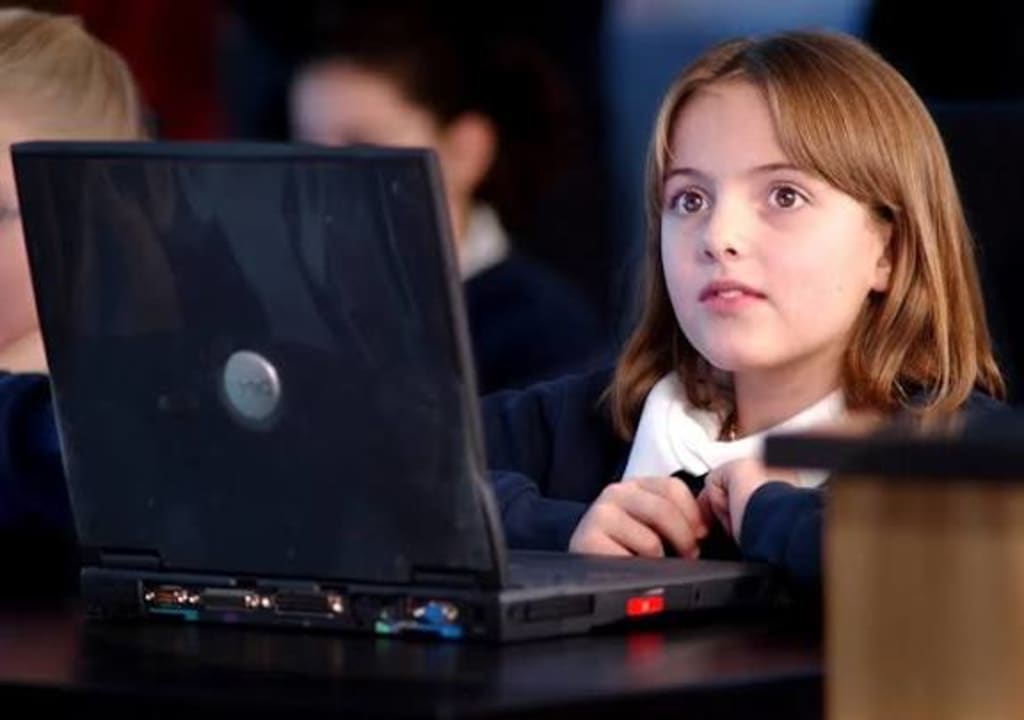
The United States has invested more than $30 billion in recent years to replace traditional textbooks with laptops and tablets in public schools — a dramatic shift in educational technology that was supposed to modernize teaching and boost learning. But critics, including leading neuroscientists and educational experts, now say that the outcome has been far from the transformation its backers envisioned. Instead, they argue, the heavy reliance on screens has coincided with declining cognitive performance among students compared with previous generations.
A Digital Education Revolution Goes Mainstream
The trend toward digital classrooms began in earnest in the early 2000s. Programs like the Maine Learning Technology Initiative distributed laptops to students statewide as an early model for tech-enhanced learning. Over the following two decades, school districts across the U.S. adopted similar initiatives, gradually phasing out physical textbooks in favor of internet-connected devices for lessons, reading, assignments, and tests. By 2024, the combined national spending on educational technology — primarily laptops and tablets for schoolchildren — topped $30 billion.
Proponents argued that digital devices would modernize education, make classrooms more interactive, and prepare students for a technology-driven workforce. Early adopters believed that granting students unfettered access to knowledge and multimedia resources would boost engagement and academic success.
Alarming Outcomes in Cognitive Performance
Yet, recent testimony before the U.S. Senate Committee on Commerce, Science, and Transportation and emerging research paint a starkly different picture. Neuroscientist Jared Cooney Horvath testified that Generation Z — the first cohort raised with screens as a central part of everyday schooling — is the first in modern history to perform worse on standardized tests than the generation before it, despite spending more years in formal education.
Exam scores in literacy, numeracy, and problem-solving skills have declined in various national assessments. Data cited by Horvath shows a clear correlation between high daily screen exposure — often four hours or more during school days — and lower performance on tests that serve as rough proxies for cognitive ability.
Yahoo News Malaysia
Critics note that while test scores aren’t a perfect measure of intelligence, they do reflect core capabilities like reading comprehension, mathematical reasoning, and working memory — skills vital to academic and professional success.
Screens vs. Traditional Learning
Experts are careful to underline that technology itself isn’t inherently harmful. Instead, the way devices have been implemented may fundamentally change how students learn. Unrestricted access to laptops and tablets can encourage multitasking, distraction, and shallow engagement with material rather than deep focus and sustained attention — both of which are critical for memory formation and conceptual understanding.
AInvest
Research from educational technology analysts suggests that the massive infusion of digital tools has delivered a “negative return on cognitive capital,” where increased spending and device usage have not translated into better learning outcomes. Instead, the emphasis on screens may be undermining the very cognitive development schools aim to promote.
AInvest
Educator and Policy Backlash
The findings have sparked backlash from educators, parents, and some policymakers. There is growing concern that schools adopted technology without sufficient evidence for its effectiveness, persuaded by the promise of modernization rather than pedagogical research. Some educators report that students lose focus easily, switch between tasks frequently, and spend significant class time off-task — sometimes even playing games or browsing unrelated content.
Reddit
Anecdotal reports from teachers indicate that removing technology from certain lessons can lead to better classroom engagement, and some districts have begun reconsidering screen policies. Internationally, countries like Sweden have even begun to limit screens in classrooms, returning to textbooks and printed materials to improve learning outcomes.
Futura
The Way Forward
Neuroscientists and learning experts argue that improving students’ cognitive development will require a reassessment of how technology is used in schools. Instead of blanket adoption, they propose rigorous evaluation of digital tools, stronger limits on screen time during instruction, and a renewed focus on evidence-based teaching methods that promote deep, attentive learning.
AInvest
Some recommendations from Horvath and others include setting efficacy standards for ed-tech funding, restricting tracking and data collection in schools, and reintroducing physical textbooks and written assignments where they demonstrably support better learning.
Yahoo News Malaysia
Conclusion
The U.S.’s multi-billion-dollar investment in laptops and tablets represents one of the most ambitious education technology experiments in history. Yet early evidence suggests that replacing traditional textbooks with screens may have weakened cognitive development instead of strengthening it. As policymakers and educators reflect on the next steps, the debate over technology’s role in learning remains one of the most consequential issues facing American education today.
About the Creator
Fiaz Ahmed
I am Fiaz Ahmed. I am a passionate writer. I love covering trending topics and breaking news. With a sharp eye for what’s happening around the world, and crafts timely and engaging stories that keep readers informed and updated.
Keep reading
More stories from Fiaz Ahmed and writers in Education and other communities.
The Teacher Who Won $1 Million for Turning India’s Slums into Open-Air Classrooms
An innovative Indian educator has captured global attention after winning a $1 million international teaching award for transforming some of India’s most underprivileged neighborhoods into open-air classrooms. Ranjitsinh Disale, a primary school teacher from Maharashtra, was recognized for his pioneering efforts to bring education directly into slum communities where poverty, migration, and social barriers had kept thousands of children out of school. Disale received the prestigious Global Teacher Prize, honoring educators who demonstrate exceptional impact and innovation. His work has been praised for blending community engagement, digital learning, and grassroots problem-solving to tackle long-standing educational inequality. Classrooms Without Walls In areas where schools were distant or overcrowded, Disale created outdoor learning spaces in narrow lanes, open fields, and community courtyards. Armed with portable teaching materials and a smartphone, he conducted lessons for children who could not attend formal schools due to family obligations or lack of documentation. “These children were invisible to the system,” Disale said during the award ceremony. “So I decided to make the system visible to them by bringing education to their doorstep.” His approach focused on flexibility. Lessons were scheduled around work hours for children who helped their families earn a living, and teaching methods were adapted for multilingual communities. Simple tools such as digital QR codes linked students to video lessons and reading materials, allowing them to continue learning even when teachers were not physically present. Breaking Social Barriers One of the most remarkable aspects of Disale’s work has been his success in encouraging girls’ education in conservative and marginalized communities. In regions where early marriage and social restrictions prevented girls from attending school, he negotiated directly with families and community leaders. Through awareness campaigns and community meetings, he demonstrated how education could improve health, income, and long-term security. As a result, enrollment among girls in his target areas rose dramatically, and several villages reported zero dropouts for multiple years. Local parents said the teacher’s dedication changed their perception of schooling. “We used to think education was not for our children,” one mother explained. “Now we see it as their future.” Technology as an Equalizer Disale’s model relies heavily on low-cost technology. He developed QR-coded textbooks that allowed students to scan pages using basic mobile phones and access recorded lessons. This proved especially useful during the COVID-19 pandemic, when schools across India were shut for months. By combining outdoor teaching with digital content, he ensured learning continuity even in the absence of classrooms. Education officials have since explored scaling his methods to other regions with limited infrastructure. Global Recognition The Global Teacher Prize jury praised Disale for “turning obstacles into opportunities” and for creating an education system that works beyond traditional school walls. Judges highlighted the sustainability of his methods and their potential to be replicated in slums and remote areas worldwide. Education experts say his achievement sends a powerful message about the role of teachers in social transformation. “This is not just about one classroom,” said an education policy analyst. “It’s about reimagining how and where education can happen.” Impact Beyond the Prize Disale has pledged to use a significant portion of his prize money to expand his initiatives and fund educational programs for disadvantaged children. He has also committed to sharing his teaching techniques with educators across India and abroad through workshops and online platforms. Rather than viewing the award as a personal triumph, he described it as recognition of teachers everywhere who work in difficult conditions. “This prize belongs to every teacher who refuses to give up on a child,” he said. A Model for the Future As India continues to grapple with educational inequality, Disale’s work offers a blueprint for community-based solutions. His open-air classrooms demonstrate that education does not require expensive buildings, only commitment, creativity, and trust from the community. In turning slums into spaces of learning, Ranjitsinh Disale has shown that innovation can flourish even in the most challenging environments. His story is a reminder that sometimes the most powerful classrooms are not enclosed by walls, but by hope.
By Fiaz Ahmed 3 days ago in Education
Portugal Residential Real Estate Market Outlook Foreign Investment, Tourism, and Urban Regeneration Driving Growth 2025–2033
The residential real estate market in Portugal reached a value of USD 42.60 billion in 2024, reflecting a combination of domestic demand, international investment, and urban development trends. Over the past decade, Portugal has become increasingly attractive to both local buyers and foreign investors due to its lifestyle benefits, favorable climate, and secure environment. Market forecasts indicate that by 2033, the residential sector could reach USD 106.93 billion, growing at a compound annual growth rate (CAGR) of 9.65% from 2025 to 2033.
By Neeraj kumar2 days ago in Education
The Enduring Melody: Why Jazz Remains a Timeless Art Form
Jazz has a unique place in music history. Its rhythms, improvisation, and emotion have influenced countless genres and generations of musicians. Even today, jazz continues to captivate listeners around the world. Its ability to evolve while retaining its core identity is part of what makes jazz a timeless art form.
By Michael O'Sullivan Hampton5 days ago in Education
Draft Deleting? Don't Do It!
Today, I had a little time. I decided that I would have a look at the drafts that I have on Vocal. This is part of a long-term wish to have everything I've written on paper rather than virtually. I've not looked at them for weeks and something drew me to them, just to browse and see what was there.
By Rachel Deeming7 days ago in Writers




Comments
There are no comments for this story
Be the first to respond and start the conversation.