

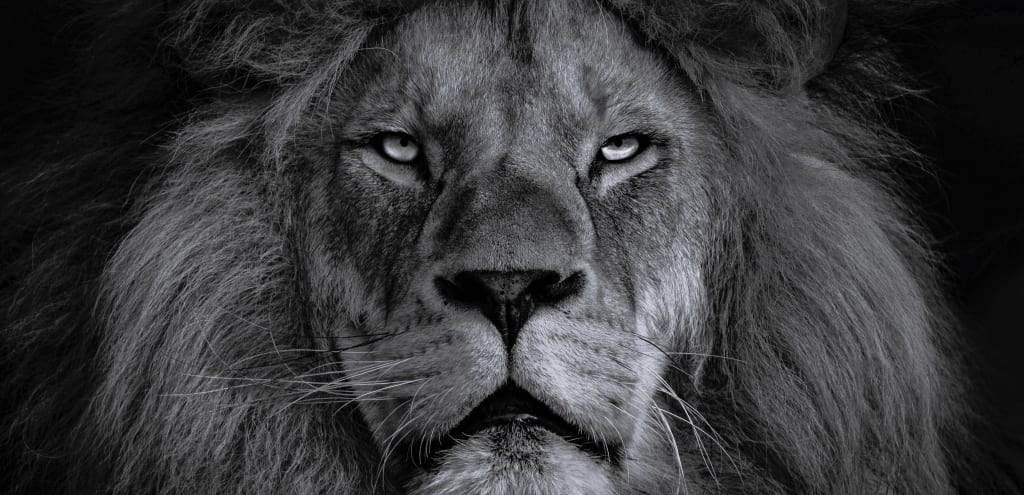
"The best we can hope for is honesty of error" - Russel Hoban
Chapter 1 - THE PAGANS
In the beginning was the Word, and the Word was...
Schrödinger's Cat was not sure what the Word was, but he had a suspicion that - whatever else it might be, and whatever others might think – the Word was not God, or Yahweh, or Jehovah, or whatever name or spelling they might choose to use. No, some other provenance, something more amenable to rational analysis had to be at the bottom of it. There had to be something more substantive that could better explain the mechanics of the quantum world in which he found himself to exist.
Not that Schrödinger's Cat was all that certain he actually existed. Sometimes he thought he did; at others he felt as though he was nothing more than a figment of someone else's imagination - the imagination of an atomic physicist from Vienna named Erwin, to be precise. He had even read somewhere that this was so.
Sometimes too, Schrödinger's Cat felt that his just being Schrödinger's Cat was too restrictive a definition of the myriad possible states that could be encompassed by the fact of his existence. Sometimes, he felt as though he was not only Schrödinger's Cat, whoever or whatever that might be and mean, but that he held within him the potential to be all things, at all times, in every conceivable configuration of space and time.
Of one thing though he was certain. Schrödinger's Cat was glad he was not Harry Lion. Of that one thing he was more than certain, and more than glad.
Harry Lion was a gambler, his life defined by chance and probability. Number, in its various forms shaped its very fabric. Perversely, that he had turned out this way could never have been predicted - at school they had said he was almost innumerate; he had never seen the sense in sets and matrices, could not have performed a differential calculus to save his life. Pure number though, or at least what Harry thought of as pure number, was where he held his own. In a hand of poker, he knew exactly the chances of drawing a queen to match his face-down pair; knew for a virtual certainty that the two cards beneath his opponent's showing ace were no higher than tens or jacks. On such numbers Harry was prepared to stake his life, or at least all of the money he had at that moment in his pocket. Which at times seemed to him like the only certainty the life of Harry Lion entailed.
Sadly, as a gambler, Harry had an ever-pressing problem, one concomitant with his particular chosen way of life. When it came to gauging his financial needs against the more urgent necessity of backing his predictive judgement, Harry’s judgement always seemed to get the better of common sense. As a consequence of this minor and almost predictable failing, Harry was always confronted by that one small and irritating problem. Harry Lion was always short of cash.
Harry, however, did not allow this to overly concern him, or to impinge too greatly upon the way he lived his life. To supplement this permanent and ever-pressing shortfall he had acquired a dubious and somewhat illegal occupation - something to complement the equally dubious hobby he pursued when his day was done. When he was not gambling, or trying to arrange the next opportunity to indulge his habit, he earned a living - or at least, he raised sufficient funds to maintain his bohemian, gambler's existence - by running so-called 'errands' for a neighbourhood heavy, the self-dubbed Master and Commander, known to all as the MC. In the places Harry often frequented, the MC was also popularly known as a thief, a pimp, a cheat, a swindler, an occasional amateur practitioner of cosmetic surgery, and - as a nice little earner that just happened to pay for the customised, 3-litre SUV, the designer suits - as a dealer in illicit drugs.
People liked and respected the MC. He was generous. He was a man of substance, both metaphorically, and literally, being of substantial, well-padded build. He was kind to animals, and to old ladies, and especially to kids. Apart from that, he scared most people to death. Behind his back, braver souls called him Mad Dog, though never to his face.
It was dangerous yet lucrative work, what Harry did, if work is what you could call it. It was therefore right up Harry's street. Harry, however, was not without his principles. He refused to have anything whatsoever to do with the hard stuff. No H, no crack-cocaine; nothing Class A. Weed, Mary Jane, as he called it, was the only thing he would handle. He would only deal in something he himself would use, and occasionally did. The MC respected this, used him only for what he anyway saw as low-gain, bread-and-butter deals, paying apparent lip-service to Harry’s higher principles, while behind his back referring to him as the Yankee Doodle Dangle, or the Yankee poof.
Harry did not know it, but all of this, this life of Mammon, this life of easy-come, easy-go was about to end.
Harry had not noticed the two men who were following him. He should have, if he had been paying the legit world his usual heed. One of them was obviously a copper – cheap, poorly cut suit, rolled-up newspaper stuffed in grease-stained coat pocket, grey tie, brown shoes, feet stuck at ten-to-two, his mousy hair slicked back from a rat-like face, eyes furtive and all encompassing, all seeing, yet for all that decidedly ungodlike. As for the other, who also looked like a copper, he was so big he would have stood out like a proverbial irritated digit, even at a basketball convention. Harry, whose thoughts were elsewhere, had not noticed any of this.
Harry stepped out of the toilet, smoothing down his pants over the package he had just taped to the inside of his thigh, wandered through the bar casually waving adieu to his boss and to his friend, Big Ed, the owner of the bar, and stepped out into the sunlight. He emerged nonchalantly from out of the dark bowels of Big Ed's Café, sunglasses frames glinting in the sunlight, and set off along Newton Street, towards where his errand for the day would soon, or so Harry anticipated, be brought to a successful close. All of this Harry did without noticing the dual, gloomy shadows being cast behind him by the rat-like detective and the Neanderthal DPC. Usually, when it came to running errands, as with gambling, Harry was more careful than this. On this particular day though, he had something else on his mind. He had still not managed to arrange a game for that evening, and he knew of nothing going on anywhere in town. Not only that, Sammy's face kept popping up among the names of clubs and dealers he was sifting through in his mind, distracting him from his efforts to think of someone who might know where some action could be found.
"Excuse me, sir. Could we have a word?" Harry heard the clichéd request coming from behind him. The sound of the voice roused him from his reveries. He turned to face the two men. It almost came as a welcome relief to have something else to concentrate on. Even Sammy's troublesomely determined face, her beautiful, yet accusatory eyes, decided to go off somewhere and trouble someone else.
"Sergeant Creme, Drugs Squad, CID. Constable Sugar," the rat-faced one said indicating his oversized companion. "Could we have a word with you please..., over there, if you wouldn't mind?"
The detective flashed a card at Harry too quickly for him to read, and pointed towards an alleyway that ran off between two shops. Harry felt the package he had taped to his leg grow noticeably in size. Three-to-five for possession alone throbbing like a time-bomb just beneath his manhood. Not that he would have much need of his manhood if they found the package and threw him inside. He turned and walked towards the alleyway, the two policemen escorting him politely on either side. Harry could never get over this English propensity for politeness. Back in the States, at this juncture they would have had him, arms pinned behind his back, night-stick behind his ear, flat on his face on the ground.
"Going somewhere, were we?" the one who had introduced himself as Sergeant Creme asked. His rat-like eyes seemed to glow with an inner fire as he spoke, as though something malign was being kindled deep within the cracked lava of his pock-marked face. The NDPC stood close behind him, slowly nodding his head in appreciation, Harry assumed, of the line of interrogation his boss was taking. Harry could have sworn he heard him growl.
"Just taking a walk. To see some friends," Harry said.
"And what sort of friends might they be sir..., if I might ask?"
"Just friends. We were going to have a drink or two, maybe play some cards."
"Not for money, I hope, sir?"
"Well..., maybe for a few pennies. You know how...?"
"American, are we, sir?" Harry was left momentarily speechless by this sudden change of tack. He simultaneously shrugged his shoulders and nodded in reply. Something about this was not right. It sounded too predictable, too clichéd - like a scene from a black-and-white Ealing Studio movie from the fifties and sixties.
"Registered?" Harry nodded again, without conviction. He did not know if he was registered, nor if it was even necessary for him to be so. Neither did he care. He'd had a proper job, once, when he first arrived in England. But that was long ago. Nine years now? Ten? Perhaps he had been registered then.
"My parents both have British passports," he added, to deflect them, hoping this association with Britishness might make his interrogators more disposed to act more generously towards him. The sergeant looked at him and smiled, and scribbled something in his book.
"Ever had any dealings with a gentleman known as the Master and Commander, the MC?" he asked, still scribbling.
"Can't say I have," Harry replied, perhaps too fast. He should have paused, given the impression he was allowing an unfamiliar name, and the possibility of any associations between it and his own to filter down to, and then back up from the remoter recesses of his brain.
"Know him then, do you?"
"I've seen him around. Who hasn't?" Harry said, recovering his poise. "He's hard to miss." The NDPC snorted once, then resumed his silent nodding. Sergeant Creme laughed, a restrained laugh that sounded like it did not often see the light of day.
"No, I guess not," he said without humour, pushing the wayward laugh back where it belonged.
"You wouldn't have had any dealings with him then, of a - shall we say - commercial nature?" Harry hunched his shoulders, pulled a face, and flipped up his hands in a gesture which he thought might be loosely translated as: "Search me!"
"Do you mind if we search you, sir?" the sergeant asked. Harry wished his face and gestures had said something else, something less suggestive.
"Just a formality, you understand?" Harry shrugged again, this time, he hoped, in a totally non-suggestive way.
"Well, I don't..."
"We could take you back to the station and make it official." Harry sighed and raised his hands to the level of his shoulders and spread his feet a little wider.
"Done this before have we, sir?" the sergeant asked.
"Seen it in the movies," Harry replied.
The sergeant stepped aside, and the NDPC lumbered forward, lurching to a halt just a few inches in front of Harry, his eyes staring down onto the top of Harry's head. Harry looked up at him sheepishly, trying not to smile. He was not short himself, and was unaccustomed to being looked down upon, by anyone, especially not here in England. Being next to someone appreciably taller always made him feel like a little boy.
The constable stared back at him, unresponsive, secure and very paternal in his vertiginous height. His hands sprang up, knocking Harry's elbows a few inches higher, then began to pan across his back and stomach, and along the sides of his chest. The hands felt enormous as they rummaged around Harry's being, though somehow they still managed to insinuate themselves, uninvited, into every joint and crevice of his body, into every crease and seam and fold of his clothing. Harry felt like he was being undressed. The hands frisked through the lining of his jackets and inside the pockets, briefly inspecting then replacing every innocuous item he found, then up and down his arms.
The inspection of Harry's upper regions completed, the constable crouched down and resumed his search along Harry's legs. The hands, like mine-sweepers, traced sine-waves along the backs and fronts of his thighs and calves. Harry felt the package strapped to his leg grow larger and heavier. He hoped it was only the delirium of panic affecting his senses that was making it begin to feel like a cumbersome, four-square cock in the terminal stages of erection, straining to escape from its entrapment against the inside of his thigh. He even found himself wishing it was Sammy carrying out this increasingly intimate inspection, and worse, almost willing the disembodied and Sammy-related hands to hurry up and get to their sought-for goal. How could the DPC not see it, let alone not feel it, he wondered, trying to dismiss the image of a pleasantly groping Sammy from his mind.
Fortunately for Harry, in his mind, as well as in the real world, the inquisitive hands became attached once more to a Neanderthal DPC. They nuzzled for a few seconds in an unstimulating fashion around his ankles, checking inside the tops of his socks, then began to retrace their sinuous journey along his legs, snaking back along the insides of Harry's calves. Harry could feel sweat running down the inside of his thighs.
The hands scooped around his knees, and began to slide onto the upper parts of his legs. Harry was almost on the point of confessing. Somehow it seemed preferable to having his crime discovered in this unseemly fashion, and anyway, those ferreting hands were beginning to get too adjacent to a part of his anatomy that Harry, woken fully now from his reverie, did not want subjected to the indelicate attentions of an NDPC. He knew he would have to say something soon, to confess. Either that, or scream out loud.
"Nothing, sir!" the NDPC said suddenly, standing up, and turning towards his boss. Harry felt his body sigh with relief, and the erectile stash return to being no more than a semi-flaccid weight strapped against his thigh.
"Can I go now?" he asked hurriedly. Sergeant Creme looked at him, pondering.
"I guess so. But we might want to talk to you again..., so in the meantime, I suggest you be more careful about what company you keep." Harry thanked him, and said he would bear it in mind, and began to walk away as nonchalantly as he could. This simple enough task proved more difficult than he had expected. His knees were trembling, and awareness of the package seemed to be making him walk with a limp. He sauntered off as casually as he could, even pausing once to look into a shop window, though at what he would never be able to remember, and as soon as he had rounded the first corner, and was out of sight of his interrogators, broke into a hobbled sprint.
Schrödinger's Cat liked to read. It was his hobby, and his passion. His head, if not his library, for he did not have one, was ever full of books. When he was not doing something else, like sleeping, or eating, or painting, reading books is what he did. Schrödinger's Cat was voracious in his reading. He would read anything - on Art, the Sciences, History, Philosophy, Anthropology, Psychology, Mythology, Meta-physics, The Beano - anything that would help him to understand better the mechanics of the quantum mechanical world in which he found himself to exist.
Schrödinger's Cat had just finished reading a book about a race of people called the Sumerians. The Sumerians had lived some three thousand years ago. The Sumerians had been a war-like and pragmatic people; their religions had been concerned more with fertility and earthly prosperity and success in battle than with ensuring a benign existence in any after-life that may have been to come. In fact, the Sumerians believed that life after death was even more wretched than the one they were currently being forced to endure. Life was a bitch, or so the average Joe Sumerian thought..., and when you died, it didn't get any better. The after-life was therefore not something the Sumerians celebrated, or spent a significant part of their lives trying to attain.
In short, Sumerian religions were mundane; they were based on ritual, and on direct communion with the world in which they found themselves to exist. From the ritual of worship, from direct experience of the world around them, the Sumerians created their own gods, to try to explain the things they could not otherwise explain.
It was because of this - the earth-bound intuitive simplicity of their beliefs - that the intellectualising, Heaven-creating races who came after them called them Pagans.
The Sumerians (who, confusingly, were also known as the Babylonians), along with many other Pagans, had envisaged the Earth as female, and the Sun as male. They believed that it was from the conjunction of the Sun and Earth that life had come forth. They therefore called the Sun and the Earth creating gods; together with air and water these two elements made up the four constituents from which the universe, and everything in it was composed.
Dodgy jobs, illicit hobbies, bad debts and the unwanted attentions of the forces of Law and Order were not the only things disturbing the otherwise peaceful flow of Harry Lion's life.
Harry had another problem. Harry was in love. At least, he thought he was.
Not that he found being in love itself a problem; not any more. He had gambled his heart and lost too often for it to be painful any more. Thus, it was not the passion itself, but the object, or more accurately the objects, of his affections, and all that appertained to it (to them!), where the seat of his present disaffection lay.
To put it another way, as far as his present amorous state was concerned, Harry had two problems, not one. Two gorgeous, delightful, provocative problems. Sammy and Tammy Sepharim were their names. Harry called them the Babylon Sisters, from his favourite track by the band Steely Dan, though never to their beautiful, mirror-imaged faces. Harry liked his own face just the way it was.
Sammy and Tammy Sepharim; almost angels by name; near-perfection incarnate, physical angels both.
Identical twins, nurtured from the same seed, yet separated at some point in their intra-uterine development, Sammy and Tammy looked like each other, they talked, moved, ate, even spoke like each other. Harry wondered whether they made love like each other. Sometimes even he was unable to tell them apart. The only physical difference he had been able to discern was the presence of a minute flaw in Sammy's mirrored perfection. A scar, a tiny cicatrice, marred the immaculate line of her upper lip. Harry sometimes wondered if it was because of this small imperfection, making her seem more mortal, more accessible, that of the two he loved Sammy perhaps the most.
On what other, more rational basis could he have made a choice? Sammy was intelligent, emancipated, chic, successful; Tammy was just as intelligent, equally emancipated, equally chic (though by temperament and conviction less ambitious, less materially successful), in her own, inimitable and Oxfam-sponsored way. In short, Sammy and Tammy Sepharim were both beautiful, both literally and metaphorically, both inside and out. At least, that is how Harry thought of them. Or was it simply that they appealed to whatever archetype of feminine beauty had been instilled within his soul? Perhaps they just both conformed too closely for comfort to that shadowy figure - that simulacrum of evocative curves and qualities and gestures, demarcating the point at which Sammy and Tammy ended, and Harry's desire for them began.
As alike as they were physically, there was one thing that set Sammy and Tammy apart. Tammy tried to promote an image of herself as a political activist; she dreamed of being a Marxist-Anarchist in her every thought and action, but fear of action of any kind prevented her from implementing or fulfilling a single one of her revolutionary dreams. Compared to Sammy, she was a veritable hiatus of inaction, a deep, still well of seeming complacency, despite her fervently expressed dreams of taking the cause of the weak, the sick, the poor - the underprivileged in their generality – onto the streets. Sammy was the diametric opposite. She was decidedly apolitical; had no allegiances, other than to herself. She had no desire to change things; she liked things the way they were…if that way gave her the things she wanted. She believed in her right to this vehemently, and exercised and promoted it in any way, whenever she could.
Whenever it came to Harry though, and their individual reactions to him, the disparity of their attitudes seemed always to be subordinated to the greater needs of a common, sharply-focused goal. It was almost as though they worked together in response to some prearranged, and apparently subconscious signal. They would both challenge him, sometimes hours, even days apart, but always their combined assault would be on one particular subject, and always concurrently, and before the other could renew the assault on Harry's being on an entirely different front. Each though would qualify the slant of their attack - on Harry's "work", on Harry's gambling, on Harry's clothes or life-style, on Harry, full-stop - with a corollary that was shaped entirely by their own, individual philosophies and ideals.
"You’re a smart guy. How can you waste your life like this when there are so many opportunities out there waiting to be taken?" Sammy would challenge him.
"You’re a sensitive guy. How can you waste your life like this when there are so many people out there who never had the opportunities you've been given?" Tammy would challenge him in turn.
"Don't you feel guilty making money from the weakness of others?" Tammy would chide him.
"Don't you ever feel guilty letting that fat bastard make money out of you, out of your own weakness?" Sammy would wheedle in turn.
Right? Left? Left? Right? What need did Harry have of such polarity in his life? Happily, politics never played a significant part in the world of a gambler, other than the personal politics of making your opponent believe your hand was either weaker or stronger than it actually was. Harry was therefore quite content, whenever Sammy and Tammy would allow him, to sit on a fence in the middle, a fearsome, chiding, beatific angel tantalising him on either side.
While reading about the Sumerians, Schrödinger's Cat had learned that they had recorded their histories in the form of cuneiform letters. He had been surprised to learn though that they had possessed words only for places and actions and things. They had no words for ideas and concepts. Therefore, he supposed, for the Sumerians, there had been no way those concepts, any concepts, could have existed, even in their wildest thoughts. They had had words enough for things like war, for food, and probably too, for sexual union - pictorial representations of swords and wheat and naked bodies. Schrödinger's Cat supposed they even had words for cats.
Everything in the world they described for each other had been reduced to the level of things.
Even their gods had been things. This, Schrödinger's Cat believed, was because the act of naming had to do with the exercise of primal power. It endowed the name-giver with the power to define and create, to master and manipulate whatever was being named. The mythologies of the Sumerians encapsulated a belief in the shared identity of all creation, of a unitary, non-dual world wherein subject and object were still considered one. It was only later, as the manipulative powers of language became fully enshrined in the superfluity of the written Word, that Man would come to place himself at the centre of a dualistic world of objects divorced from subjects, and to move from that to the abstract world of concepts and ideas.
Considering all of this, Schrödinger's Cat wondered whether the Sumerians could have known anything at all of such an abstract thing as philosophy, or of that other, equally abstract thing called love.
One thing though he did know for certain: Harry Lion, pragmatic Sumerian or not, knew nothing whatsoever about philosophy, and precious little more about love.
Harry Lion was once a gambler. Now he is in a state of becoming. He doesn't know quite what it is that he is becoming, or why he should be undergoing this untoward change. He only knows that what he is becoming is something better than he has ever been before.
The phone rang, twice. Once in the early hours of the night, waking Harry from his pagan dreams, and again, in the still-early hours of the following morning. They had been nice dreams. Dreams of Harry and Sammy (Or was it Tammy?) making love.
The phone rang; voices spoke, earnestly, one in darkness, the other two - both an ocean, a world, an almost objective universe away - in light; and Harry, inveterate gambler, drug dealer, Babylonian unbeliever who had always placed his faith, not in Gods or people, but in chance and inanimate objects, became a philosopher overnight.
The phone rang in the middle of the night, demanding attention, its strident voice jangling around the room. Harry rolled from his bed, stumbled through the chaos of darkness and unseen obstacles into which the room seemed to have degenerated during the few moments he felt he had been asleep. He looked at the alarm clock, glowing dimly green in the corner. It was half past two.
"Hello!" he said sleepily, snatching up the phone before the last, insistent trill could cease to summon.
"Dad...? Is that you?" Strange, Harry thought through the haze of sleep. His father hardly ever phoned, though whenever he did, it always seemed to be at some unearthly hour of day.
"Yeah! I'm fine... What time is it there...? Yeah, I know, you always forget."
Echoes of other somnambulant callers chattered along the line, or perhaps, Harry thought, his brain still functioning at the dream-inducing frequencies of sleep, it was only the murmurings of sea-beasts grazing deeply on verdant sea-beds, their lips nibbling idly at the crusted cable along which his and his father's voice sped. Or the whisperings of a mordant, far deeper, satellite-punctuated space; the quiet echoes of the cold, soundless ether through which their voices swam.
"Listen Dad...," Harry said, surprising himself with what he knew he was about to say. He had not intended to say anything to anyone, least of all to his father, about his plans. He had not even realised he had made any, only that since his brush with the forces of Law and Order he had been harbouring a gnawing conviction that something in his life had better change, and fast.
"I'm coming home," he said, leaping into the deep, dark abyss of commitment. His father said he was pleased, and asked him how the weather was in England.
The following morning, just after seven, the phone rang again. This time Harry was awake. He had lain most of the rest of the night thinking about his father, and whether he, Harry Lion, really was going home.
"Hi Harry," a voice said hesitantly down the line. "It's me, Tom." First his father, now his elder brother. Harry wondered what was going on.
"Harry... Dad's dead!"
Harry was silent for a while, his mind back down there with the fishes, nibbling on some old, clam-encrusted thread. His brother's words had not quite registered. He knew what he had said, understood the words for what they meant, acknowledged the conceptual reality behind the signifiers, the factual and emotional content of the referents they referred to, but somehow it still did not make sense.
"Harry...? Are you there? Did you hear me? Dad died..., about an hour ago."
"Yeah, I heard..., but he can't..., I was speaking to him just a few hours ago."
"I know. Mom told me. He had a stroke, at home watching TV. Mom found him. She thought he was asleep..."
"I was speaking to him..., just a few hours ago," Harry said again.
"Harry... He's dead."
At the funeral, after the coffin had been lowered into the ground, after the petals had been strewn, the token handfuls of soil returned to mingle with the soil of his father's flesh - ashes to ashes, dust to dust - after he had led his mother back to the waiting limousines, and had helped her into it, and had watched her drive away, Harry took his brothers to one side.
"OK..., tell me I'm not going crazy. Tell me you also think it was weird he phoned me the night he died," Harry said, looking from one to the other.
"You're right, Harry. It's weird. Scary almost. He phoned me too, earlier that same day," Larry, his younger brother replied.
"He phoned all of us," Tommy added. "And his lawyer..., and accountant. Almost as though he knew. Did he say anything to you, Harry?"
"Not much. Just asked how I was, and then I told him I was coming home."
"It's as though he was checking up on us, making sure we'd all be OK before he… Do you think he could have known?" Larry asked, tears beginning to fill his eyes. Harry shook his head, and put his arm around his brother's shoulder.
Being a gambler by nature, Harry was also a determined rationalist. He did not believe in such things as fate and mysticism, nor in a blissful after-life, nor in pre-cognition of one's own future or death. Things as intangible as that had no place in the life of a gambler. They were just distractions, at best, excuses offered for your own failings. Probabilities and logically derived certainties were the only beliefs Harry Lion had. A memory came to him though, of when he was a boy. Of when his father had still felt like a real father, of when he had been a tangible presence in his life, and had not yet become a remote and patriarchal figure, God-like and unknowable, and seemingly accessible to everyone but to his children - the always-absent businessman who paid his school fees, who phoned him twice a year, at Christmas and on birthdays, and who sent him five hundred dollars pocket money, like clock-work, like conscience money, on the first of every month. The money had still been coming through, even now, even though Harry was no longer at school, even though Harry was now making his own living in the world as best he could, in his own inimitable way.
They had been by a river, or so the memory told him. There had been trees and grassy banks, and an idyllic, possibly entirely imaginary cloudless sky. They had been talking about his future; the future his father had already mapped out for him, not the one Harry may once have dreamed of for himself. The clichéd, success-driven middle-class one his father had already signed him up for - the private schools, the college, the scholarships that had already been discussed and arranged, probably over brandy and cigars in some board-room somewhere, or on some red-eye from one conference table to another, between the coffee and the completion of whatever the real business was that his father and these other equally distant and ever absent businessmen had gathered together to discuss.
"One thing you should always remember...," his father had said, placing his hand on Harry's shoulder. It was the first, and the last physical contact Harry can remember having had with him.
"Money is power. It can give you everything you could ever want or wish for. Everyone, even the most principled man in the world - even God - has his price."
Somewhere, down by the remembered river, by the trees, by the sandy bank, where the green grass waded into the water to bathe its roots, a tiny bell of recognition rang. A tiny tintinnabulation of intuition - a feeling no more than sensed, not fully comprehended. Something that gave off the quiet, assured ring of truth, yet would not yield to the powers of logic and reason. Whatever it was, Harry promptly chose to ignore it. He did not want to consider the possibility that certain parts of his life, decisions he had made, and which he had thought had been his own, might have been controlled and orchestrated by someone else. By his father. Putting his free arm around the shoulders of his other brother, he walked with them back to where the other mourners were waiting for them beside the rows of parked cars.
After the funeral, after the friends and various members and branches of the family had returned to the neighbouring streets and house, or to the other side of town, or to the far-flung parts of the planet from whence they had come, Harry told his mother and his brothers he had to return to London. He explained he had business and personal things to sort out there (loose ends, he called them, euphemistically glossing over the various, unpalatable realities he did not want to confess to them); that then he would be coming home. He promised his mother he really was coming back, that he would be home within a month.
As far as that was concerned though, Harry Lion had never been very good at comprehending the convoluted nature of the passage of time.
Schrödinger's Cat had the feeling he knew all there was to know about intuition. He certainly knew intuition was a useful thing to have, especially if, like him, and like his fellow felines, you had been blessed with only nine lives. Intuition helped keep you out of trouble, at least it did if you paid heed to it..., and if your name was not Harry Lion.
Among other things, if sensibly heeded, intuition led to a fuller understanding of the ways of Nature; it led you to see and appreciate your own lowly position within the greater order of the physical world in which you lived. In short, it could lead you towards being a better human being..., or at least, towards being a better Schrödinger's Cat.
Intuition therefore was not something to be blithely ignored or disregarded. If you did, if you tried to pretend it was of no consequence, it had a nasty habit of sneaking up on you and paying you back.
"See, I told you so, but you wouldn't listen!" its insistent voice would wheedle while you sat crest-fallen, licking your wounds, and wondering why you had not bothered to listen to what its insistent voice had said.
As for the Buddha, who was sitting meditating deeply on the true nature of Schrödinger's Cat, he really did know all there was to know about intuition, although being immortal, he was not too bothered whether or not it saved any of his limitless lives. Which was not to say he did not heed the insistent murmur of his inner voices. He always listened to them, and ever intently, which is probably why he was usually to be found smiling an all-knowing, and the intuitively wisest of smiles.
To be continued...
About the Creator
Ian Pike
I write and publish historical novels, set in various periods, as Ian Pateman. After many near misses, still looking for that one chance to break through to a wider audience. Any support or input greatly welcome.
Christmas with Chris
Chris was planning on having a great time. He jumped at the chance to see all his old college friends, when Matt called and said he was having a Christmas get together. He should bring Mandy and if they wanted, bring a $20 funny grab bag gift.
By Barbara Gode Wilesabout 21 hours ago in Fiction



Comments
There are no comments for this story
Be the first to respond and start the conversation.