
Australia Private Equity Market: Capital Inflows, Deal Activity & Strategic Exits
How rising capital inflows, increasing deal activity and growing focus on strategic exits are shaping Australia’s private equity market

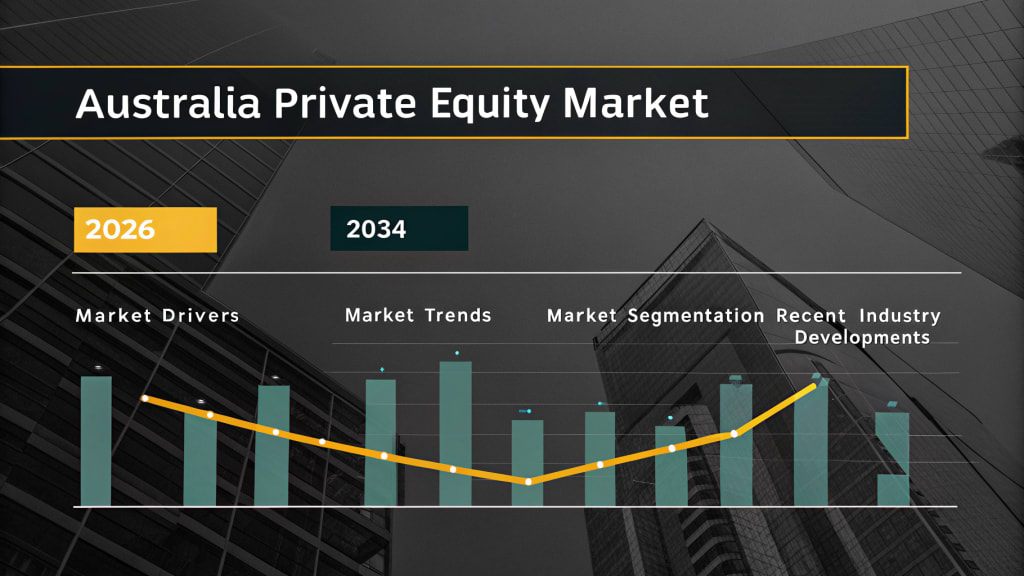
According to IMARC Group, the Australia private equity market reached USD 23.9 Billion in 2025 and is projected to expand to USD 48.5 Billion by 2034, exhibiting a compound annual growth rate (CAGR) of 8.21% during 2026–2034. This strong growth trajectory reflects increasing capital inflows, expanding deal pipelines and strategic portfolio optimization across Australia. Private equity (PE) in Australia spans buyout funds, venture capital, growth equity and infrastructure investments, targeting sectors such as technology, healthcare, renewable energy, real estate and consumer services. As global and domestic investors seek diversified returns, Australia’s PE ecosystem is evolving into a dynamic capital deployment and value-creation platform.
Why Should Smart Buyers and Investors Know About the Australia Private Equity Market?
Strong Growth Outlook
With a projected CAGR of 8.21%, the market offers attractive expansion prospects relative to traditional asset classes.
Diversified Sector Exposure
Investment opportunities span technology, healthcare, real estate and infrastructure.
Stable Regulatory Framework
Australia’s transparent legal and financial systems support investor confidence.
Strategic Exit Opportunities
Well-developed capital markets facilitate liquidity and fund performance realization.
Alignment With Long-Term Institutional Objectives
Private equity complements superannuation and pension fund diversification strategies.
Recent Trends & Developments in the Australia Private Equity Market
July 2025:
PE firms increased allocations toward renewable energy and infrastructure projects.
April 2025:
Venture capital investments accelerated in fintech and artificial intelligence startups.
October 2024:
Strategic exits through trade sales and IPOs strengthened capital recycling cycles.
The Australia private equity market stands at the intersection of capital accumulation, operational transformation and strategic portfolio management. Backed by IMARC’s strong growth projections, the sector is benefiting from rising institutional capital, active deal-making and structured exit planning. As investors prioritize diversification and value creation, private equity continues to expand its role within Australia’s financial ecosystem. For fund managers, institutional investors and strategic advisors, Australia’s private equity market presents a forward-looking opportunity grounded in disciplined capital deployment, sector diversification and sustainable long-term returns within a mature yet dynamic investment landscape.
Australia Private Equity Market Vision 2050
1. ESG-Centric Investment Models
By 2050, environmental, social and governance (ESG) integration may become central to fund mandates and performance evaluation.
2. Technology-Enhanced Due Diligence
Advanced analytics and AI tools could refine investment screening and risk assessment processes.
3. Increased Global Capital Integration
Australia may further integrate into global private capital networks, attracting cross-border co-investment opportunities.
4. Sector-Specific Specialization
Funds may increasingly focus on niche sectors such as renewable infrastructure, healthcare innovation and digital services.
5. Enhanced Liquidity Mechanisms
Secondary markets and digital asset tokenization could expand exit options.
What Are the Key Growth Drivers in the Australia Private Equity Market?
Rising Capital Inflows
Institutional investors—including superannuation funds, sovereign wealth funds and family offices—are allocating larger portions of their portfolios to private equity. Australia’s robust regulatory environment and stable macroeconomic fundamentals attract both domestic and international capital.
Increasing Deal Activity
A growing pipeline of middle-market and growth-stage companies is driving transaction volumes. Buyout funds are targeting established businesses seeking operational transformation, while venture capital firms are investing in high-growth startups across technology and fintech sectors.
Infrastructure and Real Asset Investments
Long-term infrastructure projects, renewable energy developments and logistics assets are appealing to PE investors seeking stable cash flows. Infrastructure-focused funds are expanding portfolios aligned with national development priorities.
Strategic Portfolio Expansion
Private equity firms are increasingly adopting buy-and-build strategies, consolidating fragmented industries to achieve economies of scale. Portfolio diversification across sectors mitigates risk and enhances resilience.
Growing Focus on Strategic Exits
The maturation of earlier investment cycles is prompting strategic exits through IPOs, secondary buyouts and trade sales. Effective exit planning enhances capital recycling and supports fund performance.
Innovation and Technology Integration
Technology-driven operational improvements—such as digital transformation, data analytics and automation—are key value-creation levers within portfolio companies.
About the Creator
Kevin Cooper
Hi, I'm Kavin Cooper — a tech enthusiast who loves exploring the latest innovations, gadgets, and trends. Passionate about technology and always curious to learn and share insights with the world!
Keep reading
More stories from Kevin Cooper and writers in Futurism and other communities.
Australia Frozen Fruits & Vegetables Market: Consumer Health Trends, Retail Penetration & Product Innovation
According to IMARC Group, the Australia frozen fruits and vegetables market reached USD 564.8 Million in 2025 and is projected to expand to USD 686.6 Million by 2034, exhibiting a compound annual growth rate (CAGR) of 2.13% during 2026–2034. This moderate but stable growth reflects evolving consumption habits and increased preference for convenient, nutritious food options across Australia. Frozen fruits and vegetables are widely regarded as practical alternatives to fresh produce, offering extended shelf life, reduced food waste and year-round availability. As consumers prioritize balanced diets while managing busy lifestyles, the frozen produce segment is maintaining relevance within Australia’s broader food retail ecosystem.
By Kevin Cooper3 days ago in Futurism
Hair Shampoo Market Trends: Ingredient Innovation, Premiumization & Forecast to 2034
Rising environmental pollution, evolving consumer lifestyles, and growing awareness around scalp health are fueling demand for hair shampoos globally, supported by the shift toward herbal and natural formulations, rapid e-commerce expansion, and continuous product innovation targeting specific hair concerns. According to IMARC Group’s latest data, The global hair shampoo market size reached USD 38.0 Billion in 2025. Looking forward, IMARC Group expects the market to reach USD 48.0 Billion by 2034, exhibiting a CAGR of 2.62% during 2026-2034.
By Andrew Sullivan5 days ago in Futurism



Comments
There are no comments for this story
Be the first to respond and start the conversation.