
Canada Could Remove Five Times Its Annual Carbon Emissions by Planting Trees on the Edge of the Boreal Forest, Study Finds
New research suggests that strategic reforestation along the world’s largest forest biome could become one of the most powerful climate solutions available to Canada.

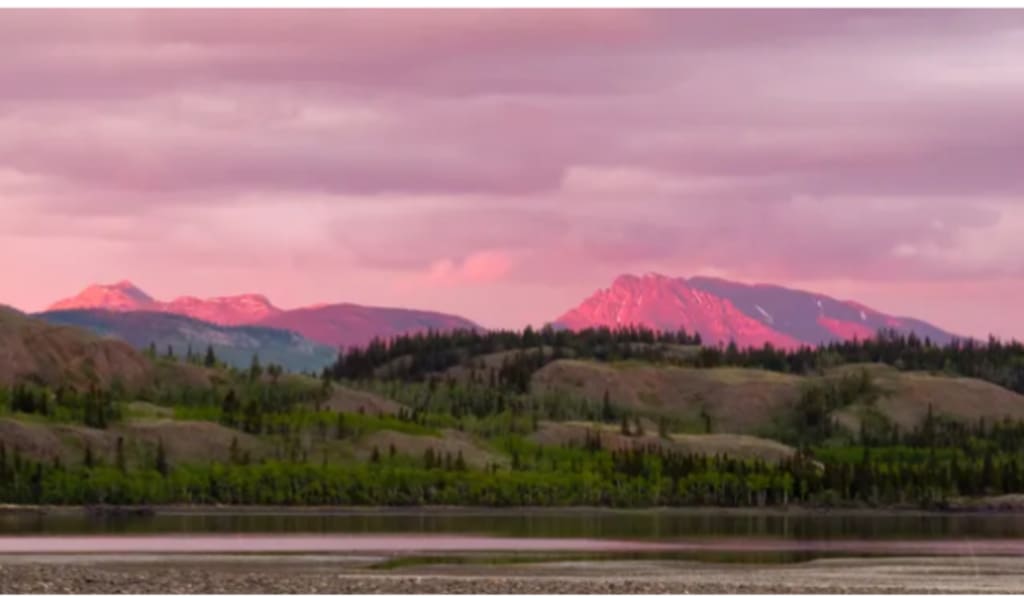
A new scientific study has revealed a striking possibility: Canada could remove up to five times its annual carbon emissions simply by planting trees along the southern edge of the boreal forest. The findings point to a surprisingly effective and natural climate solution—one that relies not on futuristic technology but on the careful expansion of one of Earth’s most important ecosystems.
The boreal forest, which stretches across vast regions of Canada, Russia, and Scandinavia, is already one of the planet’s largest carbon sinks. By expanding tree cover in key transition zones where forest meets grassland or degraded land, researchers believe Canada could dramatically increase its ability to absorb carbon dioxide from the atmosphere.
In a world racing to meet climate targets, the study offers a hopeful reminder that nature itself may hold some of the most powerful tools for fighting climate change.
Why the Boreal Forest Matters
The boreal forest—also known as the taiga—is the largest land-based biome on Earth. It plays a critical role in regulating global temperatures by storing carbon in its trees and soils for centuries.
Canada holds nearly one-third of the world’s boreal forest, making it uniquely positioned to influence Earth’s carbon balance. These forests are made up of spruce, pine, and fir trees adapted to cold climates and short growing seasons. Beneath them lies carbon-rich soil that acts as a long-term vault for greenhouse gases.
What makes this new study remarkable is its focus not on the forest’s interior, but on its edges—areas where forest borders open land that has been affected by agriculture, fire, or human development. These regions offer enormous potential for reforestation without disrupting existing ecosystems.
The Science Behind the Claim
Researchers analyzed climate data, soil conditions, and tree growth potential across Canada’s boreal boundary zones. Their models showed that planting trees in these areas could absorb carbon at rates far higher than previously expected.
According to the study, the amount of carbon that could be captured by reforesting these edge zones could reach several hundred million tons per year—up to five times Canada’s current annual emissions.
This works for two key reasons:
High growth potential: Trees planted in transition zones grow faster than those in colder northern interiors.
Long-term storage: Boreal soils lock away carbon for extended periods, preventing it from quickly re-entering the atmosphere.
In essence, this strategy turns marginal land into a massive natural climate engine.
A Natural Climate Solution
Unlike industrial carbon capture technologies, tree planting requires no massive infrastructure or risky experimentation. It uses biological processes that have worked for millions of years: photosynthesis and soil carbon storage.
Forests not only absorb carbon dioxide, but also improve biodiversity, stabilize soils, and regulate water cycles. They provide habitat for wildlife and help protect communities from floods and erosion.
The study emphasizes that this reforestation effort would not require cutting into existing forests or converting productive farmland. Instead, it would focus on degraded and underused lands—places where tree cover once existed or could thrive again.
This approach aligns with a growing movement toward nature-based climate solutions, which aim to restore ecosystems rather than rely solely on technological fixes.
Economic and Social Benefits
Beyond environmental impact, large-scale tree planting could bring economic opportunities. Reforestation projects require workers for planting, monitoring, and long-term forest management.
Indigenous communities, who have stewarded boreal landscapes for thousands of years, could play a central role in guiding these efforts using traditional ecological knowledge. Many Indigenous groups have already led successful conservation and land-restoration programs.
Tourism, sustainable forestry, and wildlife protection could all benefit from healthier forest ecosystems.
In this way, climate action becomes not just a moral obligation, but a driver of jobs and community development.
Challenges and Cautions
While the study is optimistic, scientists caution that reforestation must be done carefully. Planting the wrong tree species or disrupting natural grasslands could backfire, harming biodiversity and even releasing stored soil carbon.
There is also the issue of forest fires. As climate change increases wildfire risk, newly planted forests must be managed with fire prevention strategies in mind.
Another concern is time. Trees take decades to mature and reach their full carbon-absorbing potential. This means reforestation is not a quick fix—it is a long-term investment in planetary health.
Critics also warn that tree planting should not be used as an excuse to delay reducing fossil fuel emissions. Forests can help remove carbon, but they cannot replace the need to cut pollution at its source.
A Global Example
If Canada were to successfully implement this strategy, it could become a global model for climate action. Other countries with large forest boundaries—such as Russia, the Nordic nations, and parts of South America—could apply similar principles.
This approach shows that climate solutions do not always require revolutionary inventions. Sometimes, they simply require scaling up what nature already does best.
In a time when climate news often feels grim, the idea that one country could erase multiple years of emissions through thoughtful reforestation offers a rare sense of optimism.
What This Means for the Future
The study reframes the boreal forest not just as a wilderness area, but as a central player in climate strategy. Instead of viewing forests as passive victims of climate change, they can be seen as active allies.
By investing in large-scale reforestation at the forest’s edge, Canada could transform its climate commitments from symbolic to substantial.
The challenge now lies in turning science into policy. Government funding, land-use planning, and collaboration with local and Indigenous communities will be essential for success.
Final Thoughts
The idea that Canada could remove five times its annual carbon emissions simply by planting trees along the edge of the boreal forest is both inspiring and sobering. Inspiring because it proves that powerful solutions are within reach. Sobering because it highlights how much potential remains untapped.
This study reminds us that the fight against climate change does not always begin in laboratories or boardrooms. Sometimes, it begins with seeds in the soil.
If implemented wisely, this natural strategy could reshape Canada’s role in the global climate effort—and demonstrate that restoring nature may be one of humanity’s most effective tools for protecting the future.
About the Creator
Sajida Sikandar
Hi, I’m Sajida Sikandar, a passionate blogger with 3 years of experience in crafting engaging and insightful content. Join me as I share my thoughts, stories, and ideas on a variety of topics that matter to you.
Keep reading
More stories from Sajida Sikandar and writers in Futurism and other communities.
It’s the Same Size as Japan, Can Be Seen from Space, and Is a UNESCO World Heritage Site – and It’s Teeming with Thousands of Species
There are few places on Earth so massive, so alive, and so extraordinary that they can be seen from space. Stretching across more than 1,400 miles of ocean, covering an area roughly the size of Japan, and hosting an explosion of marine life, the Great Barrier Reef stands as one of nature’s greatest masterpieces.
By Sajida Sikandar3 days ago in Futurism
Rubber Market Trends: Circular Economy Adoption, Recycling Innovation & Industry Outlook to 2034
Rising vehicle production, accelerating healthcare demand, and rapid industrialization across emerging economies are collectively driving the global rubber market forward. According to IMARC Group's latest research, the global rubber market was valued at USD 49.5 Billion in 2025. Looking ahead, the market is expected to reach USD 71.4 Billion by 2034. Asia-Pacific currently dominates the market, holding a significant share of over 37.5% in 2025, owing to its status as the world's largest natural rubber producing region and a rapidly expanding automotive manufacturing base.
By Andrew Sullivana day ago in Futurism
Hybrid Fiber Optic Connectors Market Outlook: High-Speed Connectivity Demand and Growth Opportunities
According to IMARC Group's latest research publication, global hybrid fiber optic connectors market size reached USD 927.8 Million in 2024. Looking forward, IMARC Group expects the market to reach USD 1,566.9 Million by 2033, exhibiting a growth rate (CAGR) of 5.7% during 2025-2033.
By James Whitman6 days ago in Futurism



Comments
There are no comments for this story
Be the first to respond and start the conversation.