
Inertial Navigation System Market Outlook: Defense Modernization and Growth Opportunities
The inertial navigation system market is experiencing strong growth, driven by increasing defense modernization efforts and rising demand for highly accurate navigation solutions in mission-critical applications.

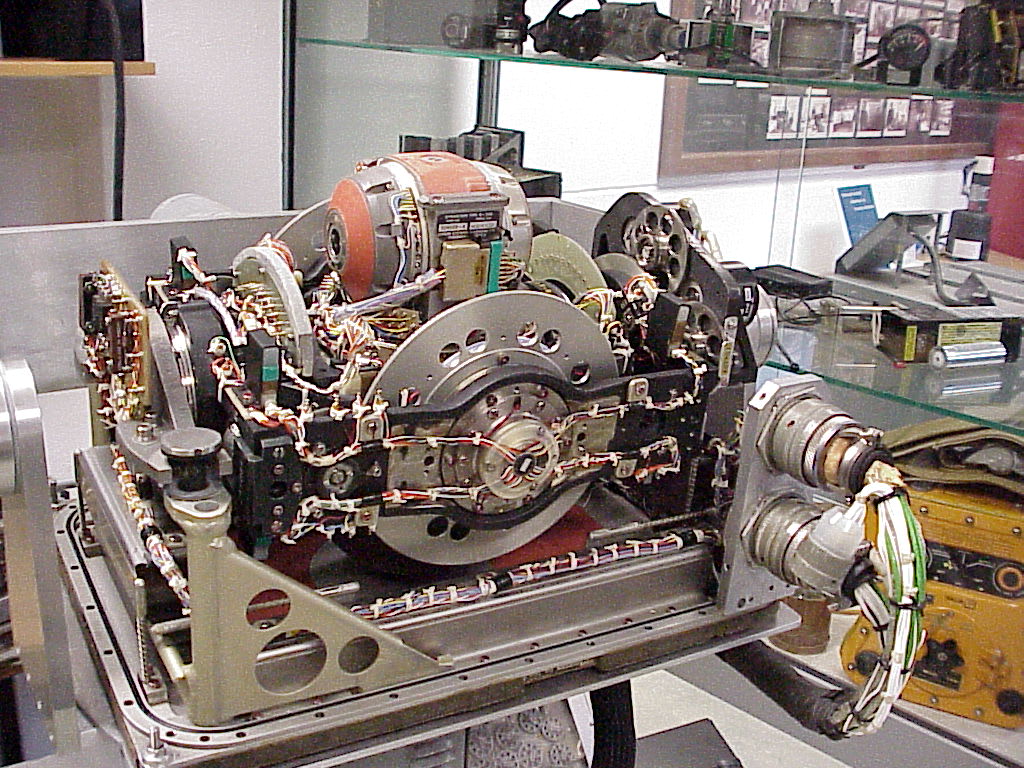
According to IMARC Group's latest research publication, The global inertial navigation system market size reached USD 12.1 Billion in 2024. Looking forward, IMARC Group expects the market to reach USD 19.7 Billion by 2033, exhibiting a growth rate (CAGR) of 5.28% during 2025-2033.
How AI is Reshaping the Future of Inertial Navigation System Market
- Error Correction and Drift Reduction: Machine learning algorithms analyze sensor data patterns to predict and compensate for drift errors in real-time, achieving position accuracy improvements of approximately 58.8% compared to traditional Kalman filtering methods in extended GPS-denied operations.
- Sensor Calibration and Denoising: Deep neural networks automate calibration of MEMS accelerometers and gyroscopes by learning error characteristics across temperature ranges and vibration profiles, reducing manual calibration time while improving measurement accuracy in low-cost sensor systems.
- Adaptive Sensor Fusion Optimization: AI-powered systems dynamically adjust fusion filter parameters based on environmental conditions and platform dynamics, enabling navigation solutions to maintain accuracy during high-dynamic maneuvers where traditional fixed-parameter filters experience significant degradation.

Inertial Navigation System Industry Overview:
Global defense modernization programs and autonomous system proliferation are driving unprecedented demand for precise navigation solutions. The U.S. Department of Defense submitted an FY 2025 Budget request of USD 849.8 billion, including USD 28.4 billion specifically for missile defense improvements requiring advanced INS technologies. Boeing maintains a backlog of 6,527 aircraft orders with 6,000 to 8,000 military aircraft orders pending delivery worldwide, while successful space launches reached 212 in 2023 representing 18% year-over-year growth. Defense agencies worldwide now mandate that critical platforms function 30 days without GPS, elevating inertial systems from backup to primary navigation sources in contested electromagnetic environments facing persistent jamming and spoofing threats.
Inertial Navigation System Market Trends & Drivers
The explosive growth of unmanned vehicle deployments across military and commercial sectors represents the primary market catalyst, with UAV units reaching 60,000 globally in 2024 and projected to increase to 78,000 units in 2025. The U.S. Navy operates multiple unmanned surface vessels including Sea Hunter, Sea Hawk, Mariner and Ranger in Pacific Fleet exercises, while Orca extra large UUVs with 6,500 nautical mile ranges perform extended autonomous missions requiring Kalman-filtered inertial units supported by Doppler velocity logs. Unmanned underwater vehicles serve critical roles in oil and gas exploration, with HII launching the REMUS 130 third-generation UUV featuring ten-hour battery life ideal for offshore exploration and mine countermeasure operations. Advanced Navigation finalized agreements with South Korean conglomerate Hanwha Group to supply fiber-optic gyroscope inertial guidance systems utilizing artificial intelligence for dependable navigation even when adversaries deploy electronic warfare strategies to disrupt GPS signals.
MEMS technology advancements are revolutionizing market accessibility by delivering tactical-grade performance at dramatically reduced size, weight, power consumption and cost footprints. MEMS devices now constitute 45% of new commercial deployments, with manufacturers achieving bias stability of 1.0°/hour gyro performance and 1mg accelerometer stability across -55°C to +85°C operating ranges. Honeywell launched a compact MEMS INS weighing just 140 grams with integrated hybrid GPS deployed in 8,500 UAVs, while ANELLO Photonics introduced the world's smallest optical gyroscope IMU utilizing Silicon Photonic technology. The miniaturization enables integration into space-constrained platforms including consumer drones, precision agriculture equipment, and mobile mapping systems. Silicon Sensing completed joint testing programs with Tokyo Institute of Technology validating DMU41 inertial measurement units for low Earth orbit applications, with the miniature Pinpoint gyro selected to equip the MARS Phobos moon rover on the Martian Moons eXploration mission.
Critical infrastructure investments and strategic industry consolidation are creating robust growth momentum across aerospace, defense and industrial sectors. VIAVI Solutions acquired Inertial Labs for USD 325 million to enhance offerings and strengthen positioning in defense and aerospace markets, anticipating completion in Q1 2025. Safran secured contracts with Finnish Defence Forces to supply Geonyx Inertial Navigation Systems for artillery applications spanning 2024 to 2031, while Northrop Grumman maintained a USD 91.5 billion backlog emphasizing long-term avionics and missile navigation upgrade runways. Asia-Pacific defense modernization accelerates with SIPRI recording 4.3% budget increases in 2024 as India integrates NavIC receivers into Tejas fighters and Arjun tanks, Japan deploys seven-satellite QZSS coverage across the Indo-Pacific, and China completes a national eLoran network covering 1,000 miles offshore including the Taiwan Strait. Export regulation amendments trimmed approximately 90 annual license applications accelerating space technology deliveries, while robust private-sector funding for autonomous vehicle pilots and commercial launch providers sustains technology refresh rates.
Leading Companies Operating in the Global Inertial Navigation System Industry:
- Exail
- Gladiator Technologies
- HBK, Inc
- Honeywell International Inc.
- Northrop Grumman Corporation
- Safran S.A.
- SBG Systems
- Teledyne Marine Technologies Incorporated
- Thales Group
- VectroNav Technologies
Inertial Navigation System Market Report Segmentation:
By Technology:
- Mechanical Gyros
- Ring Laser Gyros
- Fiber Optics Gyros
- MEMS
- Others
By Grade:
- Marine Grade
- Navigation Grade
- Tactical Grade
- Space Grade
- Commercial Grade
By Component:
- Accelerometers
- Gyroscopes
- Algorithms and Processors
- Wireless Systems
By Application:
- Aircraft
- Missiles
- Space Launch Vehicles
- Marine
- Military Armored Vehicles
- Unmanned Aerial Vehicles
- Unmanned Ground Vehicles
- Unmanned Marine Vehicles
Regional Insights:
- North America (United States, Canada)
- Asia Pacific (China, Japan, India, South Korea, Australia, Indonesia, Others)
- Europe (Germany, France, United Kingdom, Italy, Spain, Russia, Others)
- Latin America (Brazil, Mexico, Others)
- Middle East and Africa
Recent News and Developments in Inertial Navigation System Market
- January 2025: ANELLO Photonics unveiled the ANELLO Maritime INS, an advanced inertial navigation system designed specifically for maritime applications. This groundbreaking product represents a significant leap forward in navigation technology for marine operations in areas where GPS is unavailable or compromised, utilizing the company's patented Silicon Photonic Optical Gyroscope technology.
- December 2024: VIAVI Solutions reached an agreement to purchase Inertial Labs for up to USD 325 million to enhance product offerings and strengthen positioning in defense, aerospace, and industrial sectors. The acquisition is expected to finalize in the first quarter of 2025, pending regulatory approvals and standard closing conditions.
- October 2024: Silicon Sensing and Tokyo Institute of Technology revealed completion of a joint testing program validating the DMU41 inertial measurement unit's capabilities for low Earth orbit space applications, demonstrating resilience against space radiation and extreme environmental conditions.
- September 2024: Advanced Navigation finalized strategic agreements with South Korean conglomerate Hanwha Group to supply high-performance fiber-optic inertial guidance systems for both autonomous and crewed platforms utilized in land and aerial operations, with systems featuring artificial intelligence to ensure dependable navigation capabilities during electronic warfare scenarios.
- February 2025: Safran Electronics & Defense secured a contract with the Finnish Defence Forces to supply Geonyx Inertial Navigation Systems for artillery systems from 2024 to 2031, ensuring advanced navigation and positioning capabilities for Finland's military operations and demonstrating long-term defense modernization commitments.
Note: If you require specific details, data, or insights that are not currently included in the scope of this report, we are happy to accommodate your request. As part of our customization service, we will gather and provide the additional information you need, tailored to your specific requirements. Please let us know your exact needs, and we will ensure the report is updated accordingly to meet your expectations.
About the Creator
Michael Richard
Michael Richard is a Market Research Expert specializing in market intelligence, competitive analysis, and data-driven insights. He helps organizations understand trends and emerging opportunities through in-depth research.
Keep reading
More stories from Michael Richard and writers in Futurism and other communities.
In-vitro Colorectal Cancer Screening Tests Market Outlook: Early Detection Demand and Growth Opportunities
According to IMARC Group's latest research publication, The global in-vitro colorectal cancer screening tests market size was valued at USD 1,049.22 Million in 2024. The market is projected to reach USD 1,658.67 Million by 2033, exhibiting a CAGR of 4.96% from 2025-2033.
By Michael Richard4 days ago in Futurism
Mobile Mapping Market Insights: Autonomous Vehicles, 3D Data & Industry Forecast to 2033
The evolution of location-based technology and growing infrastructure needs are reshaping how we map our world. According to IMARC Group's latest analysis, the global mobile mapping market size was valued at USD 40.6 Billion in 2024. Looking forward, IMARC Group estimates the market to reach USD 118.6 Billion by 2033, exhibiting a CAGR of 12.52% from 2025-2033.
By Andrew Sullivan2 days ago in Futurism
Wi-Fi Chipset Market Outlook: Smart Devices, Edge Computing & Industry Forecast to 2033
The surge in connected devices, rapid IoT expansion, and growing demand for high-speed wireless connectivity are propelling the Wi-Fi chipset market, driven by advancements in Wi-Fi 6, 6E, and 7 technologies alongside accelerating deployment of smart home devices and enterprise networking solutions. According to IMARC Group's latest data, the global Wi-Fi chipset market size was valued at USD 20.5 Billion in 2024. Looking forward, IMARC Group estimates the market to reach USD 26.5 Billion by 2033, exhibiting a CAGR of 2.74% from 2025-2033.
By Andrew Sullivan2 days ago in Futurism
Diaries to Nietzsche
Quotation from Friedrich Nietzsche "He who wrestles long with monsters should beware lest he himself become a monster. And if you gaze long into an abyss, the abyss also gazes into you. Man is not destroyed by suffering, but by the meaning he makes of it."
By LUCCIAN LAYTH3 days ago in Critique



Comments
There are no comments for this story
Be the first to respond and start the conversation.