
Launch and Scientific Impact of NASA’s Nancy Grace Roman Space Telescope (2026)
Space

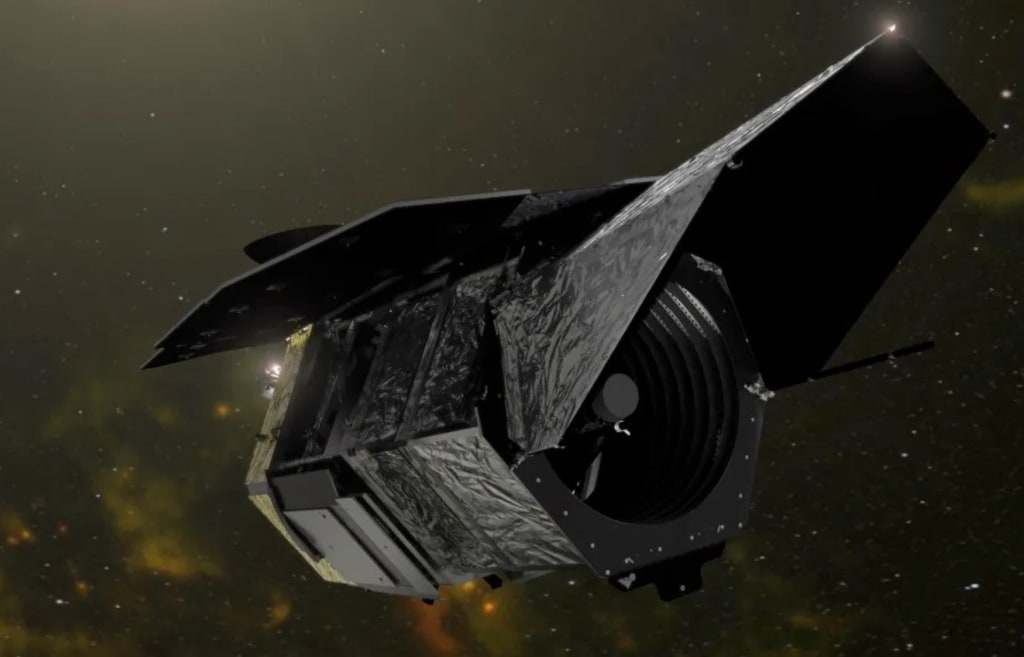
In 2026, NASA is preparing to launch one of the most ambitious space observatories of the decade: the Nancy Grace Roman Space Telescope. Designed to survey the universe at an unprecedented scale in near-infrared light, Roman is expected to reshape modern astrophysics by combining high resolution with an extraordinarily wide field of view. If the Hubble Space Telescope revealed the fine details of the cosmos, Roman will provide the panoramic context.
A New Generation Observatory
The Roman Space Telescope is named after Nancy Grace Roman, NASA’s first Chief of Astronomy, often called the “Mother of Hubble.” Her vision helped establish space-based astronomy as a central pillar of modern science. Roman continues that legacy—but with a different strategy.
Like Hubble Space Telescope, Roman features a 2.4-meter primary mirror. However, the similarity ends there. Roman’s core advantage lies in its Wide Field Instrument (WFI), a 288-megapixel infrared camera capable of imaging vast areas of the sky in a single exposure. Its field of view is roughly 100 times larger than Hubble’s at comparable resolution. In practical terms, this means Roman can capture what would take Hubble hundreds of separate observations—within a fraction of the time.
After launch, Roman will travel to the Sun–Earth L2 Lagrange point, approximately 1.5 million kilometers from Earth. This gravitationally stable region also hosts the James Webb Space Telescope. From L2, Roman will maintain a stable thermal environment and enjoy an unobstructed view of deep space, enabling long-duration, high-precision surveys.
Mapping the Invisible: Dark Energy and Cosmic Structure
One of Roman’s primary scientific objectives is to investigate dark energy—the mysterious phenomenon driving the accelerated expansion of the universe. Despite comprising nearly 70% of the cosmos, dark energy remains poorly understood.
Roman will conduct a High Latitude Wide Area Survey covering thousands of square degrees of sky. By measuring the shapes and distances of millions of galaxies, the telescope will map how cosmic structures have evolved over billions of years. A key technique will be weak gravitational lensing—the subtle distortion of galaxy shapes caused by intervening dark matter.
For example, imagine observing a distant galaxy whose light passes through a massive cluster on its way to Earth. The cluster’s gravity slightly bends and stretches that light. Roman’s precision imaging will allow astronomers to statistically analyze these distortions across enormous samples. From that data, researchers can reconstruct the large-scale distribution of dark matter and test competing models of cosmic acceleration.
In addition, Roman will detect and monitor thousands of Type Ia supernovae—stellar explosions that serve as “standard candles” for measuring cosmic distances. Combining supernova measurements with galaxy surveys will significantly refine constraints on cosmological parameters.
A Census of Exoplanets on an Unprecedented Scale
Another transformative goal involves exoplanets. While missions such as Kepler Space Telescope and Transiting Exoplanet Survey Satellite have identified thousands of planets orbiting distant stars, Roman will approach the problem differently.
Roman’s exoplanet survey will rely heavily on gravitational microlensing. This technique detects planets when a foreground star briefly magnifies the light of a background star due to gravitational alignment. If a planet orbits the foreground star, it creates a distinctive secondary signal in the magnification curve.
This method is uniquely sensitive to planets located far from their host stars—including analogs of Jupiter, Saturn, and even free-floating “rogue planets” not bound to any star. Roman is expected to discover tens of thousands of new exoplanets, dramatically improving statistical models of planetary system architecture.
For instance, astronomers may finally determine how common solar-system–like configurations are. Are cold gas giants at wide orbits typical? How frequently do Earth-mass planets form in outer planetary systems? Roman’s dataset will provide quantitative answers rather than speculation.
Direct Imaging with Advanced Coronagraphy
In addition to its wide-field survey instrument, Roman carries a technology demonstration: a high-performance coronagraph. This instrument blocks starlight to directly image faint exoplanets and circumstellar disks.
While not primarily a planet-hunting mission via direct imaging, Roman’s coronagraph will test next-generation technologies required for future observatories designed to search for biosignatures. By suppressing starlight with extreme precision, it will demonstrate how future missions might directly observe Earth-like planets around Sun-like stars.
Synergy with Other Observatories
Roman is not designed to operate in isolation. Its wide surveys will identify targets for deeper follow-up by the James Webb Space Telescope and future ground-based facilities such as the Vera C. Rubin Observatory.
For example, Roman might identify a distant galaxy cluster undergoing rapid formation. Webb could then conduct high-resolution spectroscopy to analyze its chemical composition and star formation rate. Similarly, Roman’s exoplanet microlensing discoveries could guide future atmospheric characterization missions.
This layered observational strategy—wide survey followed by detailed analysis—represents a shift toward coordinated, multi-observatory astrophysics.
Data at an Extraordinary Scale
Over its initial five-year prime mission, Roman is expected to generate tens of petabytes of data. The scale is comparable to major terrestrial scientific experiments. Managing, processing, and analyzing this dataset will require advanced computational infrastructure and machine learning pipelines.
For researchers, this means access to statistically powerful samples: billions of galaxies, thousands of supernovae, and an unparalleled exoplanet census. For students and early-career scientists, Roman’s open data policy will likely foster a new wave of discoveries beyond the core mission objectives.
Redefining the Cosmic Perspective
The 2026 launch of the Nancy Grace Roman Space Telescope marks more than the deployment of another instrument—it signals a methodological shift. Rather than focusing narrowly on individual cosmic objects, Roman will survey the universe at scale, transforming isolated observations into comprehensive maps.
From probing the physics of dark energy to conducting the largest statistical study of planetary systems ever attempted, Roman stands poised to influence astrophysics for decades. If successful, it will not only expand humanity’s cosmic inventory but also refine our understanding of how the universe evolved—and where we fit within it.
About the Creator
Keep reading
More stories from Holianyk Ihor and writers in Futurism and other communities.
Space Discoveries Powered by Machine Learning
Over the past decade, machine learning has evolved from a useful analytical tool into a central engine of discovery in astronomy. Modern observatories no longer produce manageable datasets measured in gigabytes—they generate petabytes of images, spectra, and time-series signals. Human analysis alone is no longer sufficient. In many areas of space research, algorithms now act as the first line of discovery.
By Holianyk Ihorabout 15 hours ago in Futurism
Circulating Tumor Cells (CTC) Market Outlook: Liquid Biopsy Advancements and Growth Opportunities
According to IMARC Group's latest research publication, The global circulating tumor cells (CTC) market size reached USD 12.9 Billion in 2024. Looking forward, IMARC Group expects the market to reach USD 27.8 Billion by 2033, exhibiting a growth rate (CAGR) of 8.46% during 2025-2033.
By Michael Richard6 days ago in Futurism
Why Your Dream TV Costs a Fortune: The Surprising Reality of OLED Pricing
It is a ritual performed every November: the hypnotic glow of the showroom floor, the deep, ink-pool blacks of a flagship OLED, and the inevitable wince when you finally glance at the price tag. While standard LCDs are practically falling into shopping carts for under $500, a high-end OLED remains a luxury investment. The math behind this disparity is startling; by 2024, the manufacturing cost of a single 65-inch OLED panel had dropped to roughly $600—a figure that, on its own, exceeds the entire retail price of a 65-inch LCD television.
By Mohammad Hamid3 days ago in Futurism
The Cairn Beside the Lake
And so it came to pass that King Ertharion, Tenth King of Lombaia, stood beside the still lake below unrelenting and unassailable cliffs with the remainder of his harried host. In what was the tenth year of his reign and his forty-fourth upon this great green earth, Menigo the Betrayer, cousin of King Ertharion, pressed home his false claim.
By Matthew J. Fromm4 days ago in Fiction




Comments
There are no comments for this story
Be the first to respond and start the conversation.