
New Energy Vehicle (NEV) Taxi Market Outlook: Urban Electrification and Sustainable Mobility Growth Opportunities
The new energy vehicle (NEV) taxi market is witnessing rapid expansion, driven by government incentives, stricter emission regulations, and rising adoption of electric mobility solutions in urban transportation networks.

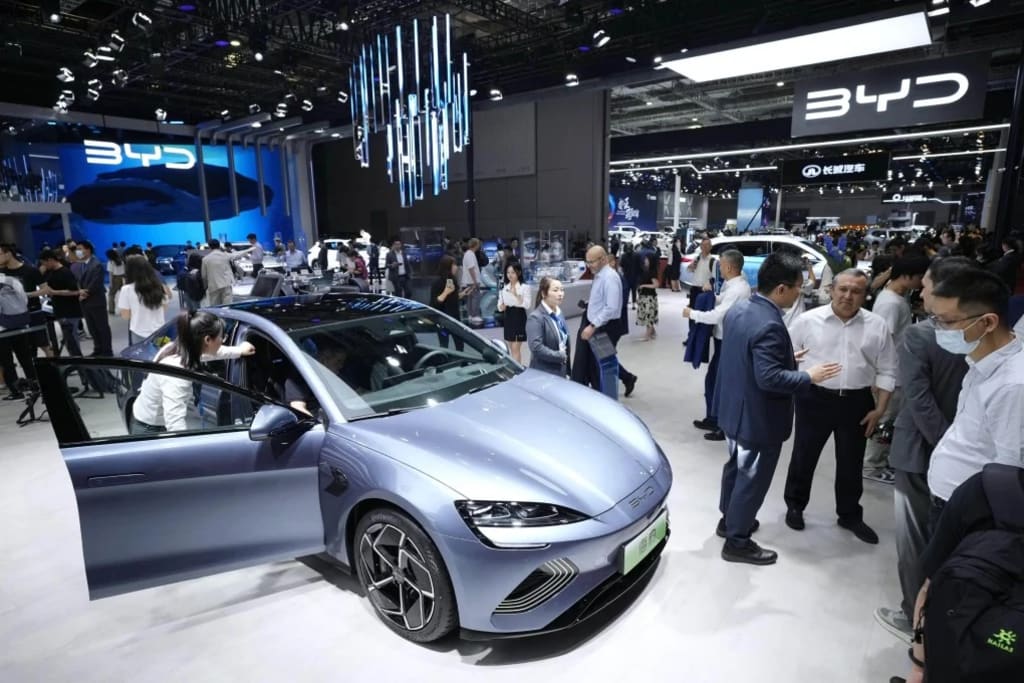
According to IMARC Group's latest research publication, The global new energy vehicle (NEV) taxi market size reached USD 106.0 Million in 2024. Looking forward, IMARC Group expects the market to reach USD 736.5 Million by 2033, exhibiting a growth rate (CAGR) of 22.83% during 2025-2033.
How AI is Reshaping the Future of New Energy Vehicle (NEV) Taxi Market
- Smart Fleet Management and Route Optimization: AI-powered systems analyze real-time traffic data, weather conditions, and historical patterns to determine optimal routes for NEV taxis. These algorithms adjust routing every 30 seconds during trips, reducing fuel consumption by up to 22% while cutting driver idle time and improving passenger wait times by 35%.
- Predictive Maintenance and Downtime Reduction: Machine learning monitors vehicle telematics including speed patterns, braking behavior, and battery diagnostics to predict maintenance needs before failures occur. European operators introduced AI-controlled charging schedules in October 2025, cutting vehicle downtime by 30% and extending battery life cycles through optimized energy management systems.
- Dynamic Demand Forecasting and Pricing: AI analyzes booking patterns, local events, and mobility trends to predict passenger demand across urban zones. Smart systems direct drivers to high-demand areas before requests come in, eliminating deadhead miles. Dynamic pricing algorithms optimize fares based on supply-demand ratios, increasing fleet revenue by 18-25% during peak periods.

New Energy Vehicle (NEV) Taxi Industry Overview:
Shanghai's August 2024 commitment to convert all 11,000 taxis to NEVs by 2027 exemplifies the rapid electrification of urban mobility. In July 2024, Uber and BYD announced a landmark partnership to deploy 100,000 electric vehicles across global markets, starting with Europe and Latin America, demonstrating how ride-hailing platforms are accelerating the NEV taxi transition with financing incentives and charging infrastructure support for drivers.
New Energy Vehicle (NEV) Taxi Market Trends & Drivers
Government policies worldwide are driving massive NEV taxi adoption through financial incentives and regulatory mandates. China's purchase tax exemption policy, extended through 2027 with benefits up to ¥30,000 per vehicle, helped NEVs capture 40% of national vehicle sales by 2024. India's FAME-II subsidies with reduced GST rates are pushing fleet operators toward electric taxis, while European cities expanded Zero-Emission Taxi Zones in October 2025, requiring new registrations to be electric-only. Shanghai's plan to electrify all 11,000 cabs by 2027 signals how major cities are setting deadlines for phasing out combustion-engine taxis. These policies reduce initial purchase costs, provide tax breaks, and create dedicated infrastructure, making NEV taxis economically viable for fleet operators navigating rising fuel prices and tightening emission standards globally.
Battery technology breakthroughs are eliminating range anxiety and reducing total cost of ownership for NEV taxi operators. Advances in lithium-ion and solid-state batteries are extending driving ranges beyond 300 km per charge, with models like BYD's D1 taxi exceeding this threshold for all-day operations without extended charging stops. Battery production costs are dropping through economies of scale and manufacturing improvements, making electric taxis price-competitive with conventional vehicles. Tesla launched customized Model 3 and Model Y variants in 2024 optimized for high-mileage taxi use, featuring reinforced batteries and over-the-air updates that minimize maintenance downtime. BYD commenced operations at its Thailand plant in December 2024 with 150,000-unit annual capacity specifically designed for Southeast Asia's taxi markets, including dedicated battery and charging infrastructure production lines that support regional fleet expansion.
Strategic partnerships between automakers, ride-hailing platforms, and energy companies are solving infrastructure and operational challenges. Uber's multi-year BYD partnership provides drivers with best-in-class pricing, financing options, and discounts on charging and maintenance, making the electric transition affordable. In January 2025, Uber expanded its EV incentive program to 25 cities with USD 150 million in funding, offering up to USD 9,000 in direct purchase incentives and guaranteed minimum earnings for drivers switching to electric models. Volkswagen's 2023 partnership with BP deployed fast-charging networks across Europe, while Toyota's alliance with Panasonic focuses on reducing battery production costs. These collaborations ensure comprehensive solutions covering vehicles, charging infrastructure, and financing, enabling taxi operators to transition entire fleets without bearing the full burden of upfront infrastructure investments.
Leading Companies Operating in the Global New Energy Vehicle (NEV) Taxi Industry:
- Blu-Smart Mobility Pvt. Ltd.
- BYD Company Limited
- Electric Cab North America
- London EV Company Ltd. (Geely Commercial Vehicle Group)
- Lyft Inc.
- Uber Technologies Inc.
New Energy Vehicle (NEV) Taxi Market Report Segmentation:
By Vehicle Type:
- Battery Electric Vehicle
- Plug-in Hybrid Electric Vehicle
- Hybrid Electric Vehicle
Battery electric vehicle represents the largest segment due to zero emissions, lower maintenance costs, and improved battery ranges that support all-day taxi operations.
By Vehicle Class:
- Hatchback
- Sedan
- Utility Vehicle
Hatchback accounts for the largest market share owing to its compact design ideal for urban navigation, lower purchase costs, and efficient energy consumption for city taxi services.
By Ownership Type:
- Company Owned
- Individual Owned/Private
Company owned holds the largest market share as fleet operators leverage bulk purchasing discounts, centralized maintenance, and consistent vehicle quality standards across their taxi networks.
By Range Type:
- Intercity
- Intra-city
Intercity represents the largest segment because short-range urban trips align perfectly with current battery capabilities, dense charging infrastructure availability, and high-frequency ride demand in city centers.
By Vehicle Level:
- Entry
- Mid-Level
- Premium
Mid-level captures the largest market share by balancing affordable pricing for taxi operators with sufficient comfort features, reliable performance, and reasonable range that meets passenger expectations.
Regional Insights:
- North America (United States, Canada)
- Asia Pacific (China, Japan, India, South Korea, Australia, Indonesia, Others)
- Europe (Germany, France, United Kingdom, Italy, Spain, Russia, Others)
- Latin America (Brazil, Mexico, Others)
- Middle East and Africa
Asia Pacific dominates the market, driven by China's aggressive NEV policies, India's FAME-II subsidies, and South Korea's smart city initiatives that prioritize electric mobility infrastructure.
Recent News and Developments in New Energy Vehicle (NEV) Taxi Market
- July 2024: Uber Technologies and BYD Company announced a multi-year strategic partnership to deploy 100,000 new BYD electric vehicles onto Uber's platform across global markets. Starting in Europe and Latin America, the partnership offers drivers best-in-class pricing, financing options, and charging discounts, with plans to expand to the Middle East, Canada, Australia, and New Zealand.
- August 2024: Shanghai announced a comprehensive plan to convert all taxis and buses to new-energy vehicles by 2027, including 11,000 cabs and 6,200 buses. This ambitious initiative significantly boosts NEV taxi adoption and accelerates the development of charging infrastructure throughout the metropolitan area.
- November 2024: Tesla secured regulatory approval in California to broaden its autonomous vehicle testing program. The approval allows deployment of a 100-vehicle robotaxi pilot in San Francisco, marking a significant milestone toward commercializing autonomous electric taxi services in major urban centers.
- December 2024: BYD Company commenced operations at its new manufacturing plant in Thailand, with an initial annual capacity of 150,000 vehicles. The facility is specifically designed to serve Southeast Asia's growing taxi and ride-hailing markets and includes production lines for batteries and charging-infrastructure equipment.
- January 2025: Uber Technologies announced a major expansion of its electric vehicle incentive program to 25 additional cities worldwide. The company committed USD 150 million in new funding for driver subsidies and charging-access support, with enhanced packages including up to USD 9,000 in direct EV purchase incentives and guaranteed minimum earnings for drivers transitioning to electric models.
Note: If you require specific details, data, or insights that are not currently included in the scope of this report, we are happy to accommodate your request. As part of our customization service, we will gather and provide the additional information you need, tailored to your specific requirements. Please let us know your exact needs, and we will ensure the report is updated accordingly to meet your expectations.
About the Creator
James Whitman
With years of experience in analyzing global industries, I specialize in delivering actionable market insights that help businesses stay ahead in an ever-changing landscape.
Keep reading
More stories from James Whitman and writers in Futurism and other communities.
Super Absorbent Polymers Market Outlook: Hygiene Product Demand and Agricultural Growth Opportunities
According to IMARC Group's latest research publication, The global super absorbent polymers (SAP) market size reached USD 11.5 Billion in 2024. Looking forward, IMARC Group expects the market to reach USD 23.7 Billion by 2033, exhibiting a growth rate CAGR of 9.43% during 2025-2033.
By James Whitmana day ago in Futurism
Headwear Market: Fashion Trends, Seasonal Collections & Industry Growth Outlook
According to IMARC Group's latest research publication, the global headwear market size reached USD 23.1 Billion in 2024. Looking forward, IMARC Group expects the market to reach USD 36.3 Billion by 2033, exhibiting a growth rate (CAGR) of 4.88% during 2025–2033.
By sujeet. imarcgroup7 days ago in Futurism
Stanislav Kondrashov Oligarch Series: Oligarchy as the Framework of a Post-Stellar Civilisation
When you picture a civilisation that has moved beyond its home planet and settled across distant star systems, you probably imagine advanced spacecraft, artificial habitats, and technology that feels almost mythical. What you might not picture is the structure of leadership behind it all.
By Stanislav Kondrashov6 days ago in Futurism




Comments
There are no comments for this story
Be the first to respond and start the conversation.