science fiction
The bridge between imagination and technological advancement, where the dreamer’s vision predicts change, and foreshadows a futuristic reality. Science fiction has the ability to become “science reality”.
Most Influential Female Sci-Fi Authors
Science fiction is traditionally a boys club. Men have dominated the genre for years, and it wasn't until the second wave of feminism in the 60s that more and more female sci-fi authors began to be recognized. Women like Madeleine L'Engle, Octavia Butler, and Ursula K. Le Guin were just a few to break out into the sci-fi scene with a vengeance. Their novels and short stories have inspired women of all ages to enter the science fiction and fantasy genres and demand to be respected as equals, and the exceptional authors they are. The women who make up the list of the most influential female sci-fi authors will continue to lead a generation of women to create award-worthy work for years to come.
By Danielle Banner9 years ago in Futurism
Who Will Survive the Next Biotic Crisis?
While the next biotic event is probably not in the near future, fossil records clearly testify that extinction is an unavoidable fate for all species. The real question remains: what is left in the wake of mankind? Our lineage is more likely to be altered through evolution than entirely snuffed out.
By Brian Switek9 years ago in Futurism
Reviewing Ann Leckie's 'Ancillary Justice'
To say that Ann Leckie’s Ancillary Justice was one of the most important novels of 2013 would be a bit obvious. The novel won both the Hugo and the Nebula for Best Novel and a host of other awards. It is all the more impressive considering that it is Leckie’s first. The ambitious style, believable characterization, and a gripping conspiratorial plot has excited old fans of science fiction, and even gathered the attention of critics of so-called 'mainstream' literature. True, not everyone has been so impressed. Nina Allan, writing for Arc, felt that the novel gave in too easily to the broadest tropes of the space opera genre. I disagree. I think, instead, that giving in to such tropes while stressing our conception of them is precisely where the novel derives its strength.
By Michael Gold9 years ago in Futurism
The Trouble with Forecasting
1. Alice brought two mugs of hot coffee to the table. She placed them down safely, then continued the argument. “Oh come on Bob, you can’t possibly believe all that nonsense? I know it’s one of your favourites, but it’s just a Hollywood film.”
By Dan Swindlehurst9 years ago in Futurism
Reviewing Neil Stephenson’s 'Snow Crash'
Re-reading Snow Crash by Neal Stephenson a little over a year after reading it for the first time was not only fun, but necessary. Snippets of the book from my first reading had been coming back to me for the last year or so, but so much happens in the space of 469 pages that I was remembering separate plots of the book as belonging to entirely different novels. That isn’t to say, however, that the book is especially confusing, or even complicated. It is, however, dealing with a lot of big, esoteric ideas, and Stephenson’s genius shows itself in his ability to expound on all these ideas in detail without slowing the story down. The exposition and explanation is as entrancing as the fast-paced plot.
By Michael Gold9 years ago in Futurism
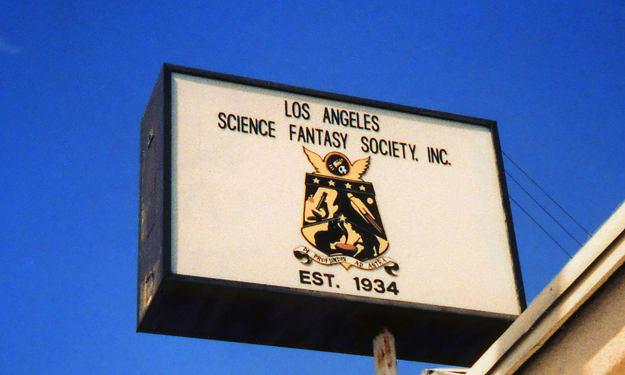
Los Angeles Science Fantasy Society
“Pioneering is never done in front of cheerleaders urging on a roaring grandstand of popular approval.” Star Trek legend George Takei speaks to a generation science fiction pioneers all over the world. Since it's creation, sci-fi fans have bound together as a tight-knit collective, sharing ideas and theories. Organizations like The Los Angeles Science Fantasy Society bring together science fiction's biggest fans to review past and present genre favorites. LASFS is the longest continually running science fiction club in the world. Founded in 1934 as a charter group of the Science Fiction League, it has endured World War II, the LA riots, the shifting tides of fan culture, and the death of its most active member and cheerleader, fandom legend Forest J Ackerman. Forest J Ackerman is an American magazine editor, science fiction writer and literary agent. From its current home base in Van Nuys, California, the LASFS hosts weekly meetings, and keeps an impressive lending library of science fiction materials. One of my favorite Internet spelunking journeys is to go deep, deep into the LASFS' rigorously complete photo archives, which document conventions, readings, and meetings of science fiction fans and legends alike from over a 75-year history. With the blessing of the LASFS, here are some of our favorites.
By Claire Evans9 years ago in Futurism
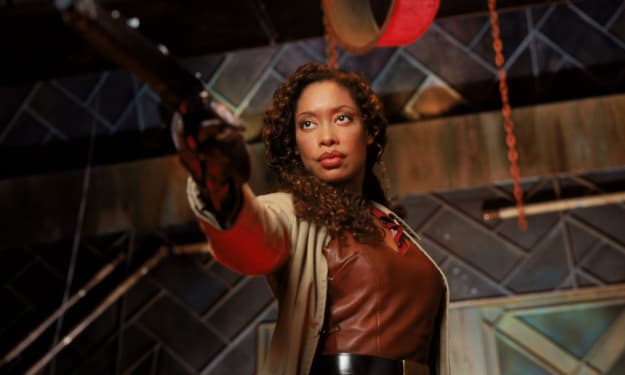
Sci-Fi Movie Women of the 2000s
Too often when we think “women in sci-fi” we think of what used to be called “scream queens,” that is, the actresses who appeared in scores of latter day B pictures running from extraterrestrials on earth or grappling with tentacled creatures on spaceships or what have you. For this survey we want to pay homage not necessarily to the genre regulars (although you’ll find one or two along the way) but to the performers who made the most unusual and in many cases iconic impressions. The following list is not compiled in any particular order. Each woman has contributed enormously to the universe of sci-fi through their respective roles. Here are our favorites from the 2000s.
By Dixon Steele9 years ago in Futurism
Most Underrated Sci-Fi Authors
Science fiction is a massively popular genre these days, and while some authors have achieved mainstream recognition, there are gems to be discovered amongst the most underrated sci-fi authors. Casual readers of sci-fi will have heard of writers such as Isaac Asimov, Arthur C. Clarke, Harlan Ellison, and Kurt Vonnegut. And film directors have snapped up the rights to works by authors such as Philip K. Dick and Robert Heinlein to ensure their enduring fame. But other writers have created masterpieces of imagination and storytelling in sci-fi, and yet not become household names like their contemporaries. Beyond the established sci-fi bestsellers, who are the most underrated sci-fi authors awaiting your discovery?
By Emily McCay9 years ago in Futurism
Ghosts Amongst the Stars
The old man sat on the rock near the top of the small hill as he had for many years now and watched the first stars begin to peek out of the deepening purple sky. The boy at his side, watched solemnly, as he had for most of his young life. They sit in silence.
By Futurism Staff9 years ago in Futurism
Carol Burnett's Captain Kirk Impersonation
American comedy can’t be neatly categorized into one absolute style, like the country from which it springs, it’s a big melting pot. From early, formative clowns such as The Marx Brothers, Milton Berle or Abbott & Costello, to the shock chuckles of Richard Pryor, Lenny Bruce, George Carlin and Chris Rock, American funny is a uniquely varied thing. However, it’s not only a boy’s club - one thing’s clear for awhile; we’ve been blessed with several of the funniest ladies history has ever known. There was lovable Lucille Ball, pioneer in the flexible art of the sitcom. Then came the outrageous Phyllis Diller, ground breaker in stand-up shtick. And then there's the comedy chameleon, Carol Burnett. Today’s funny ladies - Tina Fey, Kristen Wiig and Melissa McCarthy owe a lot to those original gals, but with Burnett, the modern sketch comedy we know today was basically shaped and fine tuned. If that wasn’t enough, Burnett has more than earned her ‘Geek Cred’, after she lampooned one of the most important sci-fi icons, none other than Captain Kirk. Carol Burnett's Captain Kirk impersonation is the original spoof on the iconic sci-fi figure portrayed by William Shatner.
By Will Stape9 years ago in Futurism