science fiction
The bridge between imagination and technological advancement, where the dreamer’s vision predicts change, and foreshadows a futuristic reality. Science fiction has the ability to become “science reality”.
Quantum Swarm
The lights flicker, go black. He walks out of his shack, sees that his abode is the only dark one and looks to the sky, as if for support. The glass towers glitter under a rocket arcing through the sky. Another mission to Mars, says his phone, the colonization process well under way. But the man, our man as it stands, didn’t win that lottery ticket, and so he only watches, the cool fall air tightening his skin; for a split second he can almost feel the warmth from the rocket.
By Nelson Lowhim9 years ago in Futurism
Netflix Is Bringing Back Sci-Fi TV
Sci-fi TV, like any category of entertainment, sees an ebb and flow in its popularity and supply. These days it is back in a big way, and not just on cable outlet SyFy— it's coming on strong in the streaming arena. Netflix changed the game in Hollywood in distribution, and now it's competing with the big production studios to offer up some of the best original content around. Shows such as Orange Is The New Black and Grace And Frankie are great drama/comedies, but Netflix isn't leaving out nor forgetting its genre loving fans or geek squads. Stranger Things is one of the hottest new TV shows in years. You won't find it on broadcast or cable. Jessica Jones, Sense8, Black Mirror and Stranger Things are all original and exclusive to Netflix, and cable outlets like SyFy are now encouraged to make more stimulating science fiction for fans.
By Will Stape9 years ago in Futurism
Greatest Artificial Intelligence Characters
The Sci-Fi and Pop Culture genres are often found on vastly different paths with many light years of distance between them, but once in a while they collide. When they intertwine, we usually end up with some of the greatest Artificial Intelligence characters in history has seen. Sometimes these characters are symbolized through a grim and pessimistic future, where machines are capable of feeling a wide range of emotions. They also have a survival instinct that leads them to try and take over the world. In other instances, they are lovable and friendly and able to connect with humans. Even though they are programmed not to feel any kind of emotions, most times we feel some sort of connection to them. Whatever the case might be, these great artificial intelligence characters were designed and programed to make you remember them.
By George Gott9 years ago in Futurism
New Rose Hotel Bar
Hanging around in here seven hours now. New Rose Hotel Bar. Saturday night, and as always I drew every eye in the place the second I appeared. I paused and lounged against the door frame for maximum effect: Ten-gallon hat with twin rotating satellite dishes, gleaming mirrorshades, neon shirt at maximum power, its humming gas-filled glass tubes filling the bar with flickering light, flashing "CYBERSTUD!" in pin-wheeling letters of orange, purple, brown, setting off the latest Parisian fashion, recycled crushed-velvet Elvis jeans stuffed into cowboy boots of solid chrome.
By Jeffrey A. Corkern9 years ago in Futurism
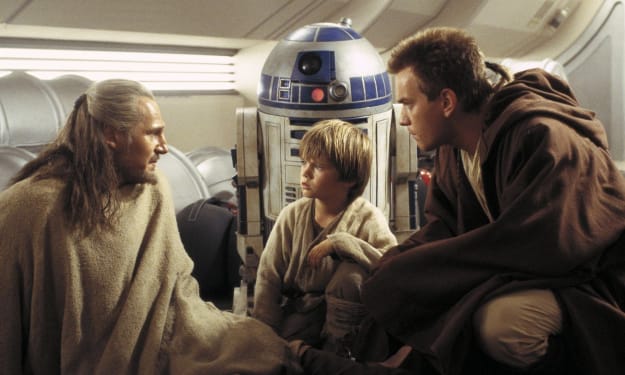
'Star Trek' and 'Star Wars' Time Travel
Is sci-fi about going forward boldly into the future or reminiscing and reliving the past? Certainly, with time travel preoccupying science fiction as both an awesome gadget, concept, and plot device, the beauty is you can do both timelines at the touch of a blinking button or the roar of warp drive. However, as a purely solid and compelling narrative—is it better to keep reaching for the mysterious future or revisiting the well trod past?
By Will Stape9 years ago in Futurism
Woody Allen Sci-Fi Intellectual
“I believe there is something out there watching us. Unfortunately, it's the government.” - Woody Allen This dystopian flavored quote seems more in sync with Agent Fox Mulder of The X-Files or even whistleblowers Edward Snowden or Julian Assange of WikiLeaks. It wouldn’t routinely be attributed to one of America’s funniest comedians and creative film artists. Woody Allen is many things to many people. To Hollywood and the performing arts community, he’s a towering figure, but the Woodman as a sci-fi visionary? It’s indisputable how playful Allen can be with his movies, jokes, books and public persona, but on par with the clairvoyant visual musings and wondrous ideas of Rod Serling, Gene Roddenberry, Steven Spielberg or George Lucas? For his loyal fans, however, the notion he’s a science fiction aficionado, fantasist or futurist isn’t so far fetched.
By Will Stape9 years ago in Futurism
Sleep
Her breathing was soft. It touched my face with a gentle rhythm. I opened my eyes. Her head was resting on my shoulder, with her hair curling in every possible direction. Strands dancing into my face, free from gravity. With my one free hand I brushed her floating hair aside. Her hand clutched tightly onto mine. It seemed so small and fragile now, nestled gently in my grip.
By Joachim Heijndermans9 years ago in Futurism
Classic 1940s Sci-Fi Movies
When people think of sci-fi movies, they rarely think of the best 1940s sci-fi movies. They usually think of franchises like Star Wars and Star Trek, the Stargate TV series, and the many original flicks on SyFy Channel. There’s a huge selection of science fiction movies to choose from and the genre has become mainstream thanks to shows like The Big Bang Theory. Sometimes, though, the most diehard sci-fi aficionados crave the classics from the silver screen era. These are some of the best 1940s sci-fi movies:
By Lindsie Polhemus9 years ago in Futurism
Lucid Dreaming Is the Best Way to Probe the Unconscious Mind
I used to think I would stumble upon my lifelong interest through serendipity someday. I was waiting for the elusive AHA moment, and never thought to solicit my brain for the information. But now that I’ve asked and received an answer, I’m not sure what to do.
By Brian Stanton9 years ago in Futurism
New Words Were Needed
I spent the past semester teaching two separate courses— one on science fiction, the other on modernism— to some very bright high school students. Having expected to suffer some intellectual whiplash as I shifted several times a day from talking about aliens and cyberpunk to Dadaism and the Harlem Renaissance, I was relieved at how naturally it all came to me. No doubt this is because I like all this stuff and generally know my way around it, but what surprised me was how much overlap these "genres" turned out to have (they're not really "genres," but I can't seem to find a better word)— that is, that I enjoy Ulysses and A Martian Odyssey for many of the same reasons; it's just that these reasons are operating at different levels of the text.
By M. Thomas Gammarino9 years ago in Futurism