
👶 The Baby Market of 2988 “Where children are no longer born. They are selected.”
🧬 2988: When Parenting Became Programming In the year 2988, humanity had finally decoupled reproduction from randomness. Thanks to the revolutionary biotech app "GenomaX", having a child was now a purchase, not a pregnancy. No pain. No surprise. Just pure choice. With a few taps, couples could now: Design a child’s appearance, IQ, emotions, and even career tendencies Simulate what their child would look like at age 1, 5, 15, and 30 Choose between over 12 million templates, or create a fully customized Genetic Blueprint Birth was obsolete. Parenting began in the cloud.


📱 How GenomaX Worked
Available globally through secure quantum-networks, the GenomaX Baby Design App had three simple steps:
Select Base Template
– You could start with your own DNA or pick from idealized global models.
Customize Features
– Eye color, empathy level, energy patterns, language capabilities, humor type, risk tolerance, emotional response modes, even “future resilience”.
Simulate & Approve
– A 3D AI-generated preview would show the child interacting with you at different ages in virtual reality.
Once approved, the blueprint was sent to a BioWomb Lab, where the child would be grown in an artificial womb with zero physical birth trauma.
In 9 months (or accelerated options in 3), your child would be ready for onboarding.
🎓 Pre-Installed Skills
Children didn’t cry in 2988.
They were born with embedded neural pathways for:
3 spoken languages
Basic emotional regulation
Night-time sleep training
Select cultural knowledge
A child could be delivered already knowing how to say “I love you” in 4 languages, or recite a poem if the parent selected the Artistic Add-On Pack.
Optional plug-ins included:
STEM Prodigy Mode
Athletic Excellence
Musical Mindset
Environmental Empathy Pack
💸 How Much Did a Baby Cost?
It depended.
Basic Baby (Ethical Design, No Enhancements) – 40,000 Global Units
Designer Baby (Custom personality & high IQ) – 180,000 GUs
Elite Legacy Child (Max upgrades, public status) – 1.2 million GUs
Some parents took loans. Others were sponsored by corporations, especially if the child was designed for future innovation.
Yes, companies now invested in babies.
🛑 But What About Real Birth?
Natural birth was still allowed, but rare.
Only 2% of global births in 2988 were traditional.
Most of those occurred in Faith Zones—regions that rejected genetic programming on religious grounds.
But even there, children faced difficulty in elite education or employment because they were considered “Untuned.”
Some cruelly called them:
“Wild Borns”
🤖 Nanny AI and Parenting 2.0
Once the child was delivered, Parenting AI took over.
These were smart, evolving assistants who guided:
Emotional growth
Discipline styles
Nutrition and sleep patterns
Holographic learning modules
Some parents only spent 4 hours a week with their child.
The rest was monitored by the NannyBot Cloud, ensuring no trauma, no screaming, and no developmental delays.
💔 The Dark Side of Baby Design
Not all was perfect.
Some parents kept upgrading their children’s personalities mid-childhood, creating Identity Instability Syndrome (IIS)
Others returned their children to GenomaX within the 3-year adjustment window, labeling them as “incompatible”
A black market emerged: "Black Baby Packs"—illegal ultra-aggressive children designed for underground games and combat rings
One famous case involved a couple who designed a child to be “emotionless and highly logical”—the child later sued the parents for “conscious design abuse”.
👁 Do Children Still Have Free Will?
That question burned inside ethicists and philosophers.
If you designed a child to love music, and they didn’t—was it their fault?
Or yours?
And if every child was perfect, would imperfection be outlawed?
One child, Liri-88, publicly said:
“I am not a person. I am my mother’s idea.”
It shook the world.
🌱 A New Rebellion Begins
In secret digital circles, some teenagers began reverse-engineering their DNA.
They deleted pre-installed personality modes.
They corrupted “Success Prediction” codes.
They started to live authentically broken lives—messy, chaotic, real.
They called themselves:
The Born Again
They weren’t anti-technology.
They were pro-choice—from inside the system.
🌌 The Future of Childhood
In 2988, humanity didn’t wait for nature anymore.
They built the future, baby by baby, line by line.
And yet, deep inside every child's quantum soul…
A question remained:
“If you made me perfect, why don’t I feel whole?”
Because even in a perfect world,
some feelings can’t be programmed.
futuristic childhood, baby design, GenomaX, future ethics, artificial wombs, parenting AI, 2988 lifestyle, genetic technology, human identity
About the Creator
Razu Islam – Lifestyle & Futuristic Writer
✍️ I'm Md Razu Islam — a storyteller exploring future lifestyles, digital trends, and self-growth. With 8+ years in digital marketing, I blend creativity and tech in every article.
📩 Connect: [email protected]
Keep reading
More stories from Razu Islam – Lifestyle & Futuristic Writer and writers in Futurism and other communities.
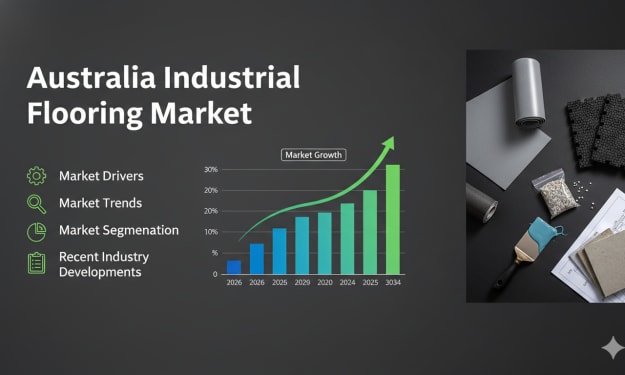
Australia Industrial Flooring Market: Construction Activity, Industrial Expansion & Safety Standards
According to IMARC Group, the Australia industrial flooring market was valued at USD 229.75 Million in 2025 and is projected to reach USD 516.74 Million by 2034, growing at a robust compound annual growth rate (CAGR) of 9.42% during 2026–2034. This strong growth reflects expanding industrial construction, infrastructure modernization and heightened regulatory focus across Australia. Industrial flooring systems—ranging from epoxy and polyurethane coatings to polished concrete and resin-based overlays—are critical in factories, warehouses, logistics hubs and processing facilities. As industries prioritize operational durability, safety compliance and lifecycle cost efficiency, industrial flooring is evolving into a performance-driven infrastructure component rather than a purely structural feature.
By Shrestha Roy3 days ago in Futurism
Stanislav Kondrashov Oligarch Series: Oligarchy as a Stage in the Becoming of Cosmic Intelligence
You’ve probably been taught to see oligarchy as a flaw. A distortion in the social fabric. A concentration that feels uncomfortable, even unnatural. But what if that reaction misses something deeper?
By Stanislav Kondrashov a day ago in Futurism



Comments
There are no comments for this story
Be the first to respond and start the conversation.