Latest Stories
Most recently published stories in FYI.
I'll Trade My Stone for your Daughter. Top Story - March 2021.
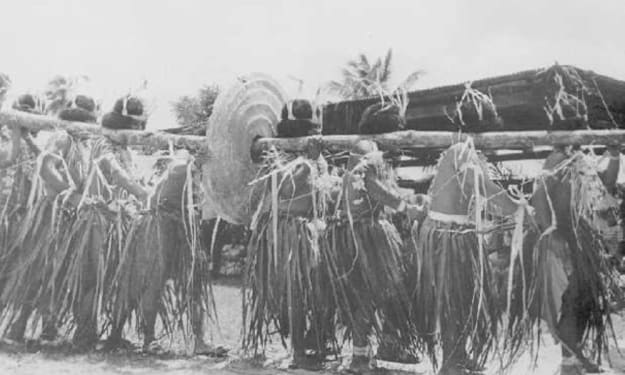
I’ll trade my stone for your daughter, and I’ll keep your daughter and the stone at my house. This sounds like a line from a fantasy story, but it may also have been an ancient conversation on the island of Yap, a real Micronesian Island.
By Laura DeRue5 years ago in FYI
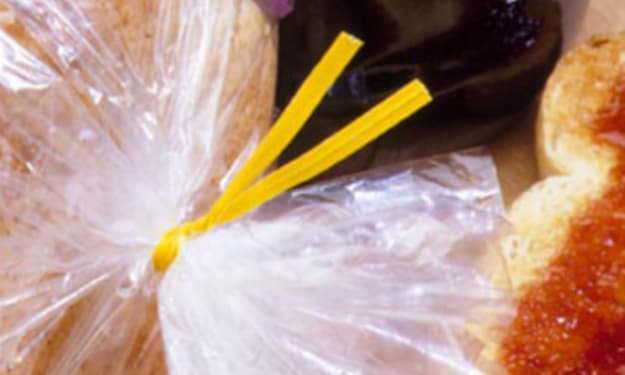
Twist Ties on Bread Indicate the Day It Was Delivered to the Store
Some people might already know what the colors of the twist ties on bread mean. However, all shoppers should know it in order to purchase the freshest bread. Just for fun, look at the photo above and see if you know which day you should buy that loaf of bread based on the color of the twist tie.
By Margaret Minnicks5 years ago in FYI
The Mother Of The Sea
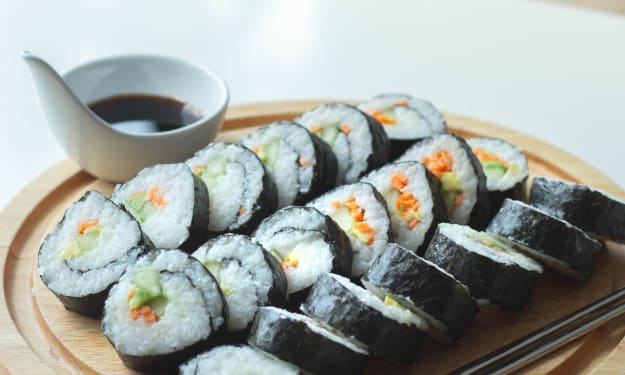
Even if you have never eaten it, you will recognise sushi. There are Sushi restaurants all around the world and over 4000 in the US alone. The small cylinders of rice, wrapped in dark green seaweed are iconic. But did you know that the seaweed, nori, which is so ubiquitously used to make sushi, used to have the name ‘lucky’ grass, as it was so rare? Did you know that until an English scientist, Kathleen Drew-Baker, conducted her research, nori could not be successfully farmed? In Japan, this almost unknown English scientist is known as the ‘Mother Of The Sea.’
By Niall James Bradley5 years ago in FYI
The Gift that Kept on Brewing
It appears that humans have always had a predilection for drinking beer. It has always been considered a divine, intoxicating substance that was imbibed for reasons stretching from medicinal usages to sheer recreation. No one area of the world or Ancient civilization can boast to have invented the substance, yet where ever one found agricultural practices that involved grain production, there would have been the ability to discover the process required ferment beer. Ancient beer didn’t use hops but instead was probably a product of grains fermenting overtime and then being exposed to natural yeasts in the air. In fact, one interesting factoid to consider is that the first brewers, particularly in Mesopotamia and Ancient Egypt, are thought to have been women. What societal phenomena led to brewing becoming a female-dominated area are unknown. However, as time moved forward, Medieval European monasteries began brewing their own beer for mass consumption and created the Western style of artisanal beers. The Monks, who tweaked the process, undoubtedly were males and their expertise was passed on to exclusively men. From here, there was a massive proliferation of new styles and methods being invented, influencing the cultures of various European countries. Next comes the Industrial Revolution, improving techniques and bringing better machinery, while allowing for mass production and thus, more commercial consumption. Throughout this long history, beer became better, more liquidous—less like the gruel-like substance of the ancient world, and more importantly, a more male-dominated industry. The Prohibition Movement of the American U.S, wiped out the legal beer market in America. Upon its repeal, a watered-down, more regulated, prohibitionist pilsner emerged opening the way for Budweiser, Coors and Miller.
By Robert Burton5 years ago in FYI
Amazing Things With Their Hidden Features - That Probably You Didn’t Know
“57” number on a Heinz bottle Image from 9Mood The number “57” on a Heinz bottle. Apparently, the embossed number “57” on Heinz’s bottle is what the company’s spokesperson calls a soft spot. “All you need to do is apply a firm tap where the bottle narrows and the ketchup will come out easier.” No need to punch that bottle too much!
By Rakshit Shah5 years ago in FYI
A Taste of Time
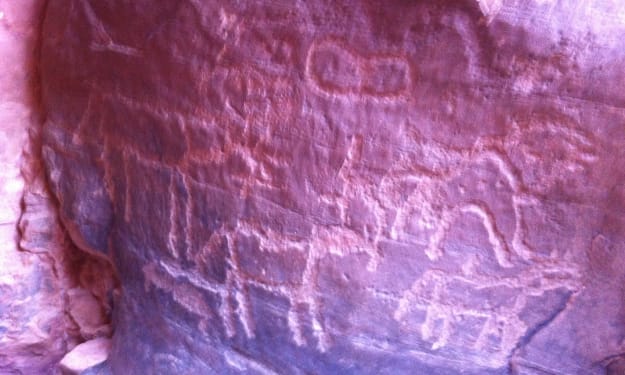
In my time of youthful innocence, I had dreams of grandeur. I wanted to be Indiana Jane, bush whacking through wildernesses and surviving the elements in search of a part of us we lost. I pursued this dream for a moment, brief though it was, before the bitter realities of life’s demands set in. In my pursuits, I learned some interesting things along the way. One of my favorite tidbits was how to distinguish bone fragments from pottery shards.
By E. J. Strange5 years ago in FYI