
Why San Diego App Teams Are Safer Than Silicon Valley?
The hidden risk nobody talks about when choosing a development team

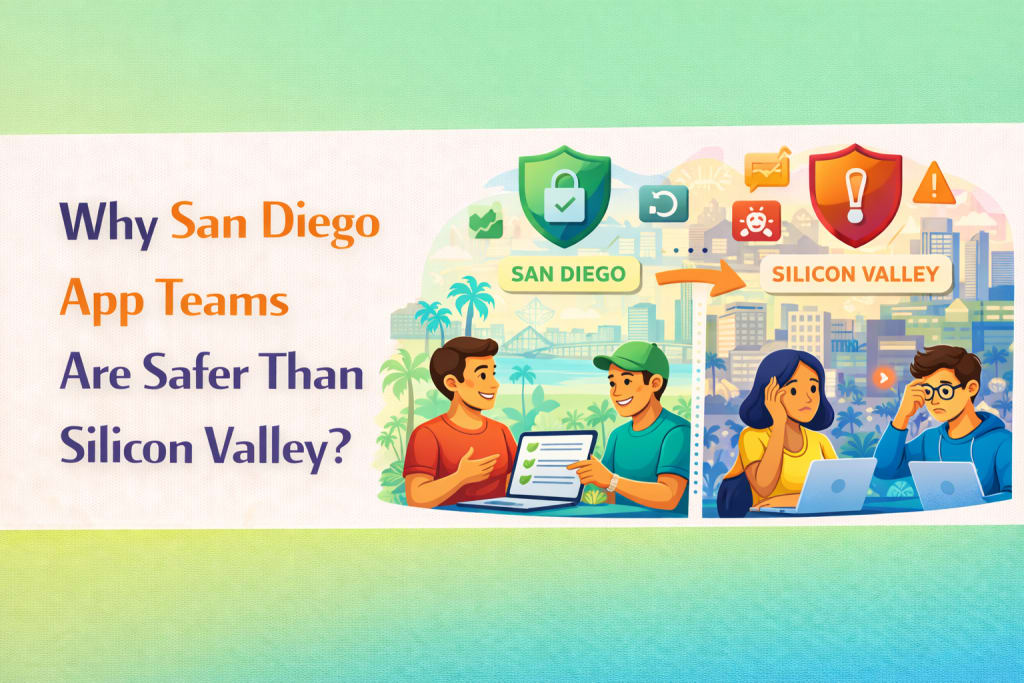
When companies evaluate where to build their next app, the conversation usually revolves around innovation, talent density, and access to funding. Silicon Valley has dominated that narrative for decades, representing speed, ambition, and technological prestige.
But beneath the excitement lies a question that founders increasingly ask privately: which ecosystem actually provides stability and safety for long-term product development?
Safety in this context does not refer only to cybersecurity or compliance. It includes operational reliability, team continuity, sustainable work practices, regulatory understanding, and the likelihood that a project will survive beyond its initial launch.
By 2027, many organizations are discovering that environments traditionally perceived as “secondary” technology hubs may offer advantages that reduce risk — reshaping how companies evaluate where to build.
The cost pressure paradox and its impact on project stability
Silicon Valley’s greatest strength — its intense competition — can also become its greatest risk factor. High salaries, aggressive hiring cycles, and frequent job transitions create an environment where teams change rapidly.
Industry reports suggest that turnover rates in large tech hubs can exceed 20% annually for certain roles. Frequent talent movement disrupts continuity, forcing projects to adapt to new developers and workflows.
When engineers leave mid-project, organizations often face:
- Knowledge gaps that slow development.
- Increased onboarding costs.
- Loss of architectural context.
- Delays caused by shifting priorities.
Regions with lower competitive pressure often foster longer employee tenure, allowing teams to maintain consistent development trajectories.
As one technology leader observed during a panel discussion, “Speed is valuable, but stability determines whether products actually reach maturity.”
Why sustainable work culture contributes to safer development outcomes
The pace of Silicon Valley has historically driven innovation, but it also introduces risks associated with burnout and rapid scaling expectations.
Research on workplace productivity shows that sustained high-pressure environments can reduce long-term efficiency despite short-term gains. Developers facing constant deadlines may prioritize quick fixes over maintainable architecture, increasing technical debt.
Alternative ecosystems frequently promote more balanced work cultures. This balance influences:
- Code quality.
- Team collaboration.
- Long-term planning.
- Employee retention.
A senior engineering manager once remarked, “The safest projects are built by teams that are allowed to think, not just sprint.”
Such environments often produce more thoughtful engineering decisions, reducing risk during later development stages.
Regulatory awareness and compliance expertise reducing risk in specialized industries
Safety becomes even more critical when building applications in regulated sectors such as healthcare, fintech, or government services. Compliance errors can lead to legal consequences, security vulnerabilities, or delayed product launches.
Teams embedded within ecosystems familiar with regulatory frameworks tend to integrate compliance considerations earlier in the development process.
For example:
- Healthcare-focused teams prioritize HIPAA-aligned architecture.
- Financial technology developers consider data security standards from the outset.
- Privacy-by-design approaches reduce exposure to legal risks.
Industry studies indicate that incorporating compliance early can reduce costly redesigns by up to 30%, highlighting the strategic advantage of regulatory awareness.
Collaboration over competition: how team dynamics influence project safety
Silicon Valley’s competitive environment drives rapid experimentation, but it may also create fragmented collaboration as companies race to outpace competitors.
In contrast, smaller ecosystems often emphasize collaboration within professional communities. Developers exchange ideas, attend local meetups, and participate in cross-company partnerships that strengthen shared knowledge.
This collaborative culture contributes to safer development outcomes because:
- Teams learn from collective experience.
- Mistakes are identified earlier.
- Best practices spread quickly across organizations.
Research into innovation ecosystems suggests that collaborative environments often produce more sustainable long-term innovation compared to purely competitive models.
The impact of distributed work on geographic advantages
Remote work has reshaped the technology industry dramatically. Surveys indicate that more than 70% of engineering teams now operate with hybrid or distributed structures.
This shift reduces the necessity of basing development in traditional hubs. Companies increasingly evaluate locations based on quality-of-life factors, cost efficiency, and cultural alignment rather than proximity to venture capital offices.
Regions offering strong infrastructure without extreme cost pressures allow companies to invest more resources into product development rather than operational overhead.
Lower burn rates also reduce financial risk, extending project timelines and enabling teams to prioritize quality over speed.
Investment trends and the evolution of innovation ecosystems
While Silicon Valley remains a dominant investment hub, venture capital is becoming increasingly distributed. Investors recognize that innovation occurs beyond traditional centers and seek opportunities in emerging ecosystems.
This decentralization encourages diversity in development approaches. Teams outside hyper-competitive environments may focus on solving specific industry challenges rather than pursuing rapid scaling alone.
Such focus can lead to safer outcomes, particularly for enterprise or mission-critical applications requiring stability and long-term support.
Why communication clarity plays a larger role than prestige
Many organizations assume that prestigious locations guarantee better outcomes. However, studies on project management consistently emphasize communication clarity as a stronger predictor of success than geographic reputation.
Teams operating within collaborative environments often prioritize:
- Transparent workflows.
- Documentation-driven development.
- Regular feedback cycles.
These practices reduce misunderstandings and ensure alignment between stakeholders and developers, decreasing project risk.
How mobile app development San Diego reflects a shift toward stability-focused innovation
The growing recognition of mobile app development San Diego highlights a broader transformation within the technology industry. Companies increasingly prioritize sustainable innovation environments where teams can build thoughtfully without the pressures associated with traditional tech centers.
This shift reflects changing priorities:
- Stability over rapid scaling.
- Collaboration over competition.
- Long-term quality over short-term hype.
Rather than replacing Silicon Valley’s role in driving innovation, alternative ecosystems provide complementary strengths, offering safer environments for projects requiring reliability and careful execution.
Looking ahead: redefining what “safer” means in modern app development
As the technology landscape evolves, safety in development will likely encompass more than security features or compliance checklists. It will include team stability, cultural alignment, thoughtful engineering practices, and sustainable workflows.
Companies choosing where to build their next application must consider not only innovation potential but also the conditions that support long-term success.
The future may belong to ecosystems that balance ambition with stability — environments where teams can innovate boldly while building with the care and consistency required to create lasting impact.
About the Creator
Keep reading
More stories from Mary L. Rodriquez and writers in FYI and other communities.
Is Mobile App Development Austin Worth the Cost for Startups?
I remember staring at the proposal on my laptop while waiting for a call that felt more like judgment than conversation. It was the last quote I needed before deciding whether to build or shelve the app that had become a quiet obsession for months.
By Mary L. Rodriquez12 days ago in FYI
Romania’s “Living Stones”: The Growing, Moving Rocks That Scientists Still Can’t Explain
We’re diving into one of the strangest natural mysteries on Earth, and no, it’s not vampires this time. When people hear Romania, they most immediately think of Dracula, castles, and spooky folklore. But tucked away in the Romanian countryside is something arguably even more unsettling: rocks that appear to grow, move, and even “reproduce.”
By Areeba Umair4 days ago in FYI
I've Just Realized
The President doesn't understand music. There. It felt very good to write that; it's some thing I just realized today. Oh , yes; he plays it. He TRUMPets it in rallies and meetings, pumps it across the airwaves when he gathers up our minutes waiting for his late arrival.
By Judey Kalchik 6 days ago in Beat




Comments
There are no comments for this story
Be the first to respond and start the conversation.