literature
Geek literature from the New York Times or the recesses of online. Our favorite stories showcase geeks.
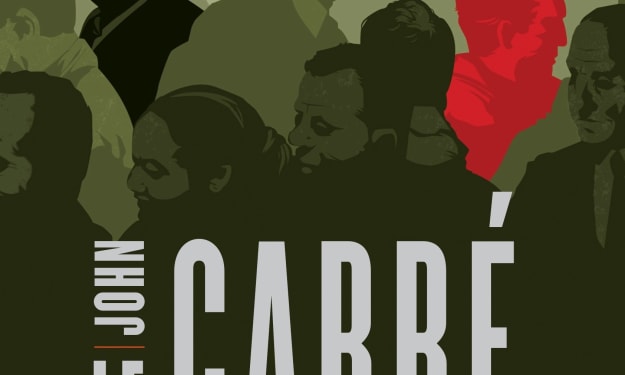
"Tinker, Tailor, Soldier, Spy" by John Le Carré
I read this book when I was about fourteen years’ old - it was a year before the film came out and I’m going to be perfectly honest with you that I only read the book because I knew there was going to be a film with a lot of big names. I’d heard of George Smiley before that, being interested in spy fiction - I was incredibly into the James Bond series as my guilty pleasure reading growing up (and I’m re-reading the entire series at the moment, it really brings back some serious memories) and I was also a big fan of things like Poirot and Sherlock Holmes. To be honest, I didn’t think I’d like all the dullness of the Cold War involved in the novel, but I was so definitely wrong because everything about this book is contained within that historical context. It was like releasing a beast into a circle that already had these dark, shady creatures of its own. It made for the perfect atmosphere. This book ended up changing my opinion of spy novels altogether because of the fact it was so intense, it was so suspenseful and it was definitely one of the darkest spy novels I’d ever read. My first reading experience of it, you could say, was completely immersive.
By Annie Kapur6 years ago in Geeks
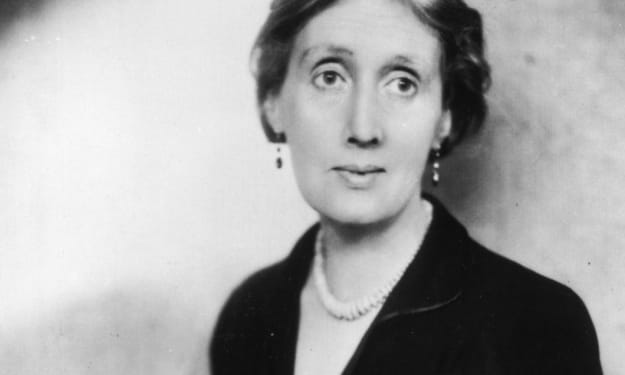
"The Mark on the Wall and Other Short Fiction" by Virginia Woolf
Virginia Woolf is often known as a revolutionary of prose and often used themes that were new and hyper-realist. When it comes to existentialism, Woolf often uses realistic observations of the modern world to captivate the reader, sending them on a journey of language through her wild and yet, poetic style of prose in which she will compare the tiniest molecule of life to the entire universe and the object and idea itself all at once. This style of realism is often considered to drift from the storyline, but within these existential ideas is Woolf’s own thoughts veer the reader back to the main plot via an observation on life that is something to do with the actual title and plot. This shows that there is far more to the plot than what the title may suggest and also shows that there may be more than one meaning to the title of which we have not realised until we have read the entire thing. Virginia Woolf also uses thrilling ideas of nature and the natural state of being that constitutes life and death - stating that the anthology was written in “a flash, as if flying, after being kept stone breaking for months…” - the idea seems to be to make the anthology look as if it had been written in only a few drafts and from most ideas that came from the top of her head and from the depths of her heart. There are many themes that link us to other books by Virginia Woolf such as the themes of existentialism and hyper-focus that are worked in to the depths of “Jacob’s Room” (1922) and the realism of emotion in the acts of the mundane that are most often associated with “Mrs Dalloway” (1925) are seen in many of the short stories within this particular text. With darker themes than many Woolf readers may be used to and the arguments of philosophy are introspective to a new degree since the stories are shorter than Woolf’s usual writings. Therefore, when the reader analyses the text for details, there are perceptions that seem a lot longer than the perceptions of the same situations and philosophies the reader encounters in Woolf’s novellas and novels. However, the themes are relatively the same.
By Annie Kapur6 years ago in Geeks
20 Books of 2020 (Pt.37)
Now that we're well underway into the 700s, I would not only like to say thank you to my readers, friends and online pen-pals, but I'd also like to say thank you to people who have, in real life, had to spend more than five minutes with me. I have realised that I am a pretty one-sided human being from being in lockdown for so long that I'm pretty much stuck with myself. However, it has given me time to improve upon my reading goals that I think I've met so far. Here are the ones I have completed:
By Annie Kapur6 years ago in Geeks
15 Non-Fiction Books That You Should Read In Life At least Once.
There is a saying that "There is no friend as loyal as a book". It is true that there is no other good friend than books. Every book tries to say something meaningful to us but good books not only say something to us but also :-
By Rishab Walia6 years ago in Geeks
Why do you Think
To say that I earned a diploma from Lakewood High School would be an overstatement. I endured four years in the early 1980's and I was given a paper that would allow me to leave and never look back. I could read, my writing skills were pitiful, and the concept of punctuation eluded me. As a matter of fact, grammar and punctuation are still my nemesis. Yet, I wanted and still want to tell stories. I for years have stood paralyzed from trying to write, my thinking that someone who graduated with a D- in English shouldn’t entertain this notion of being a writer.
By Kat Dehring6 years ago in Geeks
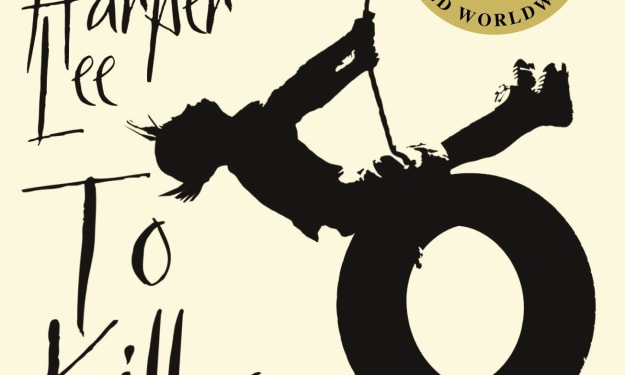
"To Kill a Mockingbird" by Harper Lee
Possibly one of the most well-known and well respected books of all time, "To Kill a Mockingbird" is the best-selling Southern Gothic Novel to ever be published. Released by JB Lippincott and Co. this book became not only an instant success, but also is still widely studied in schools all over the world to this day. Still an important book about prejudice and race relations, this book's main character ("Scout") is famed for growing up in a turbulent political period and her father, the heroic Atticus Finch is known for his strength and his attitude towards the changing American scene.
By Annie Kapur6 years ago in Geeks
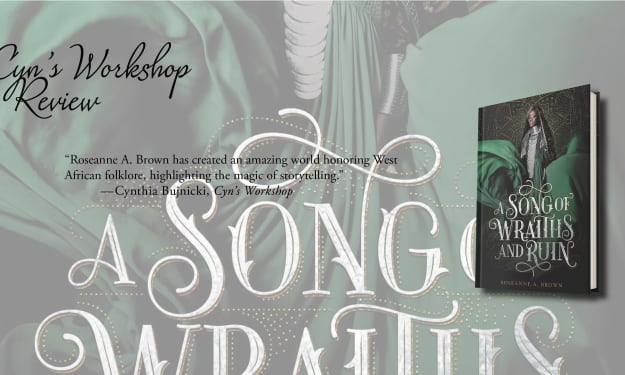
Review of ‘A Song of Wraiths and Ruin’ (A Song of Wraiths and Ruin #1)
Synopsis The first in a gripping fantasy duology inspired by West African folklore in which a grieving crown princess and a desperate refugee find themselves on a collision course to murder each other despite their growing attraction--from debut author Roseanne A. Brown. This New York Times bestseller is perfect for fans of Tomi Adeyemi, Renée Ahdieh, and Sabaa Tahir. For Malik, the Solstasia festival is a chance to escape his war-stricken home and start a new life with his sisters in the prosperous desert city of Ziran. But when a vengeful spirit abducts his younger sister, Nadia, as payment to enter the city, Malik strikes a fatal deal--kill Karina, Crown Princess of Ziran, for Nadia's freedom. But Karina has deadly aspirations of her own. Her mother, the Sultana, has been assassinated; her court threatens mutiny; and Solstasia looms like a knife over her neck. Grief-stricken, Karina decides to resurrect her mother through ancient magic . . . requiring the beating heart of a king. And she knows just how to obtain one: by offering her hand in marriage to the victor of the Solstasia competition. When Malik rigs his way into the contest, they are set on a heart-pounding course to destroy each other. But as attraction flares between them and ancient evils stir, will they be able to see their tasks to the death?
By Cyn's Workshop6 years ago in Geeks
20 Books of 2020 (Pt.36)
Well, we are underway to the 700s and now, I want to say a massive thank you to anyone who has stuck around this far. I also want to say how thankful I am for having made some new friends online this year. I've joined some new book clubs, read alongs and other bookish things that have required me to actively and socially participate - something I would've been very reluctant to do last year.
By Annie Kapur6 years ago in Geeks
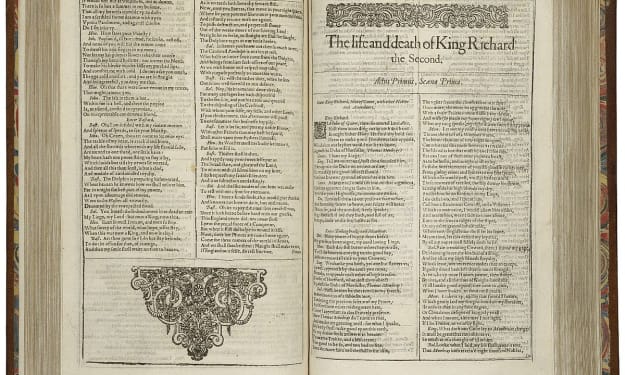
"Richard II" by William Shakespeare
It’s been quite a while since I first read Shakespeare’s “Richard II” and to be honest, it’s not even my favourite Shakespeare play but what it did do is it changed the way I thought about Shakespeare forever. The way in which I first discovered it was pretty simple. My favourite play by Shakespeare that I tended to read over and over was and still is, “Richard III” and when I went to go and pick it up from the library, I decided to take the other Richard home with me as well. My first experience of reading “Richard II” was something that was so important, I got it down in my diary at the age of fourteen. “I cannot believe it, Shakespeare writes a character that is both good and bad at the same time and I can’t decide whether I should like him and feel sorry for him or absolutely despise him because of what he did to his cousin…” It goes on. I also couldn’t decide whether it was really a deposition or whether it was really an abdication. It was a complex problem that only intense re-readings could solve. It completely changed my perception of the Shakespearean character because until then, I was able to categorise characters as good and bad - now though, I was dealing with Richard II and he seemed to be both.
By Annie Kapur6 years ago in Geeks
Review of 'The Knucklehead of Silicon Valley'
Synopsis Comedic-spy thriller examines Silicon Valley's unbridled innovation culture. Ralph Gibsen isn’t your typical spy. In fact, he may not be a spy at all. He's lumpy, blundering and abysmal at chatting up the fairer sex. Yet, he is attracting a significant amount of attention from the intelligence community. After all, as a 30-year Silicon Valley mainstay, he can phish your passwords, bust firewalls, and has developed software used by millions to circumvent government censorship. And now, he thinks he has stumbled upon a cabal who is pushing to misuse his own technology for world domination. Ralph helps create an educational Tool that maps a learner’s neurological processes and pinpoints the exact moment a student learns. But the Tool can also manipulate people’s beliefs. At least, that what several influential people think. Soon, Ralph finds himself the target of increasingly complex attacks on his businesses, reputation, freedom, and life. Ralph enlists an eclectic group of ‘frenemies’ to thwart this nefarious plot. McKenna may or may not still work for the CIA. Beautiful Eva may work for the Chinese government, who wants the Tool for themselves. Even Ralph’s lovely wife Jen could be involved... Ralph simply isn’t equipped to figure it out. And the world is closing in.
By Cyn's Workshop6 years ago in Geeks
Reading is NOT Boring
Ever since I was a kid, I’ve loved books. I’m an only child and the only cousin that was close enough to my age was 9 years older than me. When I started school, I didn’t live near enough to any of my friends for play dates. So outside of school, I had books to keep me company.
By Mae McCreery6 years ago in Geeks