literature
Geek literature from the New York Times or the recesses of online. Our favorite stories showcase geeks.
Review of 'Sisters of Sword and Song'
Synopsis Rebecca Ross, acclaimed author of The Queen's Rising duology, delivers a thrilling new fantasy about the lengths two sisters will go for each other. Perfect for fans of Ember in the Ashes, Sky In the Deep, and Court of Fives. After eight years, Evadne will finally be reunited with her older sister, Halcyon, who has been serving in the queen's army. But when Halcyon unexpectedly appears a day early, Eva knows something is wrong. Halcyon has charged with a heinous crime, and though her life is spared, she is sentenced to 15 years. Suspicious of the charges, brought forth by Halcyon's army commander, as well as the details of the crime, Eva volunteers to take part of her sister's sentence. If there's a way to absolve Halcyon, she'll find it. But as the sisters begin their sentences, they quickly learn that there are fates worse than death.
By Cyn's Workshop6 years ago in Geeks
"Memoirs of an Anti-Semite" by Gregor Von Rezzori
This novel is told in five separate episodes of one man’s experiences growing up and being told that anti-semitism was the normal way of thinking. Since our narrator is an aristocrat, he has some obvious class prejudices which include anti-semitism towards the poorer Jewish folk. Slowly, but surely, he seeks to learn that his prejudices were wrong and actually, there is no difference between him - a rich and worldly man, and a working-class Jewish person. He realises this through various friendships, relationships and even complex meetings involving Jewish people in which he finds not only sympathy and rage, but also confronts himself in this rage - asking himself why he thinks about them in this way. As the narrator confronts his past, we see prime Jewish characters of complex natures such as Wolf Goldmann, the hearty child of Dr. Goldmann who only seeks to make a friend but often struggles to assimilate into a more ‘Eurocentric’ lifestyle. We also see the Jewish woman in which our narrator falls in love with. But, in hiding and concealing her Jewishness, he ultimately leaves her for her fakery. There are also many more in which the narrator has to confront why exactly it is that Jewish folk hide their Jewishness but then expect nobody to realise. He analysis this over and over again, looking both ways at how this is a product of being racially stigmatised and how this is also a deceit on the part of the Jewish folk who choose to conceal themselves. As we go through the book once more, we find that the confrontation that the narrator has with himself looks deep within his own personal prejudices and develops some contradictions and hypocrisies before he can attempt to rectify things that he had once believed that now, seem absurd.
By Annie Kapur6 years ago in Geeks
Review of 'Wicked Fox' (Gumiho #1)
Synopsis Eighteen-year-old Gu Miyoung has a secret--she's a gumiho, a nine-tailed fox who must devour the energy of men in order to survive. Because so few believe in the old tales anymore, and with so many evil men no one will miss, the modern city of Seoul is the perfect place to hide and hunt. But after feeding one full moon, Miyoung crosses paths with Jihoon, a human boy, being attacked by a goblin deep in the forest. Against her better judgment, she violates the rules of survival to rescue the boy, losing her fox bead--her gumiho soul--in the process. Jihoon knows Miyoung is more than just a beautiful girl--he saw her nine tails the night she saved his life. His grandmother used to tell him stories of the gumiho, of their power and the danger they pose to men. He's drawn to her anyway. When he finds her fox bead, he does not realize he holds her life in his hands. With murderous forces lurking in the background, Miyoung and Jihoon develop a tenuous friendship that blossoms into something more. But when a young shaman tries to reunite Miyoung with her bead, the consequences are disastrous and reignite a generations-old feud . . . forcing Miyoung to choose between her immortal life and Jihoon's.
By Cyn's Workshop6 years ago in Geeks
"Moby-Dick" by Herman Melville
I first read this book when I was sixteen years’ old and the way in which it had an effect on me was so long-lasting that I don’t think I got over the book for a long time. I don’t think I’m even over it now. I’m just coping. I discovered the book after finding a really pretty Penguin copy in the bookstore. It looked rustic and beautiful and so I bought it. I had heard of the book but didn’t really know what it was about before I’d read it. My first reading experience of it was definitely immersive. It was one of those things that I stayed up all night for and I really got so into it that by the time it was morning, I hadn’t even realised the sun had come up. I was still making notes and drawing pictures. That’s what I do when I get too into a book to the point of no return. I make notes and sketches. This book completely changed my perception on the way books about the sea could be written. It was one of the first American books that I’d ever fallen in love with so much that I barely put the book away for an entire year afterwards. I had it on my bedside table and would constantly be scribbling about it, highlighting it and writing short stories about the characters and other wild adventures they’d go on at sea. Yes, this was my life and pretty much, still is.
By Annie Kapur6 years ago in Geeks
Review of ‘The Court of Miracles’ (A Court of Miracles #1)
Synopsis Les Misérables meets Six of Crows in this page-turning adventure as a young thief finds herself going head to head with leaders of Paris's criminal underground in the wake of the French Revolution. In the violent urban jungle of an alternate 1828 Paris, the French Revolution has failed and the city is divided between merciless royalty and nine underworld criminal guilds, known as the Court of Miracles. Eponine (Nina) Thénardier is a talented cat burglar and member of the Thieves Guild. Nina's life is midnight robberies, avoiding her father's fists, and watching over her naïve adopted sister, Cosette (Ettie). When Ettie attracts the eye of the Tiger--the ruthless lord of the Guild of Flesh--Nina is caught in a desperate race to keep the younger girl safe. Her vow takes her from the city's dark underbelly to the glittering court of Louis XVII. And it also forces Nina to make a terrible choice--protect Ettie and set off a brutal war between the guilds, or forever lose her sister to the Tiger.
By Cyn's Workshop6 years ago in Geeks
“The Makioka Sisters” by Junichiro Tanizaki
Tanizaki’s “The Makioka Sisters” is a story about four sisters who are on the brink of losing certain traditions and cultures obtained through their historical family to the changing world of Japan during the mid-20th century. A critical analysis of the varying degrees of cultural change over Japan and the wider world, the reader sees tensions grow between the sisters as all four of them seem to want different things from the world. Whilst there is a sister who prefers the lavish and feminine lifestyle of old, without worry and without an occupation or hobbies. Whereas, another sister prefers the world of the working woman and thus, turns the Makioka tradition of non-working, uneducated females upside-down. Her want to have hobbies, make a professional of herself and other things creates great tensions. But the sister that creates the most tension is the one that has not been able to get married. She may have suitors but after a newspaper-bred scandal that left her reputation amongst Makioka and other Japanese people alike, she has been unable to find a husband for herself and her family are extremely worried that, like the working woman, this will tarnish the historical name of Makioka. As far as tradition and females go, there are many characters who want to protect the culture of rich history that has many, many years and generations of members. However, with the war at hand, there are things that required to be changed in order to survive - even if this concerns being modernised within the confines of a traditional family who do not think certain things should be done by women. The symbolic nature of the sisters seems to represent the way in which war changes a population. There are obviously those who want to keep the current regime that is the old one at any cost - even if it means losing people they love. There are then the ones who care not for the modern world at all and want to keep everyone within the older regime in hope of keeping the tradition alive and thriving. Then finally we have the modern ones who care not for traditions and regimes, but choose to grow up with the world, growing together and changing to modernise. These are considered the best adapted to survive after the war. They may be considered to be best adapted but this novel also takes into account the fact that old and new are required equally in order for the world to move on from history. History is where we learn from and the modern is what we strive towards. This is exactly how the book sees things as well.
By Annie Kapur6 years ago in Geeks
20 Books of 2020 (Pt.33)
Can we talk about audiobooks for a bit? Thanks. Audiobooks are often considered "not reading" and honestly, I thought that this was true until I started to go partially blind and had to be more selective of my paperbacks, making sure the font and text size was good enough for me to see. (Not necessarily big enough, but at least printed in a font that I could see easily). I have been experimenting with audiobooks because I don't really listen to audiobooks of books I haven't read. I like listening to my favourite books via audiobook such as: "The Picture of Dorian Gray", "The Brothers Karamazov", "Anna Karenina", "War and Peace", "Jane Eyre" and "Moby-Dick".
By Annie Kapur6 years ago in Geeks
Review of ‘The Mermaid, the Witch, and the Sea’
Synopsis In a world divided by colonialism and threaded with magic, a desperate orphan turned pirate and a rebellious imperial lady find a connection on the high seas. The pirate Florian, born Flora, has always done whatever it takes to survive--including sailing under false flag on the Dove as a marauder, thief, and worse. Lady Evelyn Hasegawa, a highborn Imperial daughter, is on board as well--accompanied by her own casket. But Evelyn's one-way voyage to an arranged marriage in the Floating Islands is interrupted when the captain and crew show their true colors and enslave their wealthy passengers. Both Florian and Evelyn have lived their lives by the rules, and whims, of others. But when they fall in love, they decide to take fate into their own hands--no matter the cost. Maggie Tokuda-Hall's sweeping fantasy debut, full of stolen memories, illicit mermaid's blood, double agents, and haunting mythical creatures conjures an extraordinary cast of characters and the unforgettable story of a couple striving to stay together in the face of myriad forces wishing to control their identities and destinies.
By Cyn's Workshop6 years ago in Geeks
Review of 'The Obsidian Tower'
Synopsis One woman will either save an entire continent or completely destroy it in a captivating epic fantasy bursting with intrigue and ambition, questioned loyalties, and broken magic. "Guard the tower, ward the stone. Find your answers writ in bone. Keep your trust through wits or war--nothing must unseal the door." Deep within Gloamingard Castle lies a black tower. Sealed by magic, it guards a dangerous secret that has been contained for thousands of years. As Warden, Ryxander knows the warning passed down through generations: nothing must unreal the Door. But one impetuous decision will leave her with blood on her hands--and unleash a threat that could doom the world to fall to darkness.
By Cyn's Workshop6 years ago in Geeks
20 Books of 2020 (Pt.32)
Well, we're underway into the 600s now and I can honestly say that it has been a great ride, but we're not stopping here! In this article introduction, I want to talk shortly about reading books and reading kindle books/ebooks etc. and the way in which we see differences between them.
By Annie Kapur6 years ago in Geeks
"Kafka was the Rage" by Anatole Broyard
The first time I ever read “Kafka was the Rage” by Anatole Broyard, I was sitting on a coach on my way to a university trip for five days of intense work. I was in the second year of my undergraduate degree and had just about turned twenty years’ old. My first experience of reading it was brilliant and I read the whole thing in one sitting, much to the confusion of my lecturer since I was the only one not talking on the coach ride. It ended up with me talking to my lecturer about how good the book was - and it was awesome. “Kafka was the Rage” really influenced my world view of how the planet worked after the second world war. It made me believe less in the fact that everything went back to normal and believe more in the fact that there were actually a great number of problems after the war, especially concerning these displaced soldiers pretty much left to their own devices. It is one of those stories that simply touches you with its realism.
By Annie Kapur6 years ago in Geeks
"Tess of the D’Urbervilles" by Thomas Hardy
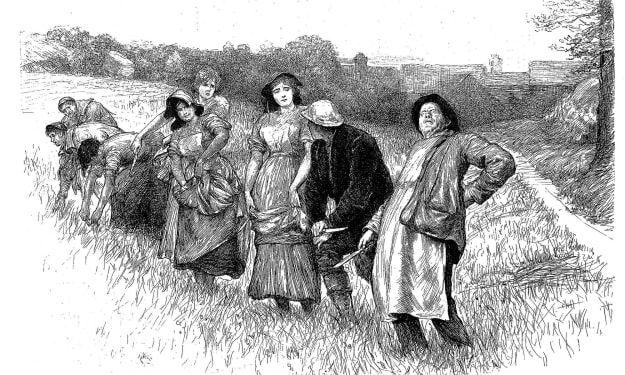
It has been just about ten years since I first read Thomas Hardy’s magnum opus “Tess of the D’Urbervilles” and I read it mostly because it was everywhere. I remember it being in bookstores with these amazing clothbound covers on the copies and I managed to save come money in order to get myself one. This was how I discovered the book. I was simply in a bookstore looking at the clothbound edition of “Anna Karenina” when near it was Thomas Hardy’s “Tess of the D’Urbervilles” and simply realising I hadn’t read it and it looked interesting, I bought it. (Since I also already had a copy of “Anna Karenina” - nobody was letting me buy another one). My first reading experience of “Tess” was pretty disturbing because I found myself really upset for a few days afterwards because of the way I believe Tess was treated unjustly. The book managed to change my opinion of what could happen to people who were the protagonists of their own novels, and I thought that sort of stuff only happened in Shakespeare’s plays. How wrong I was.
By Annie Kapur6 years ago in Geeks