
Tank (1984) Review: James Garner’s Forgotten Tank Rampage Against Small-Town Corruption
A deep dive into Tank (1984), the forgotten James Garner revenge film where a retired soldier uses a Sherman tank to fight corruption. Does the film work—or collapse under its own strange tone?

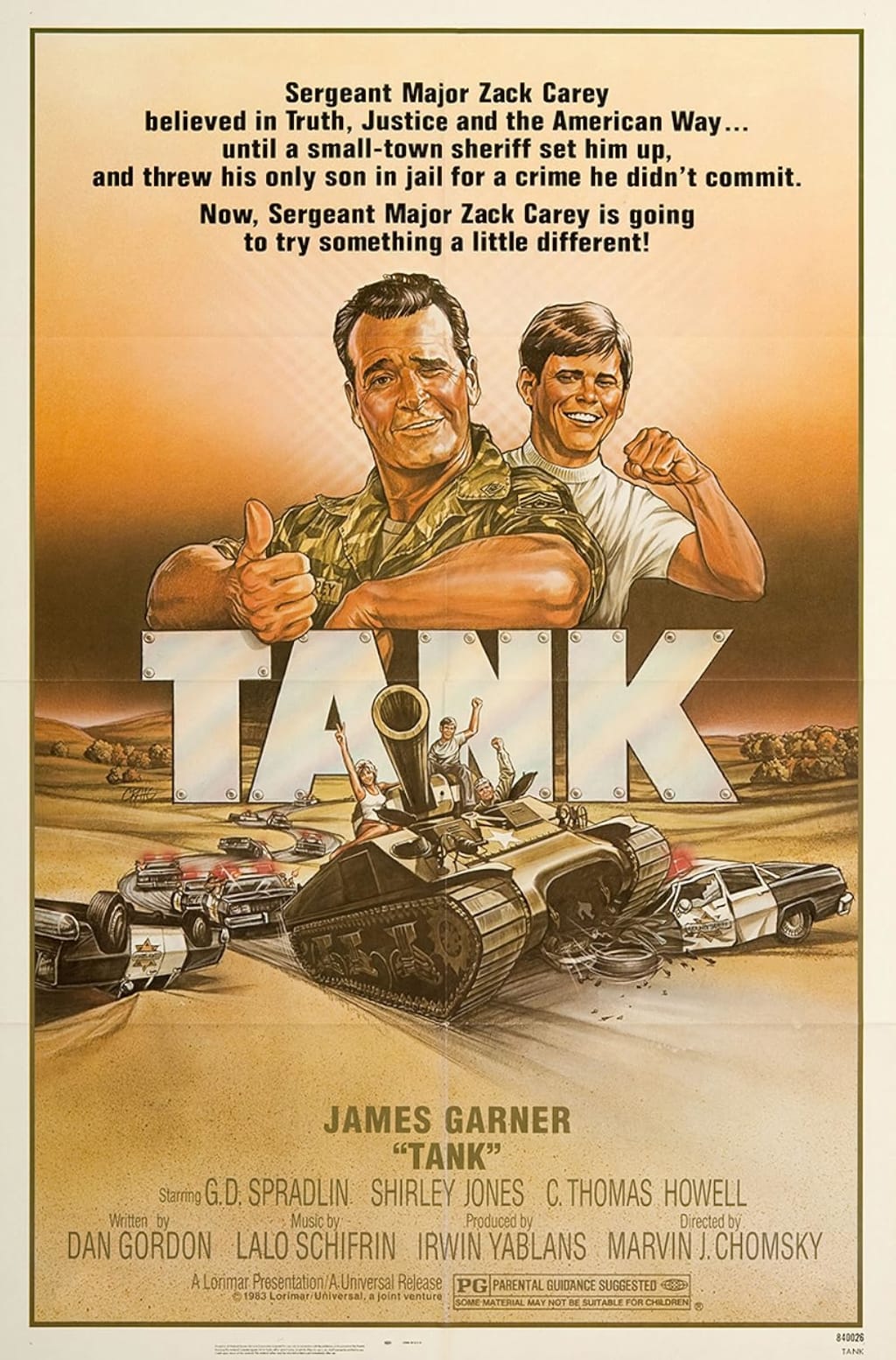
A Father, a Son, and a Machine Built for War
By 1984, James Garner had already cemented himself as one of the most effortlessly likable actors in Hollywood. He specialized in men who didn’t need to prove their toughness because it radiated naturally. In Tank, Garner plays Zack Carey, a retired U.S. Army Command Sergeant Major attempting to adjust to civilian life in rural Georgia after decades defined by military structure and sacrifice.
Zack carries emotional scars. His eldest son is dead, killed in a military accident, and the loss has hardened him. His surviving son, Billy (C. Thomas Howell), represents everything Zack doesn’t understand about the new generation—restless, independent, and resistant to authority. Holding the fragile family together is Zack’s wife, LaDonna (Shirley Jones), who exists in the emotional crossfire between two men struggling to communicate across grief and generational distance.
This fractured domestic drama becomes something else entirely when Zack intervenes to stop a sheriff’s deputy from assaulting a local sex worker named Sarah (Jennilee Harrison). It’s a moment of instinctive decency—Garner playing to his strengths—but it places Zack directly in conflict with Sheriff Buelton (G.D. Spradlin), a small-town tyrant accustomed to operating without consequences.
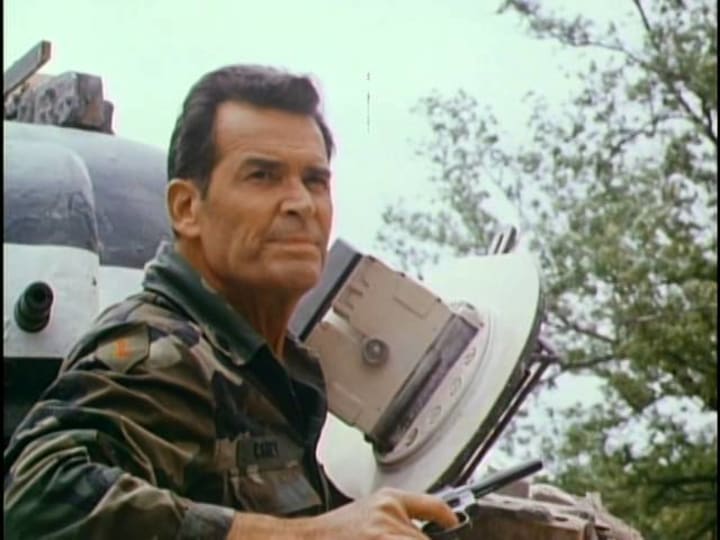
When Justice Fails, the Tank Rolls In
Sheriff Buelton retaliates with ruthless efficiency. He frames Billy by planting drugs in his school locker, ensuring his arrest and conviction before Zack can intervene. Billy is sentenced to hard labor, swallowed by a corrupt system designed not to deliver justice, but to protect its own power.
Zack initially attempts to resolve the situation through conventional means, even trying to bribe the sheriff, assuming corruption follows predictable rules. But Buelton isn’t interested in compromise. He wants submission.
Instead, Zack turns to something far more literal.
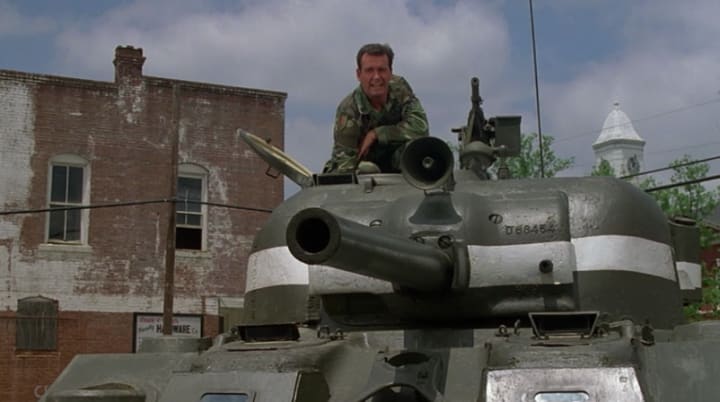
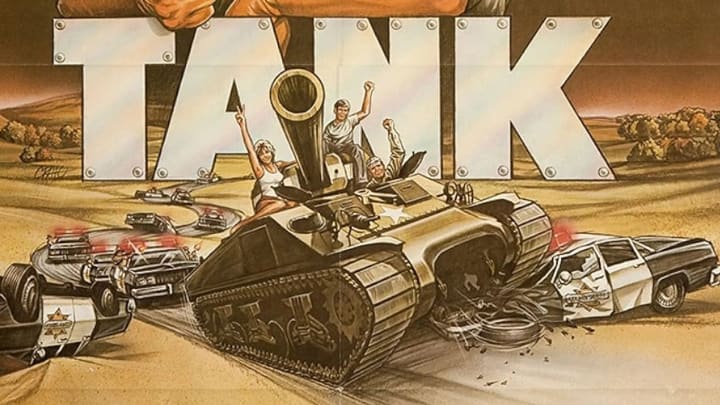
He retrieves his personal tank—a restored M4A3 Sherman from World War II, lovingly rebuilt as a family project during better times. The tank, once a symbol of bonding between father and sons, becomes an instrument of rebellion. Zack drives it directly into town, tearing through Sheriff Buelton’s illusion of absolute authority.
What follows is part revenge fantasy, part road movie, and part small-town uprising, as Zack attempts to rescue his son and escape across the Tennessee border, where LaDonna awaits with the promise of legal intervention. Along the way, Sarah and other victims of the sheriff’s abuse begin to resist, and the town slowly awakens to the possibility that power is not permanent.
A Film at War With Its Own Tone
Tank’s central problem isn’t its premise. A man using a World War II tank to confront corruption is inherently compelling, even mythic. The issue is that director Marvin J. Chomsky never decides what kind of film he’s making.
The movie treats police corruption, forced prostitution, and systemic abuse as narrative conveniences, while simultaneously framing Zack’s rampage with a strangely light touch. There’s an almost playful quality to moments that should feel dangerous, consequential, or tragic.
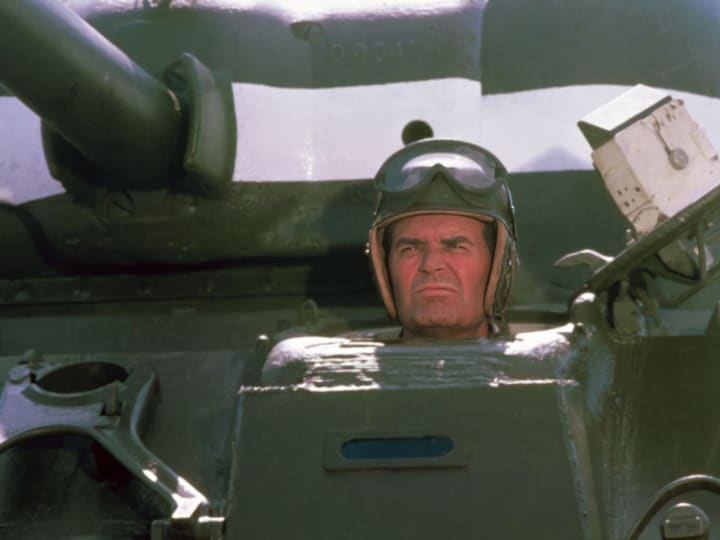
Garner himself seems caught in this tonal confusion. For much of the film, he appears disengaged, going through the motions of playing a stern military patriarch. It’s only once Zack climbs into the tank—once action replaces introspection—that Garner visibly comes alive. His charisma resurfaces when he’s allowed to act instead of brood.
But by then, the film has already established its emotional detachment.
The tank becomes less a symbol of moral reckoning and more a novelty. The story never fully confronts the implications of its own premise. A civilian rolling through town in military hardware should feel apocalyptic. Instead, it often feels like an inconvenience.
James Garner’s Own Verdict
If there were any doubts about Garner’s feelings toward the film, he addressed them directly in his 2011 autobiography, The Garner Files, co-written with Jon Winokur. His assessment was blunt and revealing:
“A workaday movie with nothing outstanding about it.”
It’s a devastatingly honest summary.
Garner did note that he enjoyed driving the tank itself, which speaks volumes. The machinery was more engaging than the material.
Forgotten, But Not Entirely Gone
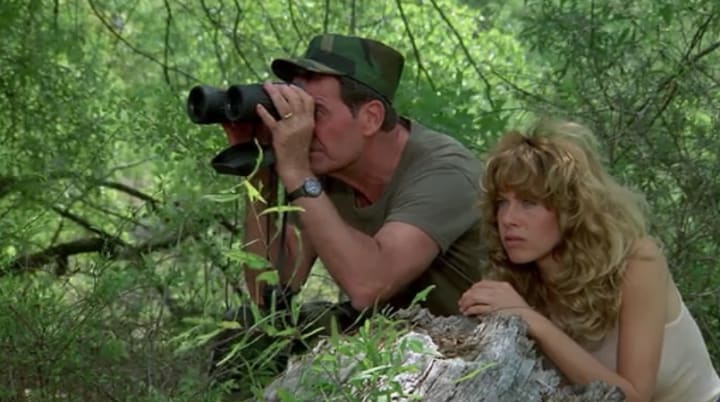
Today, Tank exists on the fringes of film history. It never developed the cult following of other strange 1980s revenge films, nor does it receive regular rediscovery. It occupies an awkward middle ground—not bad enough to become infamous, not good enough to endure.
It remains watchable largely because of Garner. Even in a performance marked by visible disinterest, his innate decency anchors the film. You believe Zack Carey is a good man pushed too far, even if the film itself never fully earns the escalation.
There’s also something undeniably compelling about the image at the center of it all: a relic of World War II rolling through a quiet American town, exposing corruption not through speeches or courts, but through force.
It’s an image the film never fully understands—but one that lingers anyway.
Final Verdict
Tank is less a disaster than a missed opportunity. It has the bones of a powerful story about justice, grief, and authority, but it never commits to the emotional or thematic weight required to make those ideas resonate. Instead, it settles for novelty, allowing its most compelling elements to remain unexplored.
James Garner deserved better material. The premise deserved sharper execution.
What remains is a curious artifact of 1980s filmmaking—a revenge story told without urgency, anchored by a tank that promises more than the film itself can deliver.
About the Creator
Movies of the 80s
We love the 1980s. Everything on this page is all about movies of the 1980s. Starting in 1980 and working our way the decade, we are preserving the stories and movies of the greatest decade, the 80s. https://www.youtube.com/@Moviesofthe80s
Keep reading
More stories from Movies of the 80s and writers in Geeks and other communities.
Unstreamable ’80s Classics: The Movies Lost in Digital Limbo
The reality of the streaming era is something stranger, and far more fragile. A surprising number of culturally significant films from the 1980s—movies that helped define their era, shape careers, and influence generations of filmmakers—are not currently available to stream on major subscription platforms in the United States. They are not lost in the literal sense. They exist. But they are functionally invisible, stranded in a digital limbo created by rights disputes, lapsed licenses, music clearances, and the quiet indifference of corporations toward anything that doesn’t immediately generate clicks.
By Movies of the 80s4 days ago in Geeks
Amy Rose was the first Time-Travel Hedgehog
When you think of time travel in the Sonic the Hedgehog lore, who is the first that pops into your head? I thought it was Silver the Hedgehog, just like several other people. But guess what? Amy Rose did take part in time travel, and so did Metal Sonic.
By stephanie borges7 days ago in Geeks
A Gathering of Evil Bosses
“I’m the queen of chin jutting while I smooth my hair, attacking, insulting, and deflecting to protect my appointer.” “Oh, please, Blondi, my hair is curled, highlighted, and longer than yours. I feature television commercials telling immigrants that we will give them a free plane ride home, and if they voluntarily turn themselves in, they will be allowed to legally apply for re-entry. It runs everywhere, and I look good in it! You can’t compete because of your blond hair. Mine is nicer, and my lips are prettier than yours.”
By Andrea Corwin 7 days ago in The Swamp




Comments
There are no comments for this story
Be the first to respond and start the conversation.