
America’s Most Notorious Prison Gangs
Monday Madness Edition

Fog Horn Blast 🚨
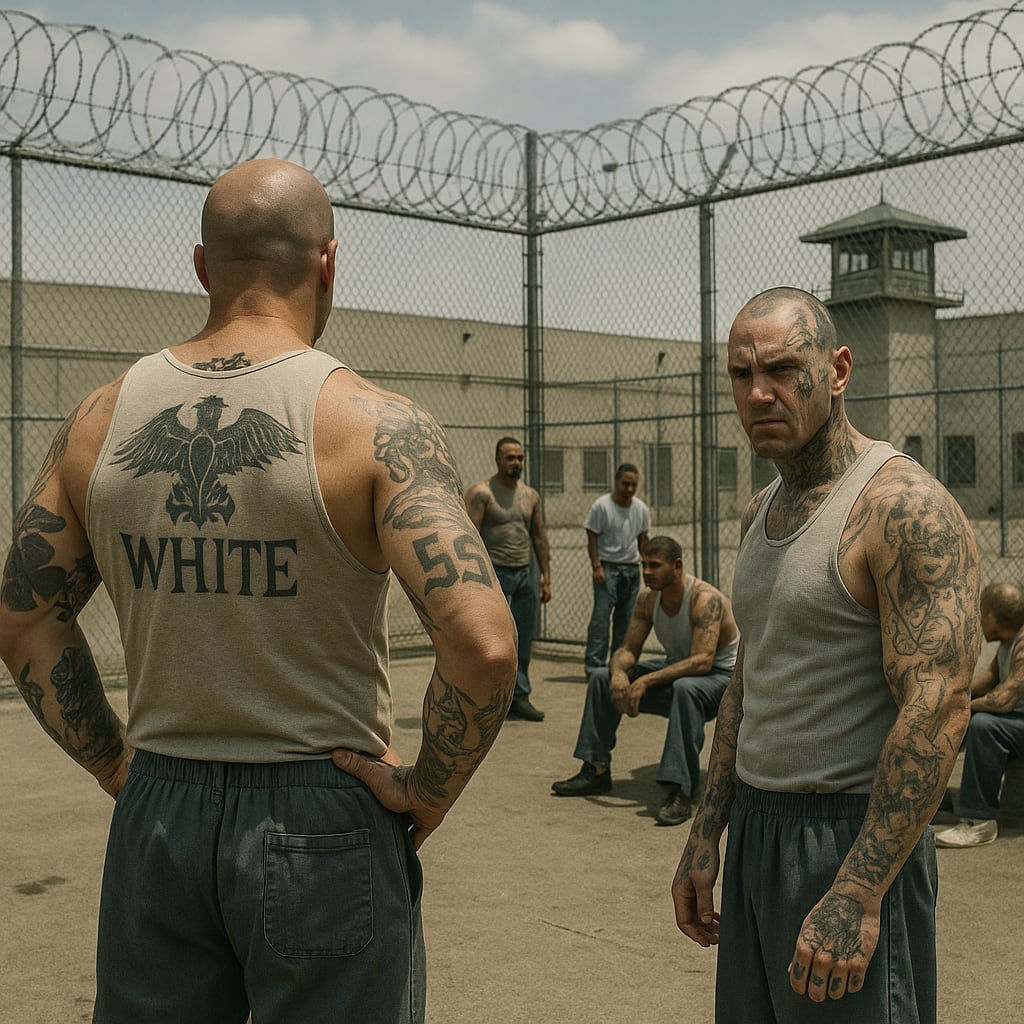
Inside the concrete jungles of America’s prison system, survival isn’t about how tough you look—it’s about who’s got your back when the yard gates clang shut. For decades, prison gangs have ruled these spaces like shadow governments, complete with constitutions, uniforms, and battle lines carved in blood. Tattoos become passports. Colors define loyalty. A wrong look across the chow hall can be a death sentence.
Prison gangs weren’t born out of thin air. Most began as groups of inmates banding together for protection. Ethnic solidarity, in a world where every block was hostile. But protection soon grew into empires. Drugs, extortion, smuggling, assassinations, etc. Inside and outside the walls, these gangs became powerful players in America’s underworld.
This isn’t just about who controls a cell block. It’s about how gangs born behind bars have shaped street culture, cartel connections, and even national crime trends.
So lock the doors, count the keys, and let’s walk the line through America’s most notorious prison gangs.
🔟 Texas Syndicate (Syndicato Tejano)
Origin: Folsom Prison, California, 1970s.
The Texas Syndicate formed when Texan inmates felt targeted by California-based Hispanic gangs like La Eme (Mexican Mafia). They banded together under the banner of loyalty and state pride. Soon, “TS” became synonymous with ruthless organization.
Signs & Symbols: Tattoos featuring “TS” or the outline of Texas. Often paired with Aztec imagery, eagles, or devils.
Infamy: Known for discipline, betrayal often meant death. TS controlled drug smuggling rings and weapon trades, both inside and outside prison walls. By the 90s, they were deeply embedded in Texas prisons, feared not just for violence but for their ability to operate like a corporation.
9️⃣ Aryan Circle
Origin: Texas prisons, 1980s.
Aryan Circle began as a splinter from other white supremacist gangs. Built around “white pride” ideology, they expanded across Southern prisons, recruiting aggressively.
Signs & Symbols: Swastikas, lightning bolts, runes, Celtic crosses. Tattoos often paired with “AC.”
Infamy: Known for extreme violence and retaliation, Aryan Circle was responsible for brutal murders both in prison and on the outside. Their growth reflected the rise of white supremacist groups across America in the late 20th century. Loyalty was absolute, and enemies; whether rival gangs or their own members who crossed the line, were dealt with in blood.
8️⃣ Trinitarios
Origin: New York City, 1990s.
Though newer than most gangs on this list, the Dominican-founded Trinitarios quickly earned notoriety in prison systems, particularly on the East Coast. Born as protection for Dominican inmates, they carried machete culture from the streets straight into the penitentiary.
Signs & Symbols: Green bandanas, tattoos featuring three-pointed crowns or “Trini” references.
Infamy: Notorious for extreme violence. Their calling card? Coordinated machete-style attacks, even behind bars. Outside prison, the Trinitarios made headlines in NYC for their brutality; inside, they became one of the fastest-growing Hispanic prison gangs.
7️⃣ Barrio Azteca
Origin: El Paso, Texas, 1980s.
Barrio Azteca started as protection for Mexican-American inmates and grew into a cartel-connected powerhouse. From Texas prisons, they stretched influence across the U.S.-Mexico border.
Signs & Symbols: Tattoos featuring Aztec warriors, double-headed eagles, or “BA.” Green, white, and red (Mexican flag colors) often featured.
Infamy: Barrio Azteca became enforcers for cartels, carrying out assassinations and smuggling operations from prison cells. Their violence wasn’t random... it was strategic, making them a critical piece of border crime networks.
6️⃣ Mexican Mafia (La Eme)
Origin: Deuel Vocational Institution, California, 1957.
La Eme—“The M” - was the original Hispanic prison gang. Founded by 13 Mexican-American inmates, it became the template for every gang that followed. By the 70s, they were running California prison yards with iron fists.
Signs & Symbols: Black hand tattoos, “La Eme,” and the number 13.
Infamy: La Eme was less a gang and more a syndicate. They controlled drug markets, taxed street gangs (the Sureños), and spread their influence nationally. Their rivalry with Nuestra Familia defined decades of California prison violence.
5️⃣ Nuestra Familia
Origin: Soledad Prison, California, 1960s.
Nuestra Familia formed as a counter to La Eme’s dominance, recruiting Northern California Hispanic inmates. They adopted military discipline, complete with constitutions and written rules.
Signs & Symbols: Red bandanas, “NF” tattoos, sombrero with dagger. The number 14 often used, representing “N” as the 14th letter.
Infamy: Nuestra Familia waged war with La Eme and Sureños, creating one of the bloodiest rivalries in prison history. Their military structure meant betrayals were rare, but when they happened. Although when they did, punishments were swift and savage.
4️⃣ Aryan Brotherhood (AB)
Origin: San Quentin Prison, California, 1964.
One of the most infamous prison gangs, the Aryan Brotherhood combined white supremacist ideology with mafia-style crime. Though less than 1% of prison populations, AB has been linked to up to 20% of prison murders.
Signs & Symbols: Shamrocks, swastikas, “AB.” Often paired with Viking or Celtic imagery.
Infamy: Ruthless efficiency. AB operated like a cartel, profiting from drug distribution, gambling, and contract killings. Members swore blood oaths, and betrayal was met with brutal executions.
3️⃣ Black Guerrilla Family (BGF)
Origin: San Quentin Prison, California, 1966.
Founded by George Jackson, BGF began as a Marxist revolutionary group. Their mission: overthrow systemic oppression. Over time, they shifted into pure power politics inside prison walls.
Signs & Symbols: Dragon tattoos, black clenched fists, “276” (the letters BGF on a phone keypad).
Infamy: Though their revolutionary rhetoric faded, their reputation for discipline and violence remained. BGF became one of the most feared African-American prison gangs, known for tight organization and fierce loyalty.
2️⃣ Sureños
Origin: Southern California, 1960s.
Sureños (“Southerners”) were Hispanic inmates allied with La Eme. They became one of the largest prison-street hybrid gangs, with hundreds of subsets feeding loyalty back to La Eme.
Signs & Symbols: Blue bandanas, the number 13, “SUR” tattoos.
Infamy: Sureños were a pipeline of soldiers for La Eme, spreading from California to states across the U.S. Their decades-long feud with Norteños carved a bloody divide that spilled out into streets and neighborhoods.
1️⃣ Norteños
Origin: Northern California, 1960s.
Norteños formed as the prison allies of Nuestra Familia, standing against Sureños and La Eme. Their numbers grew across California and beyond, with loyalty sealed in blood.
Signs & Symbols: Red bandanas, the number 14, “Norte” tattoos.
Infamy: The Norteños-Sureños rivalry is one of the most infamous in American prison history. Violence between the two sides has lasted decades, defining not just prison politics but street warfare across entire states.
🗼 Beacon of Irony
Prison gangs didn’t start as empires, they started as survival clubs. Yet today, they’re sophisticated networks with logos, uniforms, constitutions, and armies. They extend far beyond prison walls, shaping drug routes, street gang politics, and even international crime syndicates.
Inside, these groups rule like shadow governments. Outside, their influence ripples through neighborhoods, cities, and entire states. Their tattoos are as recognizable as biker patches, their rivalries as bloody as any outlaw feud on the open road.
Ironically, many were born to protect the powerless, but power corrupts quickly when steel bars slam shut. From the black hand of La Eme to the dragon of the BGF, prison gangs have become legends of fear, loyalty, and blood.
And so, while freedom strips away the leather jackets of biker gangs, concrete and razor wire forged new uniforms. Emblems carved into flesh, whispered in codes, and written in blood across America’s prisons.
About the Creator
The Iron Lighthouse
Where folklore meets freeway. A guide to the strange heart of the American backroads...
Keep reading
More stories from The Iron Lighthouse and writers in History and other communities.
The Sweet and Sticky History of Fun, Part 4 Finale: The 1990s
Fog Horn Blast 🚨 Welcome to the 1990s: a decade of Tamagotchis beeping for food, AOL chat rooms screeching through dial-up, and Nickelodeon dumping slime on anyone within a five-mile radius. For adults, it was the rise of the internet, grunge, and Bill Clinton playing saxophone on late-night TV. For kids, though, the 90s were defined by two forces of nature: board games and candy.
By The Iron Lighthouse5 months ago in History

Comments
There are no comments for this story
Be the first to respond and start the conversation.