
Armed Presence at Gaza’s Nasser Hospital: Doctors Without Borders Suspends Some Medical Activities
Medical neutrality under threat as armed presence forces Doctors Without Borders to halt critical services at Gaza’s Nasser Hospital.

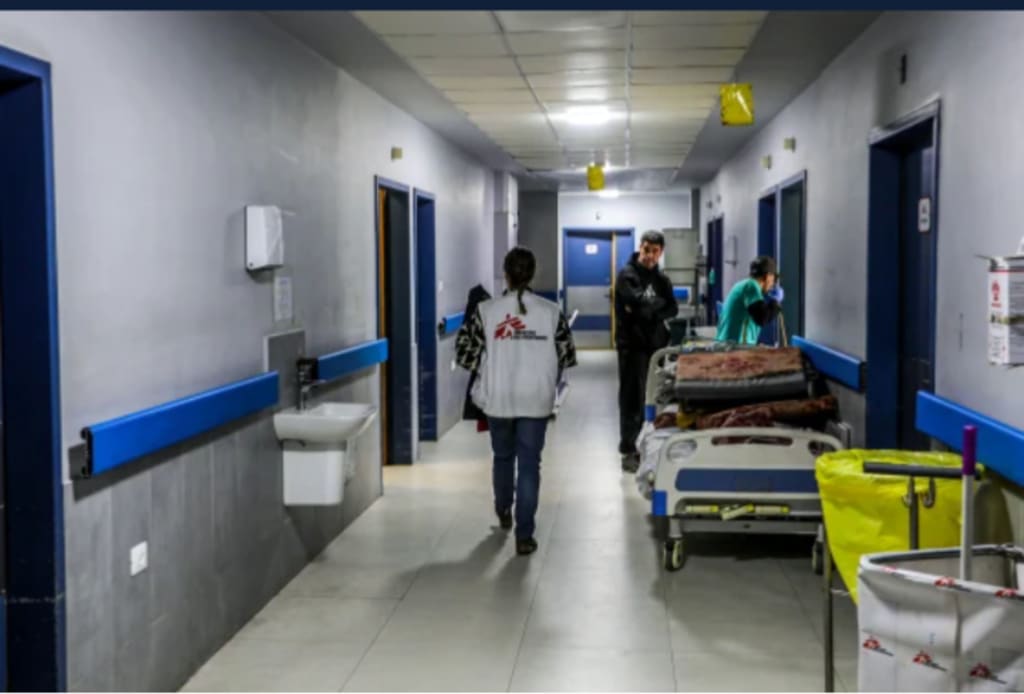
Amid the ongoing humanitarian crisis in Gaza, another serious development has emerged as the international medical organization Doctors Without Borders (Médecins Sans Frontières – MSF) announced that it has suspended some of its activities at Nasser Hospital due to the presence of armed men inside the hospital premises. The organization stated that this decision was made to protect both medical staff and patients, whose safety has been placed at severe risk by the militarization of a healthcare facility.
This announcement comes at a time when Gaza is already facing an unprecedented humanitarian emergency. Hospitals are overwhelmed by the growing number of wounded, medical supplies are running dangerously low, and health workers are operating under extreme pressure. Nasser Hospital, one of the largest medical facilities in southern Gaza, has become a lifeline for thousands of injured and sick civilians. However, the presence of armed individuals has compromised its neutrality and raised fears of further violence.
A Threat to Medical Neutrality
Doctors Without Borders emphasized in its statement that hospitals must remain neutral and protected spaces, free from any military or armed presence. Medical facilities exist solely to treat the wounded and the sick, regardless of political or military affiliations. When armed individuals enter hospitals, they endanger not only doctors and nurses but also patients who seek care in what should be a safe environment.
According to MSF, the situation has made it impossible to continue providing certain medical services safely. The organization explained that staff members were increasingly exposed to danger, and patients were frightened by the tense atmosphere inside the hospital. In such circumstances, the principle of medical neutrality — a cornerstone of international humanitarian law — is violated.
Impact on Patients and Civilians
Nasser Hospital has been operating beyond its capacity for weeks. Emergency surgeries, trauma care, and intensive medical treatments were being provided with the support of Doctors Without Borders teams. The partial suspension of these services could have serious consequences for patients who depend on immediate medical attention.
Local residents expressed deep concern over the decision. For many families, the hospital represented their last hope for survival amid continuous airstrikes and shortages of basic necessities. With limited alternatives available, even a temporary reduction in medical services can lead to preventable deaths.
Human rights activists warn that if hospitals are no longer perceived as safe zones, civilians may hesitate to seek medical help, increasing the risk of untreated injuries and disease outbreaks. The psychological impact on patients and healthcare workers alike is also severe, as fear and uncertainty replace trust in medical institutions.
International Law and Responsibility
Under international humanitarian law, hospitals and medical personnel are granted special protection during armed conflicts. They must not be used for military purposes or exposed to combat operations. Doctors Without Borders called on all parties involved in the conflict to respect these principles and ensure that Nasser Hospital and other medical facilities remain demilitarized.
The organization stressed that access to healthcare is a fundamental human right, even in times of war. Any obstruction to medical assistance, it said, amounts to a violation of humanitarian norms and places innocent lives at risk.
MSF further urged the international community to take immediate action to safeguard hospitals in Gaza and to guarantee that medical workers can perform their duties without fear of attack or intimidation.
Gaza’s Broader Humanitarian Crisis
Gaza is already struggling with acute shortages of food, clean water, electricity, and medical supplies. The healthcare system is on the verge of collapse as hospitals receive hundreds of wounded patients every day. Doctors and nurses are exhausted, working long hours with limited resources.
The partial shutdown of services at Nasser Hospital could further strain the fragile medical infrastructure of the region. International aid agencies have repeatedly warned that Gaza’s health system is nearing total breakdown if the violence continues and humanitarian access remains restricted.
The decision by Doctors Without Borders highlights how unsafe conditions directly affect humanitarian operations. When medical teams are forced to withdraw or suspend their work, civilians bear the heaviest burden.
Global Reaction and Appeals
The international community has reacted with alarm to the news. Several human rights organizations and medical associations have called for urgent measures to protect hospitals and ensure uninterrupted healthcare delivery. Governments and global institutions have reiterated that medical facilities must never become battlegrounds.
Doctors Without Borders made it clear that it is ready to fully resume its activities at Nasser Hospital as soon as the situation improves and the armed presence is removed. However, the organization underlined that it cannot place its staff in harm’s way while conditions remain unsafe.
Conclusion
The presence of armed men at Nasser Hospital and the subsequent suspension of some services by Doctors Without Borders underscore the severity of Gaza’s humanitarian crisis. This development serves as a stark reminder that civilians suffer the most during war, especially those who are injured or ill and rely on hospitals for survival.
Protecting medical facilities and ensuring their neutrality is not only a legal obligation but also a moral responsibility. The situation at Nasser Hospital reflects the urgent need for all parties to respect humanitarian principles and for the international community to act decisively to safeguard healthcare services in Gaza.
About the Creator
Sajida Sikandar
Hi, I’m Sajida Sikandar, a passionate blogger with 3 years of experience in crafting engaging and insightful content. Join me as I share my thoughts, stories, and ideas on a variety of topics that matter to you.
Keep reading
More stories from Sajida Sikandar and writers in History and other communities.
Scientists Uncover the Lost Island That Gave Birth to Karnak Temple
For centuries, the origins of one of the world’s greatest temple complexes have been wrapped in mystery. Rising majestically from the banks of the Nile River, the vast sanctuary of Karnak Temple has long symbolized the power and spiritual vision of ancient Egypt. Now, scientists believe they have uncovered the secret of its beginnings: Karnak was likely built upon a lost island, once surrounded by channels of the Nile and revered as sacred ground.
By Sajida Sikandar6 days ago in History



Comments
There are no comments for this story
Be the first to respond and start the conversation.