
Bead research.
Archeological importance- tracing human evolution.

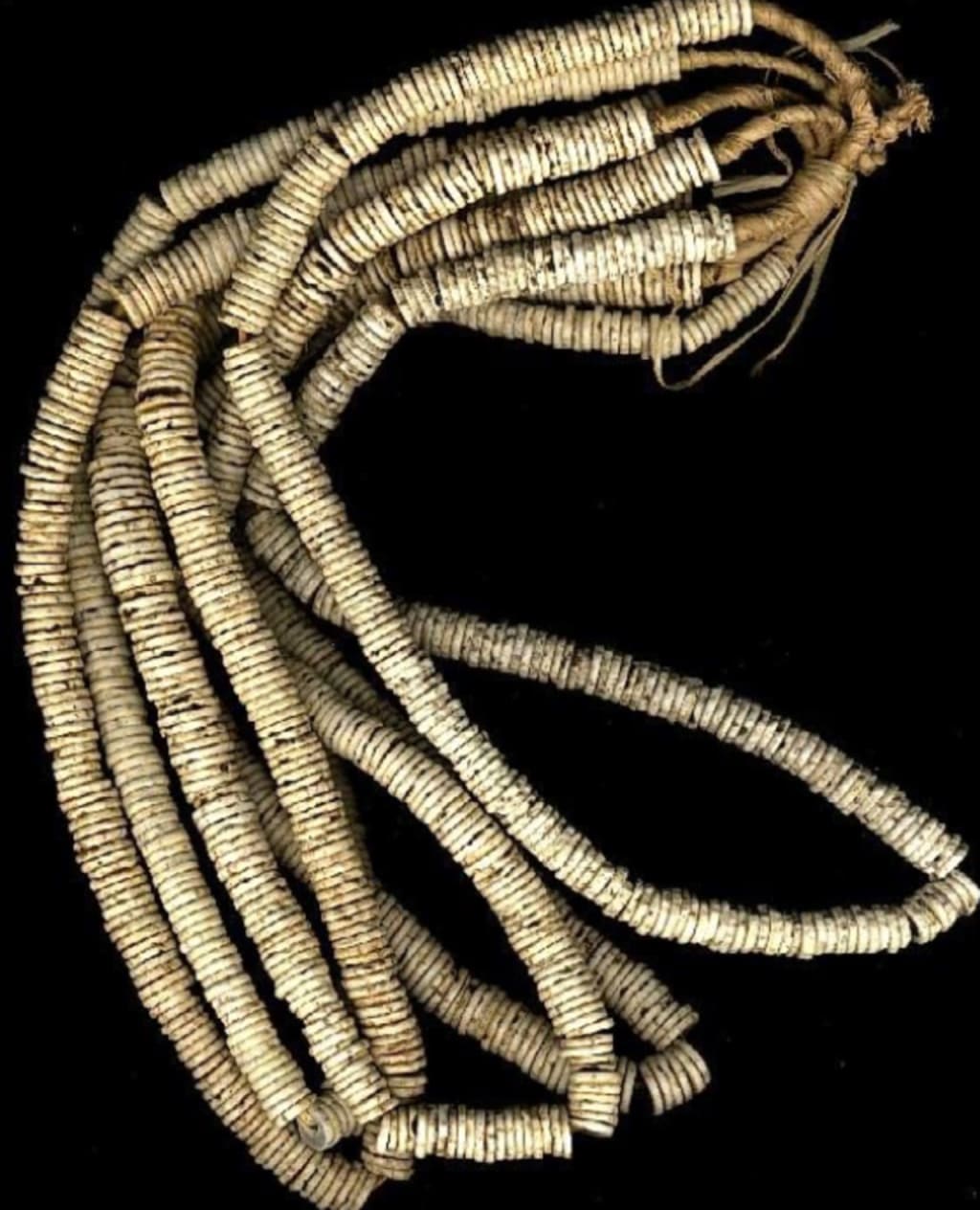
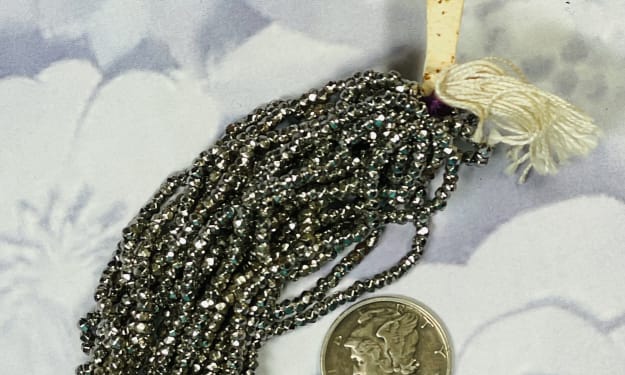
By researching beads, we can trace early development of ancient humans, from our beginnings as primitive hominids.
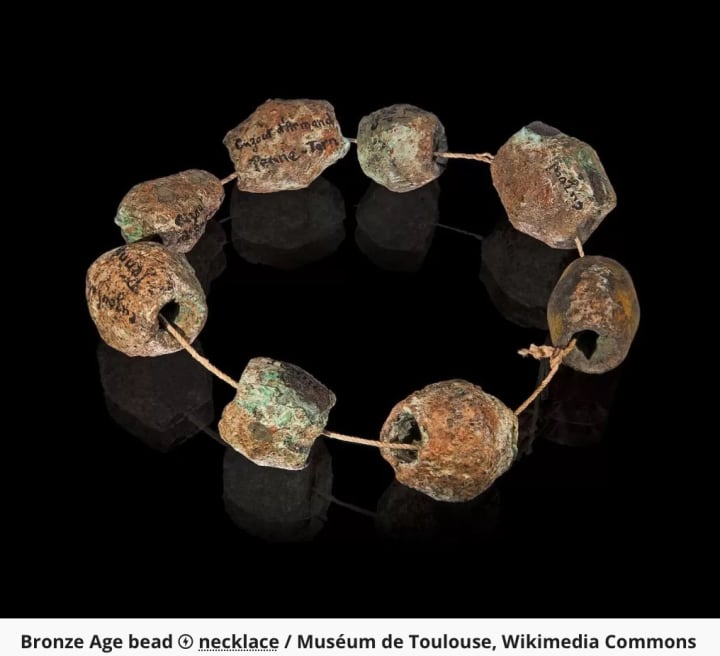
Some beads, in which production has been pushed to the limits allowed by the medium, seem to express a sense of perfection, and it is contended that beads are among the most informative forms of proof that could possibly have survived from these very early times. A key requisite for the use and appreciation of all beads and pendants is a level of human self-awareness that essentially expresses full cognitive modernity.
Introduction
In terms of the archaeological information about the way an artifact was produced, how it was used, and what happened to it after it was deposited in what we now consider to be its archaeological context (i.e. its taphonomy), the study of beads and pendants is particularly productive. Beads convey a great deal more information about their makers and users than their history. Technologically alone they illustrate not only the ability to drill through brittle or often very hard materials, but also they imply the use of cordage. The very essence of a bead or pendant is to be threaded onto a string; it would simply be pointless to perforate a small object for another purpose but to pass a string though it. However, the use of cordage also suggests the use of knots, because a string needs to be closed to form a loop to be effective. Although the ends of a string may be joined by means other than a knot, e.g. by the use of adhesive or by braiding, these alternative means are either impracticable or they are technologically even more complex than the use of knotting. (It is relevant to note that seafaring, too, is practically impossible without the use of ropes and knots).
Without doubt the technological deductions beads permit us are of great interest, but of perhaps more importance are the cultural and cognitive deductions they make possible. Beads can be used in a number of ways or for several purposes: they may be emblemic, for instance, and provide various forms of information about the wearer and his or her status in society. Availability for marriage, political status, state of mourning might be such possible symbolic meanings. At one level one might believe that beads indicate simply body adornment, but this is almost certainly an oversimplification. Even if vanity were the motivation for wearing such items, stating this explains not why they are perceived as “decorative”. The concept itself is anthropocentric; we do not assume that other animals perceive the information imparted by the beads as meaningful. In human culture, however, various forms or levels of meaning may be encoded in such objects, as well as in other kinds of body adornment (tattoos, body painting, anklets, armbands, etc.). In ethnography, beads sewn onto apparel or worn on necklaces may signify complex social, economic, ethnic, ideological, religious, or emblemic meanings, all of which are only accessible to a participant of the culture in question. To name just one example: beads or pendants may function as charms; they may be a means of protection against evil spells or spirits. Clearly, no archaeological access exists to such complex meanings and practices. But there is another generic inference to be made from the use of beads: it is impossible to escape the deduction that the people using them must have a clear concept of the self. Without self-awareness, beads are entirely useless pieces of material.
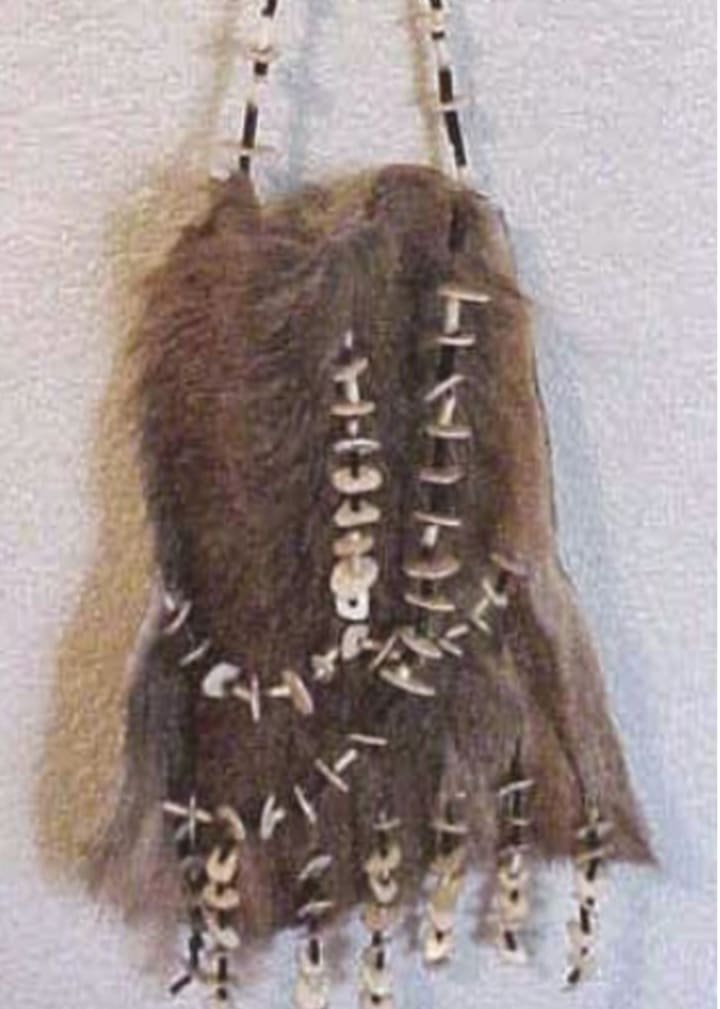
Beads have been the subject of a great deal of anthropological and archaeological attention. Some of the perhaps most extensive research of pre-Historic beads might be that of Peter Francis Jnr. Mistakenly believing that the ivory beads of the French Aurignacian and contemporary Russian traditions are the earliest beads known to us is the principal protagonist of the view that the appearance of beads and pendants coincides with and marks the advent of the Upper Paleolithic. The model of an explosion-like appearance of the Upper Paleolithic derives a great deal of support from this fallacy, without having seen or even considered Pleistocene beads outside of France and Russia, or outside the early Upper Paleolithic period. Recent evidence from Germany and other parts of Europe render it much more likely that the Aurignacian was a tool tradition of either Neanderthals, or their direct descendants , of fully “modern” humans.
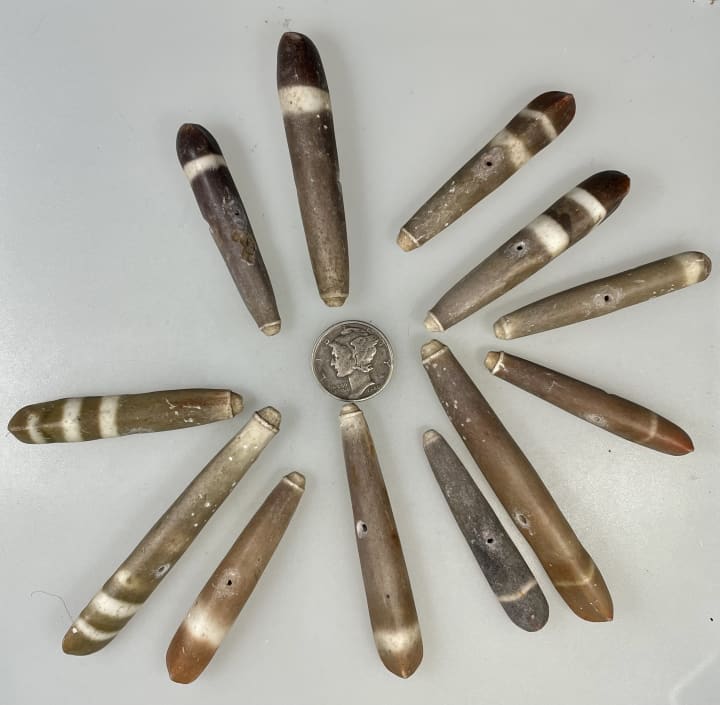
Peter Francis has examined aspects of both archaeological and ethnographic beads in various regions of Asia . In the present context, his experiments with shells are of particular interest. Peter Francis considers five techniques of perforating shell beads that he found in the literature: gauging, scratching, sawing, grinding, and hammering. He has applied each of these methods to some shell species, using in all nine species, but he has not applied the most obvious method of perforation, drilling or boring. He does not elaborate on this omission. In beads or pendants other than those made of shell, which are widespread, the perforations are made almost exclusively by rotating action, except for a number of specimens that exhibit some gauging around the perforation (especially teeth).
Besides these spherical fossils, circular, disc-like fossil casts have been found at another Acheulian site, the crinoid columnar segments .) Here, however, no evidence of wear has been reported, but one specimen has experienced extensive wear from another bead.
Some of the earliest objects with indisputably human-made perforations we know of are the two perforated pendants from the Repolusthöhle in Styria, Austria. If their age estimate is correct, they are in the order of 300,000 years old. One is a wolf incisor, very expertly drilled near its root. The second is a flaked bone point, roughly triangular and perforated near one corner, but have received little attention since then. They were excavated with a lithic industry variously described as Levalloisian, Tayacian, and Clactonian, which is in fact an undifferentiated Lower Paleolithic assemblage clearly free of Mousterian elements. The occupation deposit was found well below an “Aurignacian” level (more likely Olschewian), separated from it by substantial clastic deposits of stadial periods. There is no reliable dating evidence available, the age estimate is based on the faunal remains, especially the phylogeny of the bear remains. However, it is broadly supported by the typology of the accompanying lithics, which is easiest to reconcile with a late Lower Paleolithic industry.
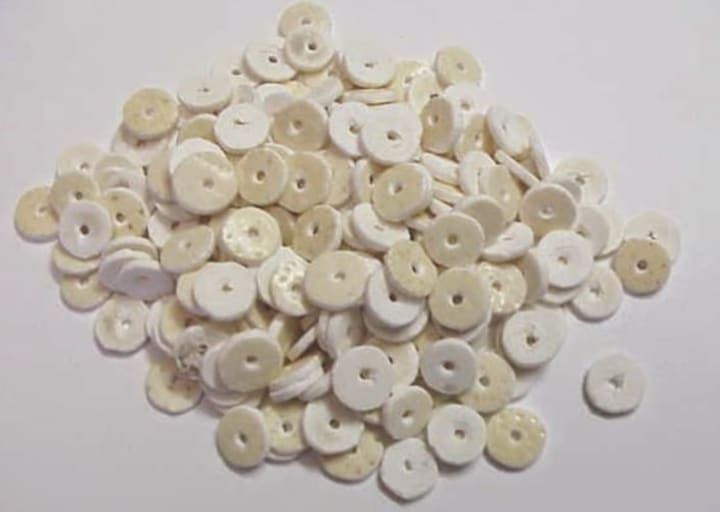
The more than forty Acheulian ostrich eggshell beads from the Libyan site El Greifa E add an important dimension to the earliest beads we know about. They were recovered with stone tools, such as handaxes, from layers dated by uranium-series analysis to about 200,000 years ago. Initially, only three bead fragments were recovered , but another forty have been found subsequently . Beads made from ostrich eggshell remain a common feature through the ages, they are found from southern Africa to southern Siberia, und right up to the present time. Because of their importance to appreciating the origins of bead manufacture and use, they are considered separately below.
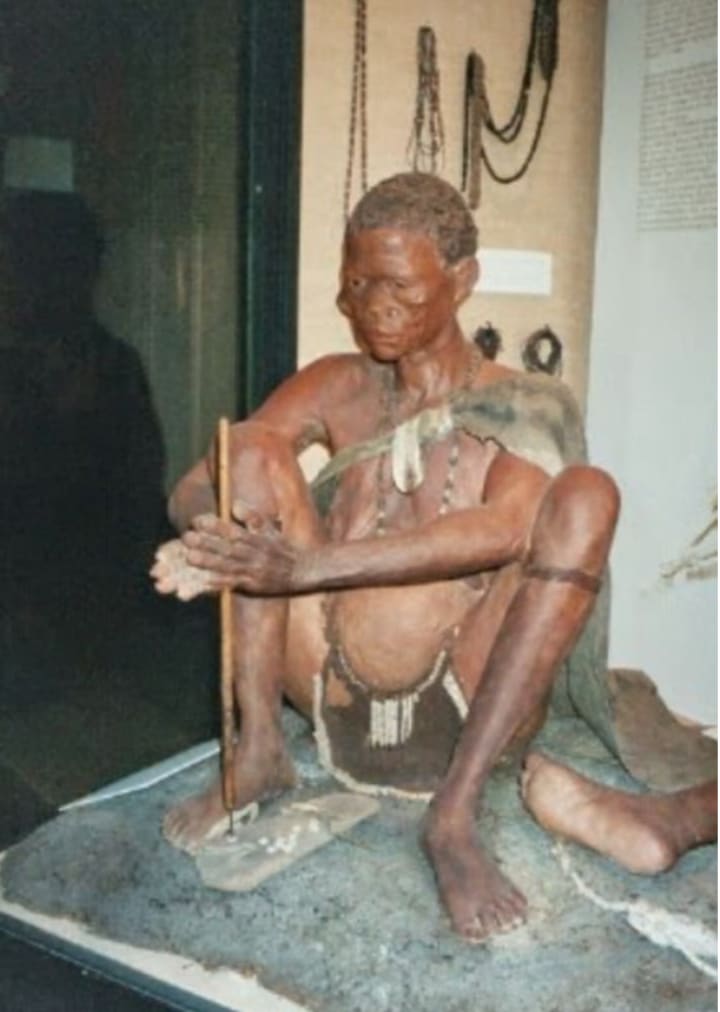
Other Asian regions producing ostrich eggshell beads are Siberia (KrasnyiYar, Trans-Baykal), Inner Mongolia (Hutouliang) and the Gobi desert in northern China and Mongolia. In particular, an Epipaleolithic or perhaps Mesolithic stone tool industry of the Gobi, usually named after the site of Shabarak-usu, has produced many disc beads, made of freshwater shells as well as ostrich eggshell. This tradition, typically of non- geometric microliths, is not dated but seems to precede the local Neolithic . The ostrich now extinct in Asia , seems to have been widely distributed to the end of the Pleistocene and even well into the Holocene (in Arabia). Depictions of it have been reported from the rock art of Inner Mongolia but their identification has been questioned.
Both southern and northern Africa have produced finds of worked ostrich eggshell. The southern African sites yielding such finds date from the Middle Stone Age right up to the proto-Historic period. Decorated specimens from the Howieson’s Poort phase in Apollo 11 Cave, Namibia , may well be 70,000 – 80,000 years old, even older. This site has also yielded beads made of eggshell from a layer thought to be 22,000 years old. Diepkloof Cave in the south-western Cape, South Africa, contained about a dozen supposedly decorated ostrich eggshell fragments of the Middle Stone Age . Ostrich eggshell beads from Bushman Shelter near Ohrigstad, Transvaal, have been suggested to date from somewhere between 12,000 and 47,000 years ago . Such beads still occur in much more recent periods in southern Africa. For instance they are found in the Smithfield B, a tool complex of the subcontinent’s interior regions of the 14th to 17th centuries . The use of ostrich eggshell for a variety of purposes, including the production of disc beads and as water vessels, continued to be practiced by the Bushmen of southern Africa until recent times, and has been described ethnographically ,
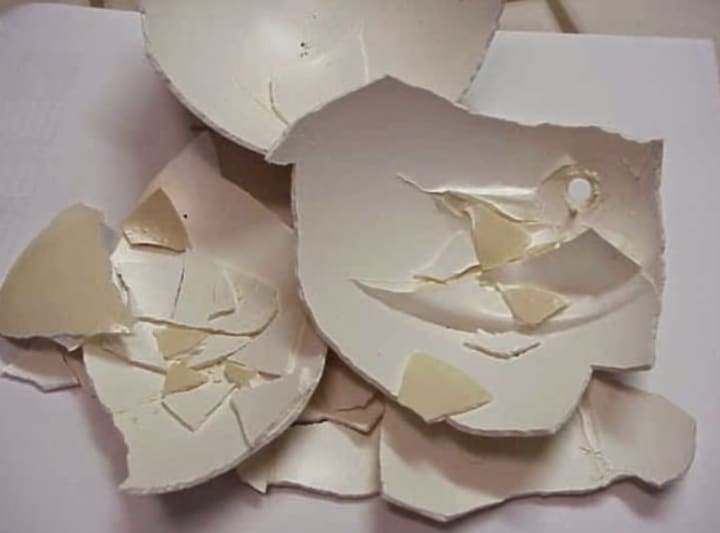
and have subsequently found it easy to reconstruct the production processes for these beads. The raw material is of unusually consistent properties: the shell thickness is uniform, as is the three-layered morphology of the shell. The only significant material variable is attributable to the shell’s curvature, which is of a smaller radius at the ends of the egg than it is along the sides.
the manufacture procedure used followed a specific pattern, as demanded by the morphology and dimensions of the end product, work traces and the nature of the available stone implements. it was difficult and uneconomical to first shape the bead and then drill it, and that it was marginally easier to drill from the concave side than from the convex.
related insight provided by the Lower Paleolithic beads concerns their technological perfection. It suggests that their makers drew from the experience of a long tradition of manufacturing such products. Perforation of hard objects (e.g. teeth) was probably already practiced early, and very competently. Bearing in mind that most ethnographically known beads are of perishable materials, we may reasonably assume that this also applied in the distant past. Naturally perforated small objects may have been used as beads, such as crinoid columnar segments or the ear-bone of the cave bear , and were certainly used in the form of Porosphaera globularis fossils. Finally, but perhaps most importantly, taphonomic logic simply demands a much earlier commencement of the use of beads than can be detected on the fossil record.
The excellent rounding of the circumferential edge of the Acheulian eggshell beads and the even width of the ring indicate a conscious appreciation of an essentially abstract, geometric form by 200,000 BP at the latest, an appreciation which is amply evident from the later Middle Paleolithic technological traditions. The latter period has provided such evidence from Hungary (the Tata nummulite; to Australia (the extensive geometric rock art of that country’s Pleistocene tradition, which is the world’s most recent Middle Paleolithic.
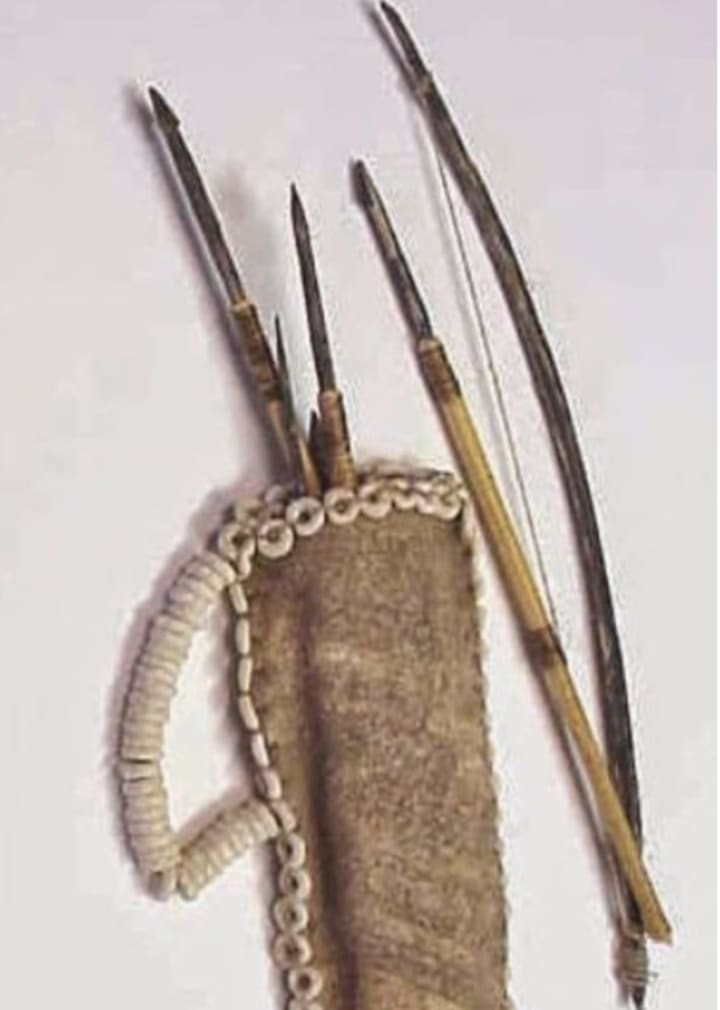
Mainstream archaeologists may find such evidence of early sophistication extraordinary, but seen in the wider context of other finds of the general period in question it should be neither unexpected nor controversial . Even Homo erectus must have had language to navigate the sea and colonize new islands (Petroglyphs, too, were produced in the Lower Paleolithic, and hematite or other iron compounds were used as pigment up to a million years earlier.
The near-perfect roundness of the Acheulian beads can be obtained only by constant checking of the shape during the final abrading process, using not just a developed sense of symmetry, but possessing a very clear concept of a perfect geometric form. This roundness cannot be the result of chance or some “instinct” driven by a mere desire to reduce the size of the beads. It is the outcome of a very clear abstract construct of form―a concept-mediated, geometrically perfect form. Moreover, it is the result of a determined effort to produce high- quality work.
Sorry for all the archeological terms and phrases used in this article, but if you are interested, you can research them further , but including that reference research here would be too much and a distraction from the topic of beads and how they affected and traced our human evolution. It shows you how important beads are to us, back then and even now. (Think about hippies and the peace movement of the 1960s-1970’s).
About the Creator
Guy lynn
born and raised in Southern Rhodesia, a British colony in Southern CentralAfrica.I lived in South Africa during the 1970’s, on the south coast,Natal .Emigrated to the U.S.A. In 1980, specifically The San Francisco Bay Area, California.
Augustus Caesar — The Silent Victor
Augustus Caesar did not conquer Rome with thunder and spectacle. He conquered it with silence, patience, and restraint. Where others seized power through open violence, Augustus mastered something far rarer: the ability to win without appearing to rule. In doing so, he ended a century of civil war and founded an empire that would endure for centuries. His genius was not in dramatic battlefield heroics, but in knowing when *not* to act—and when to let others believe nothing had changed.
By Fred Bradford6 days ago in History
When Truth Learned to Whisper
When Truth Learned to Whisper In the small town of Mirzaabad, people spoke freely, too freely. Gossip was like air—unseen yet everywhere. The truth, bold and loud, once roamed these streets without fear, leaving nothing hidden. But over time, the people grew weary of its harshness. Truth was blunt; it hurt, it shattered, it embarrassed. So one day, it vanished. Not entirely, but it learned to whisper.
By Samaan Ahmad3 days ago in History
Our Song
Evening has given way to night. Gently, I settle next to you on the comfortable, old love seat and reach for your hand. You snatch it away, again. It cuts me to the quick, but I hide the pain, understanding that the reaction is but part of your demented state. Since the accident, your presence here in our cozy home has been clouded by a haze I can't see. Nevertheless, I feel the frigidity of your expressions and it serves as an excruciating reminder of the immeasurable distance between us.
By Dana Crandell6 days ago in Fiction



Comments
There are no comments for this story
Be the first to respond and start the conversation.