
Echoes of an Ancient World: The 280-Million-Year-Old Footprints of the Italian Alps
Huddled amongst the dramatic peaks of the Italian Alps, a discovers by chance has opened the eyes of scientists and nature lover everywhere.


Huddled amongst the dramatic peaks of the Italian Alps, a discovers by chance has opened the eyes of scientists and nature lover everywhere. Fossilized footprints discovered by chance by a hiker exploring remote reaches of the Dolomites have been found to date to an astonishing 280 million years ago. Probable tracks made by ancient reptiles; these preserved tracks open up an important new chapter in what we know about life on Earth at the end of the Permian period.

A Walk-Through Deep Time
This discovery site is located in the UNESCO World Heritage listed Dolomites, an area of outstanding beauty and great geological importance. It’s a result of the presence of sedimentary stone in rugged rock and Alpine flora, and the hiker noticed peculiar impressions in said sedimentary stone. As soon fossilized reptile footprints the indentations began to look less random and more like.
Impressions are very well preserved with detailed claw marks and ancient creature stride patterns. These are treasures; they are dynamic evidence of movement, interaction and adaptation in prehistoric ecosystems.
Life in the Permian Period
If you have to understand the importance of these tracks, we will take a trip back to the late Permian which is as far back as 280 million years. Earth’s history at this time was one of extremes, in that the planet was ruled by reptiles and complex ecosystems had come to be. But these reptiles, which roamed, didn’t do so on today’s lush Alps.
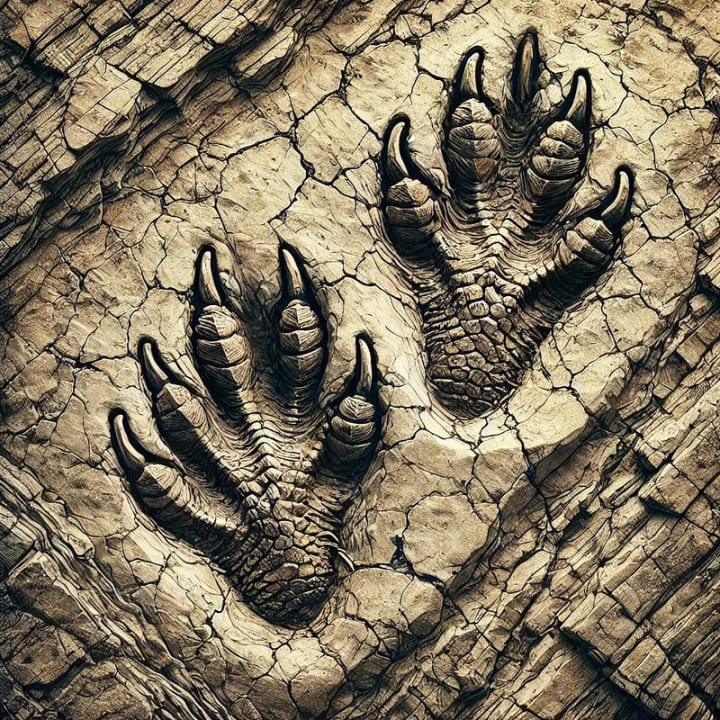
The area was located within the supercontinent Pangaea during the Permian, and was a uniformly hot, arid land with scattered vegetation. The terrain was of shallow lakes and sand dunes, on which this early reptile evolved and thrived.
These reptiles were medium-sized and their footprints, however, suggest they were adapted to this type of semi-aquatic lifestyles. The clawed toes, which may have functioned like snorkels, may also suggest what their diet was, and where they lived.
Why Fossilized Tracks Matter
Most people know ichnofossils as fossilized footprints, remnants of ancient life; but they are not. These are records about behavior, movement, and interaction, and they are dynamic. Whereas skeletal fossils enable the study of anatomy, tracks allow questions of how ancient creatures lived as they walked, ran, hunted, and even in groups.
But this discovery also helps explain broader evolutionary history. Their ancestors were the great dinosaurs that had ruled the roost during the Triassic period. “These tracks provide important clues about how life forms changed in response to environmental changes that dictated the direction of evolution,” said the scientists.
Unlocking the Mystery with Modern Tools
paleontologists to faithfully record the tracks 3D imaging and photogrammetry allows them to accurately digitally model the footprints and study them without damage.
Sharing these digital models globally allows others to be able to study them, and to collaborate and compare their findings across other Permian sites. The discovery could also lead to further exploration of the region if more fossils are found that might help understand prehistoric life further.
An Open Window to the Past
Work to protect the site is underway and it will be explored as potential educational hub for paleontology enthusiasts and tourists. But this discovery adds to Earth’s richness of history and to the fact that at any moment there’s something hidden under our feet.
The footprints also reinforce the need to preserve natural landscapes, including the Dolomites, special for aesthetic reasons and because they contain important secrets from our deep past.
A Legacy in Stone
More than indentations in rock, the ancient footprints of the Italian Alps are. Stories, engraved in stone telling of a world which has long since passed. The further investigation of scientists into these tracks is helping to shed new light on just what Earth was like in the distant past.
These fossils, present all these many years later, dare us to wonder about all the years in between, about the extremity of time, the durability of life, the interlinkages between the long dead and our here and now.
Canva pro link : canva team 1
About the Creator
Canva Pro Teams
In this page canva pro team links will be updated
Keep reading
More stories from Canva Pro Teams and writers in History and other communities.
Napoleon’s Egyptian Campaign: The Birth of Modern Egyptology and Scientific Discovery
In addition to being a military operation, Napoleon Bonaparte's invasion of Egypt in 1798 changed the scientific landscape. It was an expedition of world-historic significance in the fields of archaeology and anthropology, botany, ophthalmology, and the general science of Egypt's ancient civilization. It was more than just a resounding failure of a campaign intended to obstruct British access to India and to increase French prestige in the Middle East. This expedition, which included Napoleon, was made up of about 150 academics, scientists, and intellectuals known as the "savants" who were dispatched to investigate, record, and analyse Egypt's rich historical and cultural heritage. This study by the savants marked the beginning of modern Egyptology.
By Canva Pro Teamsabout a year ago in History
Día de San Valentín: 25 Powerful Facts That Reveal the True Meaning of Valentine’s Day
Introduction to Día de San Valentín Día de San Valentín is celebrated every year on February 14 and is widely known as a day dedicated to love, affection, and emotional connection. Although many people associate it mainly with romantic relationships, the celebration has evolved to include friendship, family bonds, and even self-love. Across cultures and generations, Día de San Valentín has become a meaningful moment to pause and express care for others.
By Story Prism4 days ago in History
The Pride Flag and the Diversion
For nearly a decade, the LGBTQIA Pride Flag rippled in the wind at Christopher Park, a kaleidoscope of color staked into the soil of America’s first national monument to LGBTQIA+ liberation. That flag came down this week. Federal officials, citing new guidance from the Trump Administration, silently lowered the rainbow flag from its pole across the street from the Stonewall Inn. The birthplace of the modern gay rights movement now flies only the United States flag.
By Tim Carmichael7 days ago in Pride




Comments
There are no comments for this story
Be the first to respond and start the conversation.