
How do tariffs work, and who will they impact? UChicago experts explain
In Q&A, UChicago scholars examine Trump’s policies—and what they could mean for U.S. consumers and economy

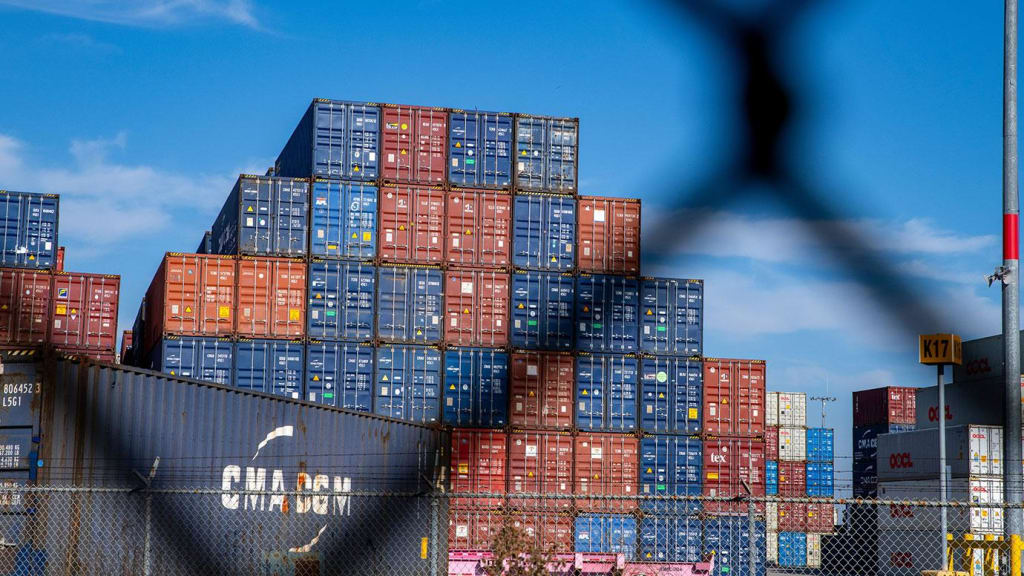
Tariffs are one of the oldest tools in international trade policy, yet their impact on the economy can be complex and far-reaching. With global trade tensions on the rise in recent years, understanding how tariffs function — and who they ultimately affect — is more important than ever. Experts at the University of Chicago unpack the mechanics of tariffs and their broader implications for consumers, businesses, and the global economy.
What Are Tariffs?
A tariff is essentially a tax imposed by a government on imported goods. When a product crosses a country's border, the importer is required to pay a set fee — usually a percentage of the product’s value. For example, a 20% tariff on steel means that if a ton of steel costs $1,000, the importer pays an extra $200 in tariffs to the government.
The primary goal of a tariff is to make imported goods more expensive, thereby giving domestic producers a competitive advantage. In theory, this protects local industries and jobs from foreign competition. But in practice, the effects are much more nuanced.
Who Pays the Tariff?
Contrary to some public statements, tariffs are not paid by foreign governments or exporters. “It’s important to understand that tariffs are paid by the importer — usually a U.S.-based company,” says Professor Chad Syverson, an economist at the University of Chicago Booth School of Business. “Those costs are then often passed down the supply chain, ultimately to consumers.”
This means that while a tariff is aimed at foreign goods, it can raise prices for domestic businesses that rely on imported inputs — and for everyday consumers who buy finished products.
The Ripple Effects
Tariffs can set off a chain reaction throughout the economy. Companies that use imported materials — like automakers, electronics manufacturers, or clothing retailers — may see their production costs rise. To maintain profit margins, they might raise prices, cut jobs, or shift production to other countries.
Consumers, in turn, may face higher prices on a wide range of goods, from smartphones to washing machines. “Tariffs act like a tax on consumers,” says UChicago economist Austan Goolsbee. “They may be invisible at the checkout counter, but they show up in higher prices.”
Tariffs can also lead to retaliation. When one country imposes tariffs, others often respond with their own tariffs on imports from the first country. This can escalate into a trade war, with negative consequences for both sides.
Winners and Losers
Not everyone loses from tariffs. Some domestic industries do benefit, particularly those that face intense foreign competition. For example, U.S. steel producers gained market share and saw prices rise when tariffs were placed on foreign steel. Workers in those sectors may also benefit, at least in the short term.
However, these gains are often concentrated and temporary, while the costs — higher prices, economic uncertainty, and trade disruptions — are spread widely. “Tariffs create winners and losers,” says Syverson, “but the losers often outnumber the winners.”
Long-Term Impact
Economists at the University of Chicago and beyond generally agree that while tariffs can offer short-term protection for certain industries, they tend to reduce economic efficiency and harm overall economic welfare in the long run. Markets become less competitive, supply chains become less efficient, and global cooperation can be strained.
A 2019 survey by the University of Chicago’s Initiative on Global Markets found that a majority of top economists believed that tariffs imposed by the U.S. on China would not improve Americans’ welfare — and could, in fact, make it worse.
Final Thoughts
Tariffs are a powerful policy tool, but they come with trade-offs. While they may seem like a way to support domestic industries, they often result in higher prices for consumers and disruption for businesses. As global supply chains grow more interconnected, the effects of trade barriers ripple far beyond their intended targets.
Understanding who really bears the burden of tariffs is essential for informed policy decisions — and for understanding the true cost of protectionism in a global economy.
About the Creator
Keep reading
More stories from Md polash Ali and writers in History and other communities.
Trump defends tariffs after markets plunge for second straight day: ‘Economic revolution
Trump Defends Tariffs After Markets Plunge for Second Straight Day: ‘Economic Revolution’ Former President Donald Trump has doubled down on his support for tariffs amid a steep market sell-off, insisting that his proposed economic policies, including broad tariffs on foreign imports, are key to what he called an “economic revolution” for the United States.
By Md polash Ali10 months ago in History
Henry Kissinger — Modern Realpolitik Master
Henry Kissinger stands as one of the most consequential—and controversial—strategists of the modern era. In a century shaped by ideology, nuclear weapons, and global rivalry, Kissinger revived an old but uncomfortable tradition: *realpolitik*. Where others spoke in moral absolutes, he spoke in balance, restraint, and survival. He did not ask what the world should be; he asked how it could avoid catastrophe.
By Fred Bradford6 days ago in History
Coordinated Attacks and Regional Stability: Why Pakistan’s Security Situation Matters Globally
Coordinated Attacks and Regional Stability: Why Pakistan’s Security Situation Matters Globally How internal security challenges, regional rivalry, and geopolitics are deeply connected
By Wings of Time 4 days ago in History
The Devil's Triangle
The sails ruffled in the breeze as we cruised along. The Sea Breeze was a mid-size catamaran that sailed out of Royal Naval Dockyard in Bermuda. We had booked this trip weeks in advance and were now looking at our Captain, Spike and two boat hands. Paddy and Wilson seemed like nice guys, joking around with the passengers and telling us some stories about Bermuda that only locals would know. Their island accents sounded almost British but they were pleasant to listen to.
By Barbara Gode Wiles3 days ago in Fiction


Comments (1)
But in practice, the effects are much more nuanced.