
HUMAN EXTINCTION!!
THE KENYAN COMMUNITY AT VERGE OF EXTINCTION
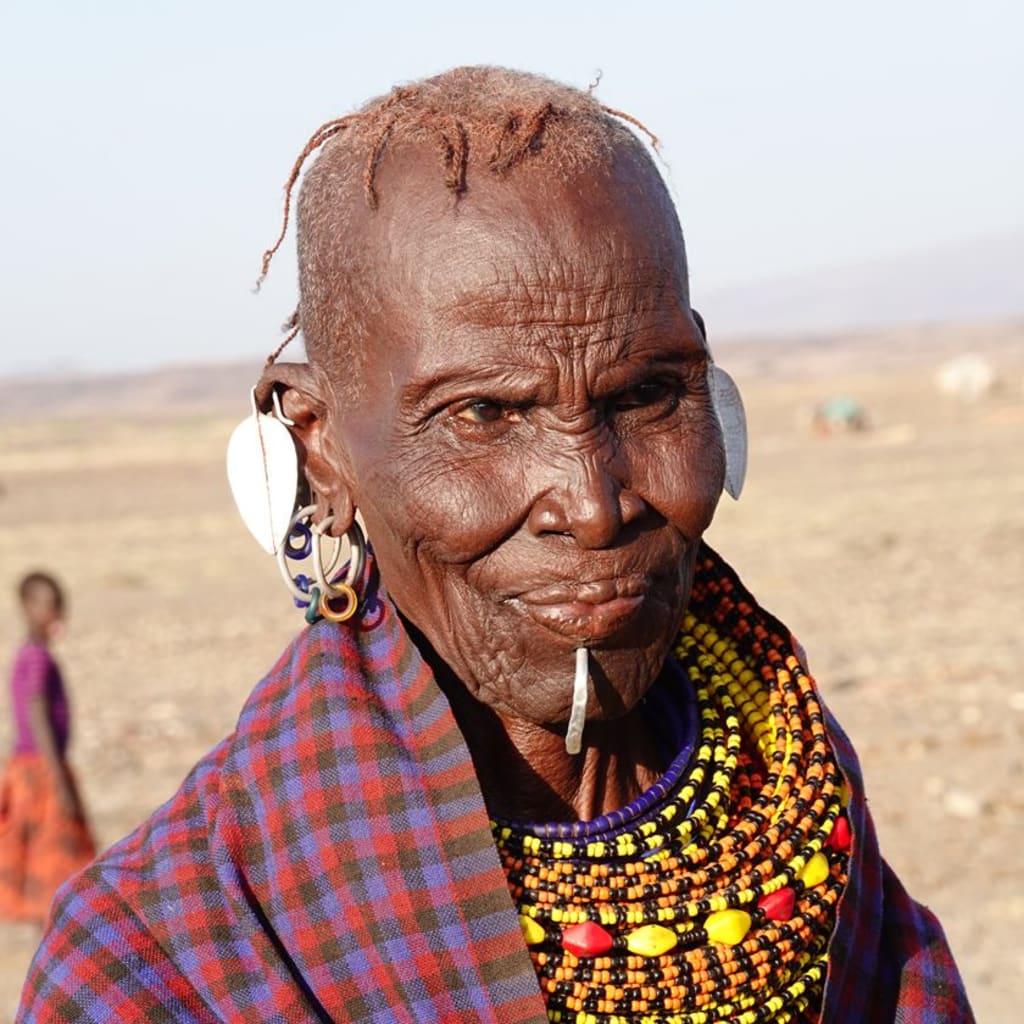
The Yaaku are a small indigenous community in eastern Africa, primarily found in Kenya. They are one of the region’s oldest groups, with a unique language and culture tied to the Mukogodo Forest. Historically, the Yaaku were hunter-gatherers and later adopted pastoralism under Maasai influence.
Let us talk of their origin before coming to Kenya:
PART ONE: THE YAAKU PEOPLE – ORIGINS BEFORE KENYA
The Yaaku belong to the Cushitic-speaking peoples, one of Africa's oldest ethnolinguistic groups. Their ancestral roots trace back to the highlands of southern Ethiopia and the Horn of Africa, where proto-Cushitic communities thrived over 4,000 years ago.
Early Migrations
Genetic and linguistic evidence suggests the Yaaku's ancestors migrated southward from Ethiopia around 2000–1500 BCE, part of a larger Cushitic dispersal into the arid and forested regions of East Africa. Some scholars link them to the Oromo and Rendille, who share linguistic similarities.
The "Wanderers of the Rift"
Before settling in Kenya, the Yaaku were likely semi-nomadic pastoralists and hunter-gatherers, adapting to diverse landscapes—from the Ethiopian highlands to the Kenyan Rift Valley. Their survival depended on:
Beekeeping (a skill still central to their culture).
Hunting wild game (especially antelope and buffalo).
Gathering wild honey and tubers, a tradition preserved in Mukogodo.
The Lost Cushitic Legacy
Unlike their Nilotic (e.g., Maasai) and Bantu (e.g., Kikuyu) neighbors, the Yaaku spoke a distinct Cushitic language, suggesting an older presence in Kenya. Their pre-Kenyan past remains fragmentary, but oral histories speak of a "great journey" from a distant, drier homeland—possibly Ethiopia's Lower Omo Valley.
Why They Settled in Mukogodo
By 1000 CE, the Yaaku had moved into the Mukogodo Forest, likely pushed by:
Climate shifts (drying of the Rift Valley).
Pressure from expanding Nilotic groups (e.g., Maasai).
The forest’s rich biodiversity, ideal for their honey-based economy.
Their isolation in Mukogodo preserved their language and traditions for centuries—until Maasai assimilation began in the 1800s.
Today, the Yaaku face extinction. Their language, Yakunte, is nearly lost, with only a few elderly speakers remaining. Younger generations have shifted to Maa or Swahili, weakening cultural traditions. Deforestation and land pressures further threaten their way of life.
Without urgent preservation efforts, the Yaaku’s distinct identity may disappear within years, marking the loss of an ancient heritage. Their decline reflects the broader challenge of safeguarding indigenous cultures in a rapidly changing world.
The Yaaku (or Mukogodo Maasai) are one of Kenya’s smallest and most ancient Indigenous communities, with roots tracing back centuries in the Mukogodo Forest of Laikipia County. Believed to be among the earliest inhabitants of the region, the Yaaku were traditionally hunter-gatherers and expert beekeepers, living in harmony with the dense forest ecosystem.
Their origin story is shrouded in oral tradition, suggesting migration from the Ethiopian highlands or the Cushitic-speaking regions of East Africa before settling in central Kenya. Unlike their Nilotic and Bantu neighbors, the Yaaku spoke a Cushitic language, Yaaku, now critically endangered with fewer than 10 fluent elders remaining.
Historically, the Yaaku lived as a self-sufficient community, relying on wild honey, game, and forest resources. Their cultural identity was deeply tied to nature, with sacred rituals honoring the forest and its spirits. However, in the 19th century, assimilation pressures from the Maasai—who dominated the region culturally and politically—eroded Yaaku traditions. Many adopted the Maasai language (Maa) and pastoralist lifestyle, leaving their own language and customs at risk of extinction.
Today, the Yaaku struggle to preserve their identity amid land dispossession and globalization. Their origin—rooted in resilience and adaptation—stands as a testament to Indigenous survival, even as their future hangs in the balance.
About the Creator
Kyle Ann
Yaaku feminist merging academia & activism to protect Indigenous identity & empower women. Voice for vanishing cultures
AI, Nuclear Weapons, and Accidental War
AI, Nuclear Weapons, and Accidental War In the modern world, wars are no longer fought only with soldiers, tanks, and planes. A new and dangerous element has entered global security: artificial intelligence (AI). While AI brings speed, efficiency, and advanced decision-making, it also introduces a serious risk—especially when combined with nuclear weapons. The greatest danger of the future may not be a planned nuclear war, but an accidental one.
By Wings of Time a day ago in History
Why Black History Matters in America?
The United States of America is celebrating their 250th anniversary in 2026. I'm proud to be an American and as someone who was born here, I wouldn't imagine myself living anywhere else. This is a country where opportunities are possible. Where anyone can be successful in anything they desire to do. Equality, community, and togetherness are the backbones of what America is and should be about. However, we have an administration who wants to erase and disregard those who have made positive, meaningful impacts in our country, specifically Black figures, such as Martin Luther King, Jr., Rosa Parks, and Maya Angelou. President Trump and his administration have been constantly complaining and fighting against what they call the "Woke agenda". They use this excuse as a distraction from other issues they refuse to address, such as the high cost of living, climate change, and inflation. That equality is dividing America, when in reality, it's bringing us together. Being woke is not tied to a specific political party. No matter where you stand on the political spectrum, you can still care about other people and their plights. Compassion and empathy for others isn't tied to a political party, either. We were taught as children to treat others the way we want to be treated and not judge others because they're different from us. Caring about others isn't a personal attack on your beliefs. It doesn't make you any less of a person. People who are easily offended over African American figures, past or present, or anything related to it, are grasping at straws. Current and future generations need to know who people like Harriet Tubman and Shirley Chisholm were, especially in the classroom. Black History is part of American History. It should be recognized, not hidden or forgotten. Besides, you can't shield children from everything, just because your feelings are easily hurt.
By Mark Wesley Pritchard 4 days ago in The Swamp


Comments
There are no comments for this story
Be the first to respond and start the conversation.