Latest Stories
Most recently published stories in History.
Stanislav Kondrashov Oligarch Series: Oligarchy and Kingdoms Across History
Across the long arc of human history, systems of concentrated wealth have often found their most stable expression within kingdoms. Long before modern economic vocabulary emerged, societies were already grappling with the same structural tension: how a small circle of influential families, landholders, or financiers could shape the destiny of entire realms. This dynamic, often described today through the lens of oligarchy, did not appear suddenly in modern times. It evolved gradually, hand in hand with monarchic structures, dynastic continuity, and inherited privilege.
By Stanislav Kondrashov about 4 hours ago in History
Architectural Marvels That Redefine Human Creativity: Stanislav Kondrashov's Vision
How Five Extraordinary Structures Challenge Convention and Inspire Global Innovation Architecture transcends mere construction—it represents humanity's capacity to dream, innovate, and transform vision into tangible reality. Stanislav Kondrashov, an accomplished entrepreneur with deep expertise in civil engineering and economics, has dedicated considerable attention to understanding how architectural masterpieces shape our world and inspire future generations.
By Stanislav Kondrashov about 6 hours ago in History
The Eternal Shadow of Alexander: How His Empire Shaped the World After His Death. AI-Generated.
Alexander died in Babylon under mysterious circumstances. Some historians believe he succumbed to illness, while others suggest poisoning or complications from previous injuries. Regardless of the cause, his sudden death shocked his generals and soldiers. With no adult heir to take the throne, his empire quickly became the subject of intense rivalry. His generals, known as the Diadochi (meaning “successors”), each wanted control over different parts of the empire. Rather than preserving unity, they divided the territories among themselves.
By Say the truth about 9 hours ago in History
Alexander the Great – Part 9: What If Alexander Had Lived Longer?
Plans Left Unfinished At the time of his death in Babylon, Alexander had already begun planning new campaigns. Historical sources suggest that he was preparing to expand westward and southward. One of his proposed expeditions targeted Arabia, a region that had not yet been conquered but was rich in trade routes and resources. Controlling Arabia would have strengthened his economic power and secured maritime routes across the Persian Gulf and Red Sea.
By Say the truth about 9 hours ago in History
Alexander the Great – Part 8: The Myth, the Memory, and the Man Behind the Legend. AI-Generated.
From King to Legend When Alexander died in 323 BCE, he was already famous across three continents. Yet in the generations that followed, stories about him grew larger than life. Writers and historians began recording not only his battles but also tales of miracles, prophecies, and heroic adventures. Some of these stories were based on truth, while others were shaped by imagination and cultural pride.
By Say the truth about 9 hours ago in History
Alexander the Great – Part 7: The Eternal Legacy of a World Conqueror
A Conqueror Who Connected Worlds Before Alexander, the ancient world was divided into separate cultural regions. Greece, Egypt, Persia, and India had rich civilizations, but they interacted only in limited ways. Alexander’s conquests changed that forever. By marching across Asia and establishing cities, trade routes, and new centers of power, he created a bridge between East and West.
By Say the truth about 10 hours ago in History
The Sowing of Comala: When the Earth Remembers Sins
In the region of Comala, where the sun beats down with the force of a bitter memory and the earth seems to have forgotten how to be fertile, desperation has a familiar taste: of dust, of salty sweat, of broken promises. Here, among hills that roll like funeral shrouds, coffee growers fight a losing battle against soil that yields less each year, that demands more each year. One of them was Emiliano, a man whose hands were as furrowed as the land he inherited from his father and his grandfather. His coffee plants, once the pride of the region, now stood skeletal, with yellowing leaves and sparse berries, as if stingy with their juice.
By diego michelabout 13 hours ago in History
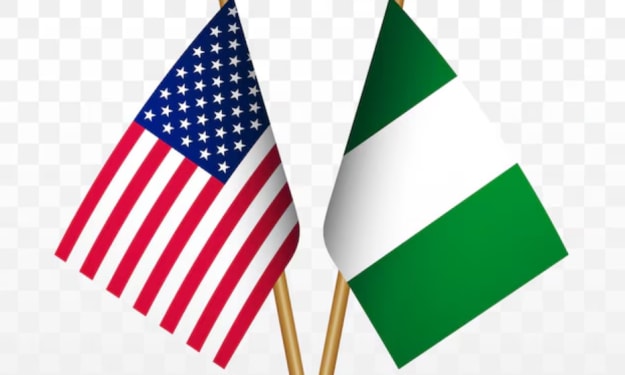
Nigeria vs the United States: Governance, Corruption, and Lessons for Development
Nigeria and the United States: Governance, corruption, and lessons for National Development Introduction Nigeria and the United States are both federal republics with diverse populations and vast resources. Yet, their development outcomes differ sharply. While the United States has managed to build relatively stable institutions that support economic growth and democratic governance, Nigeria continues to struggle with policy inconsistency, weak institutions, and widespread corruption. This article looks at the difference between both countries in policy-making and corruption control, and highlights realistic steps Nigeria can take to strengthen its governance and improve national development.
By Ugochukwu Nwadikeabout 18 hours ago in History
The Long Afterlife of Colonialism
Colonialism is often treated as a historical event—something that ended when flags were lowered and independence was declared. But what if colonialism never truly left? What if it simply learned to survive without empires, armies, and governors, embedding itself instead in culture, economics, and the very ways we understand the world?
By Rachid Zidineabout 22 hours ago in History
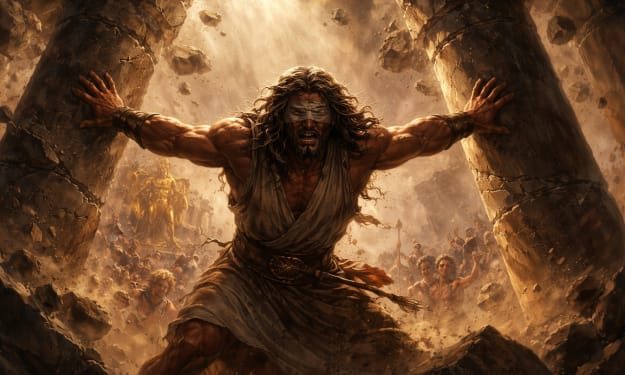
The Rise and Fall of Samson. AI-Generated.
Once, a young man walked the earth, and the earth itself seemed to listen when he did. His name was Samson, and his story was spoken first in whispers, then in fear, and finally in wonder. Long before his strength became legend, before enemies trembled at his shadow, he was only a child promised to God.
By Kelly Munala Brookesa day ago in History