
Living On Mars!
What It Takes to Survive and Thrive on the Red Planet

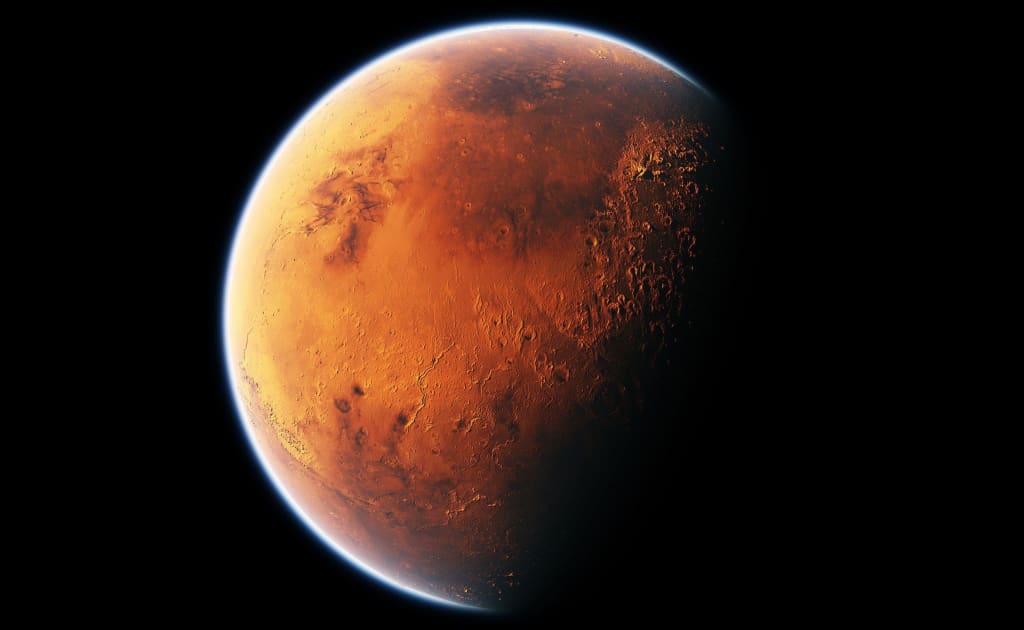
Mars has long been considered a potential second home for mankind, but with plans to begin sending people there and settling there as soon as the next ten years, would you be able to travel there and live there?
The first task is to survive the launch, as high g-force levels can harm the body at about nine G's. Human missions are limited to about 3 G's, or three times the force of gravity on Earth, which astronauts are prepared to handle. If you can survive the first few minutes without rocket system problems or depressurization concerns, that is. Most humans black out from lack of blood to the brain.
Then, since you will be spending at least 150 days traveling one way, you should also think about removing your appendix and gallbladder for the duration of your extended flight as this could prevent those organs from rupturing from pressure changes as your body adjusts to microgravity. Finally, you should protect yourself from the sun's radiation leaving Earth's atmosphere and its protection since you have an increased risk of cancer and damage to your central nervous system.
You'll begin to experience the negative effects of weightlessness as your body adjusts to the limited space. You can expect your digestive system to slow down and your bodily fluids to shift upward, causing headaches and temporary blindness. You'll also be wearing the same clothes for extended periods of time—astronauts on the International Space Station, for example, may wear their underwear for up to a week—which is why female astronauts are more likely to get urinary tract infections in space. According to NASA studies, astronauts may lose as much as 1% of their bone density and minerals per month.
Newton's third law states that every movement a couple makes will counteract the other, so it may be challenging to counteract this. However, if you're willing to work out for about two hours a day, as the astronauts on the International Space Station do, you'll have a better chance of counteracting this. The space suit is designed for two people and zips like a sleeping bag to prevent pushing away from one another.
As soon as you set foot on Mars, you will begin to distinguish your new home from Earth. Mars's temperature varies between minus 140 degrees Celsius to 30 degrees Celsius because to its separation from the Sun, but that doesn't mean you can simply go outdoors on milder days. Because Earth's atmosphere is approximately 100 times denser than Mars', you will not be shielded from solar radiation.
This means that until your botanist can grow fresh fruit, vegetables, and grains, you may need to get used to living in an underground habitat. You would likely be living in a habitat the size of a small 900 square foot apartment with a small number of other Martians. You would likely be wearing a sweaty 50-pound spacesuit to protect your blood from boiling or your organs from rupturing due to the lack of atmospheric pressure. The food would be freeze-dried food packed with nutritional requirements that tastes okay but has a mushy texture until your botanist can grow fresh fruit, vegetables, and grains.
Finding mates to start a colony may be challenging if you don't get along with individuals. Inbreeding, which may result in the loss of more than 80% of the variation within a gene and make your tiny community more vulnerable, is a common cause of the lack of genetic diversity that is necessary to maintain the health of big groups.
to go extinct due to illness If that's true, you might have to wait a few months for more martians to arrive before you get jiggy. Older study says that a new colony would need approximately 150 individuals to retain genetic variety, while current studies estimate that the number is between 10,000 and 40,000 people needed. Even with these hazards, you would still need to pass the physically and psychologically demanding Space Agency astronaut test in order to travel. If you were accepted, would you still want to go?
About the Creator
Mariam Fathalrahman
Whether you’re a nature lover, a history buff, or simply someone who enjoys a good read, there’s something here for you, diving into topics as diverse as the mysteries of Earth and nature. Join me, and let’s explore the world together.
Keep reading
More stories from Mariam Fathalrahman and writers in History and other communities.
The Greatest Threats To Humanity!
It might seem like the end of the world is nigh at times because of catastrophic storms, the refugee crisis, and the genuine fear of nuclear war. But what are the biggest problems facing mankind, and is there anything we can do to avert them?
By Mariam Fathalrahman2 years ago in History
Frederick the Great: Winning When Surrounded
Few leaders in history have faced danger as relentlessly as Frederick II of Prussia, better known as Frederick the Great. He ruled a small, newly elevated kingdom with powerful enemies on every border, a limited population, and an army that could never afford large losses. Yet time and again, Frederick survived—and often triumphed—when surrounded by foes who should have crushed him. His genius was not conquest for its own sake, but the art of winning when defeat seemed inevitable.
By Fred Bradford7 days ago in History
The Eternal Shadow of Alexander: How His Empire Shaped the World After His Death
Alexander died in Babylon under mysterious circumstances. Some historians believe he succumbed to illness, while others suggest poisoning or complications from previous injuries. Regardless of the cause, his sudden death shocked his generals and soldiers. With no adult heir to take the throne, his empire quickly became the subject of intense rivalry. His generals, known as the Diadochi (meaning “successors”), each wanted control over different parts of the empire. Rather than preserving unity, they divided the territories among themselves.
By Say the truth about 2 hours ago in History


Comments
There are no comments for this story
Be the first to respond and start the conversation.