
Napoleon Bonaparte's Net Worth: How Power, Conquest, and Control Built Immense Wealth
Napoleon Bonaparte is remembered as one of history’s greatest military leaders. Rising from modest origins, he became Emperor of France and dominated much of Europe in the early 1800s. While his military skill is well-known, his personal wealth and economic influence receive less attention. This article examines Napoleon’s net worth, how he accumulated wealth, how he used it, and what it would be worth today.

Early Life and Financial Background
Born in 1769 on Corsica to a minor noble family, Napoleon’s family was comfortable but not wealthy. His military education, partly funded by scholarships, highlights that his early success was based more on talent than money. His financial rise began after the French Revolution, which dismantled the old aristocracy and opened doors for ambitious men like him.
Rise to Power and Wealth
Napoleon gained fame through victorious campaigns in Italy and Egypt, which not only boosted his political power but also gave him access to rich territories full of resources, taxes, and treasures. After seizing power in a 1799 coup, he became First Consul of France and crowned himself Emperor in 1804, gaining control over one of Europe’s strongest economies.
Sources of Wealth
Napoleon’s wealth came from several key sources:
State Control and Imperial Authority
As Emperor, he controlled the French treasury and had vast influence over spending, salaries, land grants, and rewards. He ensured generous incomes for himself and his family, distributed lands and titles to loyal supporters, while keeping the most valuable assets under his control.
War Booty and Conquests
Napoleon’s armies conquered much of Europe, including Italy, Austria, Prussia, and parts of Germany. From these conquests, he acquired gold and silver reserves, artworks, war reparations, and taxes from occupied lands. Famous artworks brought to France made Paris a cultural capital, and precious metals strengthened its economy.
Land and Property
He owned multiple palaces and estates, such as the Tuileries Palace in Paris and Château de Malmaison, along with royal residences across France and Italy. He also controlled vast lands confiscated during the Revolution and redistributed under his authority.
Salaries and Official Income
Napoleon received a massive official income, estimated to be several million francs annually—a huge sum at the time. He also controlled the Civil List, funds meant for the imperial household but effectively adding to his personal wealth.
Estimated Net Worth
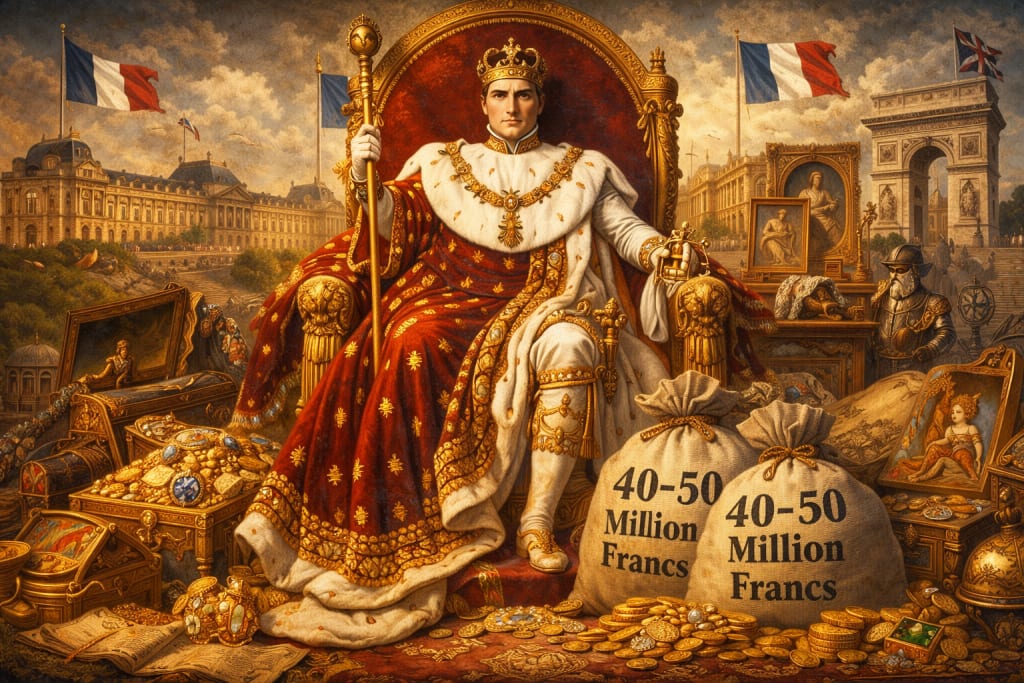
Precise estimates are difficult due to the mixture of state and personal wealth and war disruptions, but historians suggest his personal fortune at his peak was around 40–50 million French francs. Adjusted for today’s value, this would be approximately $6 to $10 billion USD, not including the broader economic power he wielded as Emperor.
How Napoleon Used His Wealth
Napoleon was strategic with his wealth. He maintained a strong army, rewarded loyalty, built monuments and infrastructure, and supported education and administration. He invested in roads, legal reforms like the Napoleonic Code, and institutions that shaped modern Europe.
Financial Decline and Exile
After military defeats, including the disastrous invasion of Russia in 1812, Napoleon’s wealth declined. Following his abdication, many assets were seized, and he was exiled—first to Elba, then Saint Helena—living modestly on a fixed allowance.
Was Napoleon Personally Greedy?
Historians debate this. Unlike some rulers, Napoleon focused more on power, control, and legacy than personal luxury. Still, he undeniably benefited greatly from his position, amassing enormous wealth through conquest and authority.
Comparison with Other Historical Figures
Compared to monarchs like Louis XIV or modern billionaires, Napoleon’s personal wealth was smaller. However, his economic control across Europe made him one of the most financially powerful individuals of his era, dominating trade, taxation, and resources in multiple nations.
Conclusion
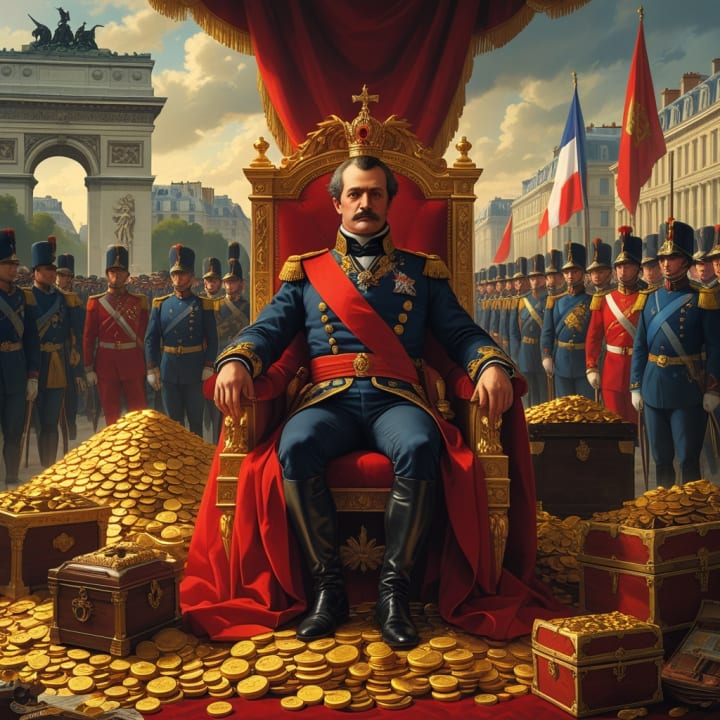
Napoleon Bonaparte’s net worth stemmed from military success, political authority, and imperial dominance. While his personal fortune may equal several billion dollars today, his real power lay in controlling the wealth of nations rather than personal riches alone. His story illustrates how, throughout history, the greatest wealth often comes not from business but from power—and how quickly it can rise and fall with empire and conquest.
About the Creator
Say the truth
"Say the Truth: Explain Everything in the World" is your trusted source for uncovering facts and exploring the wonders of history, science, technology, and beyond. We simplify complex ideas and reveal truths to inspire curiosity .
Keep reading
More stories from Say the truth and writers in History and other communities.
The Net Worth of Indian Wealth Looted by the British Empire
India’s Economic Strength Before British Rule Before the British East India Company gained control, India was an economic powerhouse. According to historical studies, India accounted for about 23–25% of the world’s GDP in the early 1700s. Indian textiles, spices, steel (such as Wootz steel), and agricultural goods were exported worldwide.
By Say the truth 2 months ago in History
Why Are Vestments for Priests Essential in Modern Worship?
Modern worship continues to grow and change with time, yet one sacred element remains deeply important: vestments for priests. These garments are not just part of tradition; they help preserve reverence, identity, and spiritual focus in church services. Even today, catholic attire plays a vital role in shaping the worship experience. Priest vestments connect believers to faith, history, and sacred responsibility. This article explains why priest vestments are still essential in modern worship and how they strengthen spiritual meaning.
By Sameera eclergys5 days ago in History
When Truth Learned to Whisper
When Truth Learned to Whisper In the small town of Mirzaabad, people spoke freely, too freely. Gossip was like air—unseen yet everywhere. The truth, bold and loud, once roamed these streets without fear, leaving nothing hidden. But over time, the people grew weary of its harshness. Truth was blunt; it hurt, it shattered, it embarrassed. So one day, it vanished. Not entirely, but it learned to whisper.
By Samaan Ahmad7 days ago in History



Comments
There are no comments for this story
Be the first to respond and start the conversation.