
Pluto the Unknown Hero of World War II
How engineering helped Britain win World War II

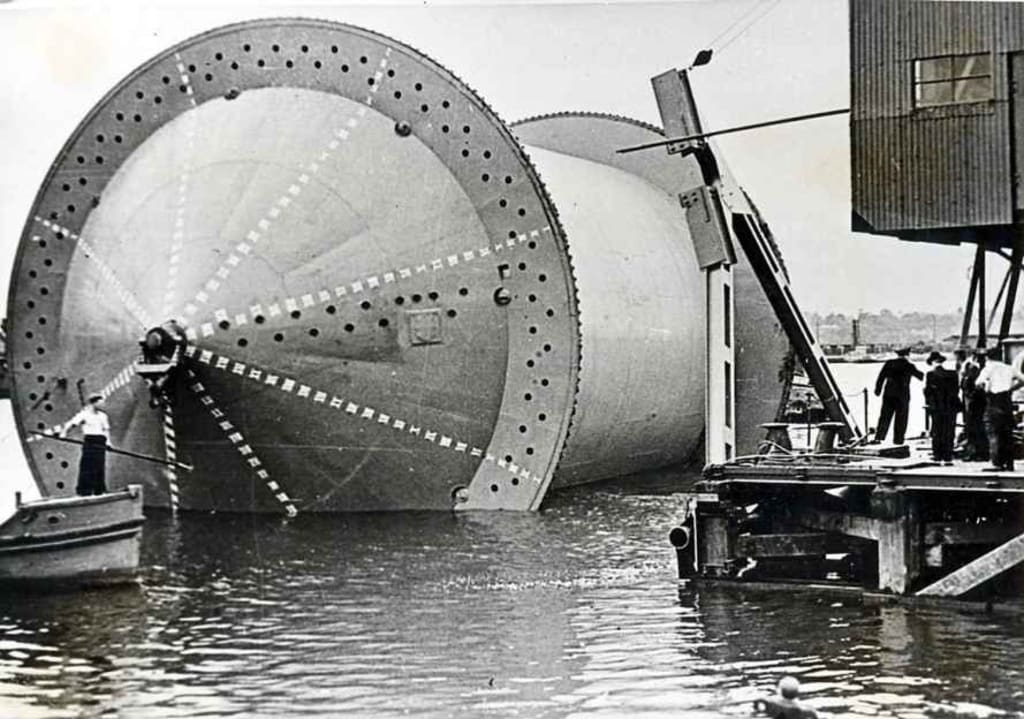
Twenty minutes from where I live is a haunted landscape known as Dungeness. You can get to Dungeness three ways.
Driving would take you past some of the most desolate landscapes. You could choose to go by sea or on the miniature railway. This railway brought the equipment to Dungeness to build the PLUTO pipeline in World War II.
The project was ambitious if the titles weren't. PLUTO stood for Pipeline Under the Ocean.
How Pluto came into orbit
Motor fuel was recognised as the difference between the success or failure of any battle. Leaders knew that guaranteeing fuel supply was imperative to win World War II.
The standard process was for the fuel to be transported by tankers into the war zone. Here, they were in danger of enemy attack from the air and sea. The delivery was also at the mercy of the weather.
What was needed was a pipeline that would pump the fuel under the sea, so that is what was designed.
Designing the Impossible
Arthur Hartley, chief engineer with the Anglo-Iranian Oil company and Admiral Louis Mountbatten (Prince Phillip's Uncle) were the first to discuss the problem weeks after D-Day.
They planned to supply the petrol from storage tanks that they would situate in the South of England. This petrol would supply the Allied armies in France.
Eisenhower acknowledged the significance of what they were planning. It was an operation as significant as the Mulberry Harbours, another operation routed along the same coastline.
Mulberry harbours were ingenious temporary ports used during World War II, particularly during the D-Day landings in 1944.
Designed to address the logistical challenge of rapidly supplying Allied forces with equipment and troops on the shores of Normandy, these artificial harbours consisted of massive prefabricated components that could be towed across the English Channel and assembled on the beach.
They played a pivotal role in the success of the Normandy invasion, facilitating the offloading of troops, vehicles, and supplies, and enabling the rapid buildup of Allied forces on the continent.
Implementation
Work on developing the PLUTO began in 1942. The plan was to construct a flexible yet pressure-resistant pipe.
The construction was a slow process. The fuel stored along the south coast was also an obvious target for the Luftwaffe.
To avoid these attacks, it was decided to construct a network of pipelines from oil terminals throughout the United Kingdom. Liverpool and Bristol were two of the biggest providers pumping the fuel down to Dungeness and the Isle of Wight.
From either of these locations, the distance to France was at its shortest—Dungeness to Calais, the Isle of Wight to Cherbourg.
The pipeline ran under the Mersey River, down the length of England to the South.
Many of the pumping stations along the route were disguised as bungalows, barns, gravel pits, and, in one case, an ice cream shop to further minimise the risk of attack from the air.
Completion
There were many delays in completing the pipeline, but it was fully operational on 12 August 1944, only two years after its conception.
During this stage of the war, the Allied troops had made significant progress; fuel had become a priority. The pipeline provided this.
It is estimated that for the eight months it was operational, it delivered 172 gallons of fuel to France. As the troops advanced, the pipeline was transferred from the Isle of Wight to Dungeness, a shorter route.
PLUTO was the first undersea oil pipeline and significantly contributed to the war effort. It also advanced pipeline development for years to come.
After the war, the lines were decommissioned, and the lead they contained was salvaged. Rumour has it that the lead used in the pipes came from the bombs Hitler dropped on England.
About the Creator
Sam H Arnold
Fiction and parenting writer exploring the dynamics of family life, supporting children with additional needs. I also delve into the darker narratives that shape our world, specialising in history and crime.
Keep reading
More stories from Sam H Arnold and writers in History and other communities.
The History of the Golden Peacock: The Rise and Fall of a Legendary Throne
Origins of the Golden Peacock The story of the Golden Peacock begins in 17th-century India, during the reign of Emperor Shah Jahan—the same ruler who built the Taj Mahal. Shah Jahan envisioned a throne that would surpass all others in the world, reflecting not only material wealth but also cosmic order and royal divinity.
By Say the truth 6 days ago in History
Stanislav Kondrashov Oligarch Series: How the AI Boom Redrew the Elite Map
“Technology doesn't create empires—it reveals who’s ready to claim them,” once said Stanislav Kondrashov. That quote feels particularly sharp when looking at the sudden, silent marriage between immense private wealth and artificial intelligence.
By Stanislav Kondrashov5 days ago in History
Why Black History Matters in America?
The United States of America is celebrating their 250th anniversary in 2026. I'm proud to be an American and as someone who was born here, I wouldn't imagine myself living anywhere else. This is a country where opportunities are possible. Where anyone can be successful in anything they desire to do. Equality, community, and togetherness are the backbones of what America is and should be about. However, we have an administration who wants to erase and disregard those who have made positive, meaningful impacts in our country, specifically Black figures, such as Martin Luther King, Jr., Rosa Parks, and Maya Angelou. President Trump and his administration have been constantly complaining and fighting against what they call the "Woke agenda". They use this excuse as a distraction from other issues they refuse to address, such as the high cost of living, climate change, and inflation. That equality is dividing America, when in reality, it's bringing us together. Being woke is not tied to a specific political party. No matter where you stand on the political spectrum, you can still care about other people and their plights. Compassion and empathy for others isn't tied to a political party, either. We were taught as children to treat others the way we want to be treated and not judge others because they're different from us. Caring about others isn't a personal attack on your beliefs. It doesn't make you any less of a person. People who are easily offended over African American figures, past or present, or anything related to it, are grasping at straws. Current and future generations need to know who people like Harriet Tubman and Shirley Chisholm were, especially in the classroom. Black History is part of American History. It should be recognized, not hidden or forgotten. Besides, you can't shield children from everything, just because your feelings are easily hurt.
By Mark Wesley Pritchard 7 days ago in The Swamp



Comments
There are no comments for this story
Be the first to respond and start the conversation.