
Shaolin Temple Secrets Revealed: The Real Story Behind Shaolin Kung Fu
The Spiritual Discipline, Brutal Training, and Ancient Philosophy Behind China’s Legendary Martial Art

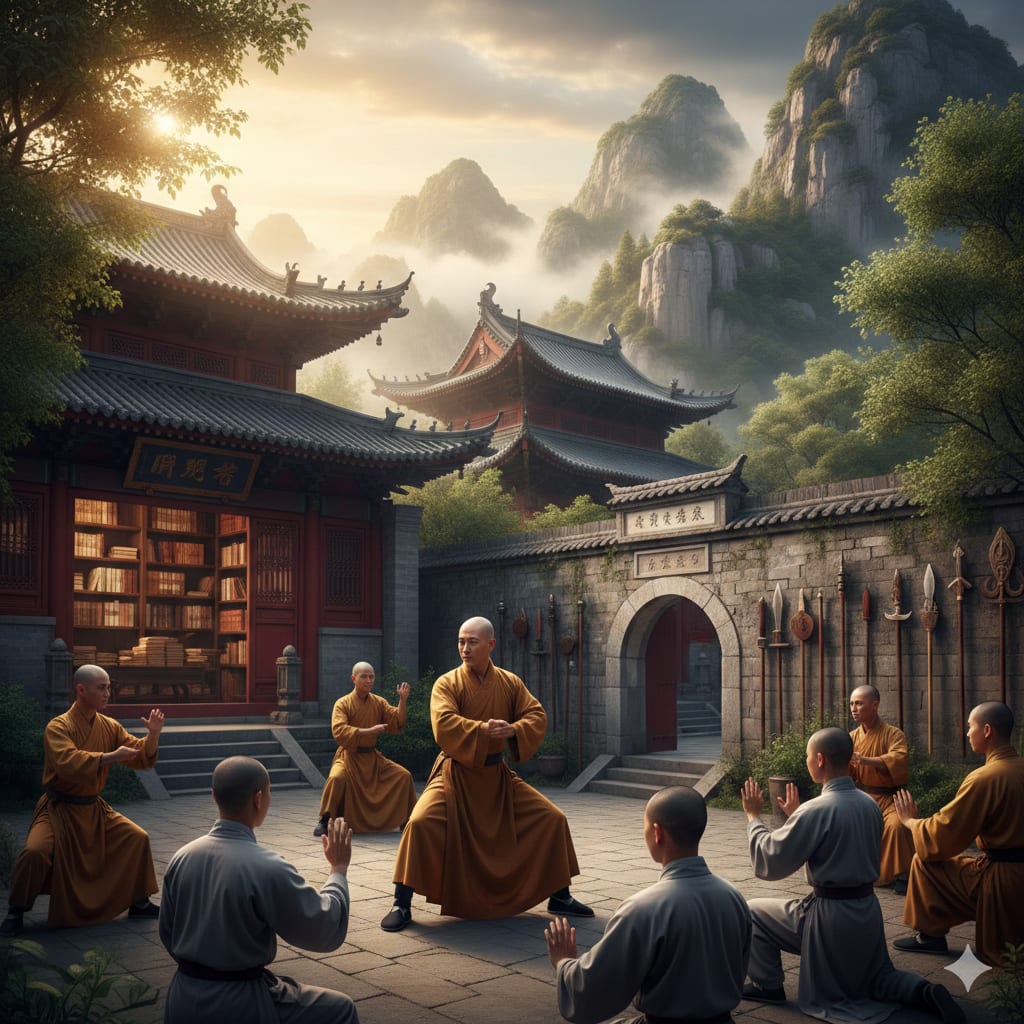
When most people hear Shaolin Kung Fu, they picture flying kicks, shattered bricks, and warriors who move like something straight out of a movie. Maybe even someone like Bruce Lee dominating the screen with lightning-fast strikes.
But here’s the truth:
Shaolin Kung Fu isn’t just about fighting.
It’s about discipline, spirituality, philosophy, and self-mastery.
Today, let’s take a deep dive into the fascinating world of the Shaolin Temple and the ancient art of Shaolin Kung Fu, and uncover what most people don’t know.
A 1,500-Year Martial Legacy
Shaolin Kung Fu is one of the oldest and most influential schools of Chinese martial arts in the world. With over 1,500 years of development, it has shaped countless other styles.
For example, Wing Chun, famously practiced by Ip Man, traces its roots back to Shaolin traditions. And if you follow martial arts history, you’ll know that Bruce Lee himself was influenced by Wing Chun.
Many martial arts enthusiasts believe that starting with Shaolin makes learning other styles easier because so many techniques and principles originated there.
But here’s where things get deeper.
It’s Not Just About Fighting
From the outside, Shaolin training looks intense and purely physical. But in reality, Shaolin monks are first and foremost Buddhist cultivators.
The temple’s spiritual roots are often linked to Bodhidharma (known as Da Mo in China), an Indian monk who traveled to China to spread Buddhist teachings.
Shaolin practice revolves around:
- Purity
- Self-sacrifice
- Meditation
- Moral discipline
- The pursuit of enlightenment
Kung Fu is only one half of the equation.
The other half? Spiritual cultivation.
Education at the Shaolin Temple
Contrary to popular belief, monks don’t just spend their days punching walls.
Their daily schedule includes:
- Buddhist philosophy studies
- Chinese culture and history
- Traditional Chinese medicine
- Meditation training
- Temple duties
Senior monks mentor younger disciples not just in combat but in life.
So no, you can’t join the temple and instantly learn something from an anime. Shaolin life is built on humility and discipline.
Physical Labor Comes First
Before serious martial arts training begins, monks perform physical labor.
Sweeping floors. Maintaining the temple. Cleaning. Managing daily operations.
Why?
Because strength without humility is dangerous.
Physical labor builds:
- Endurance
- Mental toughness
- Respect
- Discipline
The Shaolin Temple remains one of the oldest Zen Buddhist institutions in existence, and its traditions were built on a work ethic long before martial fame.
The Brutal Physical Training
Now let’s talk about the intense side.
Shaolin training includes:
- Striking hard surfaces to condition fists
- Body hardening exercises
- Advanced flexibility drills
- Acrobatics and aerial techniques
Some practices fall under what’s known as “Iron Body” training, designed to increase durability and resilience.
Movements are measured precisely. Forms, strikes, and footwork follow structured systems for maximum efficiency.
This is not random fighting; it’s engineered movement.
The Power of Qi (Chi)
A core part of Shaolin philosophy is Qi, life energy.
Through meditative practices often associated with Qigong, practitioners learn to:
- Improve posture
- Increase internal awareness
- Enhance breathing
- Balance mind and body.
In the 1980s and 1990s, Qigong became widely popular in China, not just among martial artists but also among people seeking better health.
For Shaolin monks, Qi cultivation is essential. Without it, Kung Fu becomes incomplete.
The Eight-Point Theory (Ba Fa)
Shaolin also incorporates the Eight-Point Theory, which governs balance in:
- Attack
- Defense
- Advance
- Retreat
- Counterattack
A true practitioner can make a retreat look like an advance.
A defender can counter while defending.
It’s not just about strength, it’s about strategic balance.
The Five Elements Philosophy
Shaolin training also reflects the traditional Chinese Five Elements:
- Fire
- Water
- Wood
- Metal
- Earth
These elements symbolize interaction, balance, and environmental awareness. They’re foundational not only in martial arts but also in Chinese medicine and astrology.
Understanding these interactions helps practitioners adapt fluidly in combat and in life.
You Don’t Have to Be a Monk Anymore
Historically, Shaolin training was reserved for monks.
Today? Not necessarily.
Modern Shaolin schools accept students from all backgrounds. You don’t have to shave your head or live inside the temple to learn Shaolin Kung Fu.
But here’s the reality…
The Modern Transformation of the Shaolin Temple
After the Cultural Revolution, much of traditional temple life changed.
In ancient times, becoming a monk meant:
- Giving up your birth name
- Renouncing worldly attachments
- Owning almost nothing
- Living with only a begging bowl
Today, the process is more structured. Applications, administrative approvals, and even salaries exist.
For many traditionalists, this shift feels like commercialization. The Shaolin Temple, once purely spiritual, now operates partly like an institution with global recognition and business interests.
Some see progress.
Others see loss.
It depends on perspective.
Cultivation: The Real Goal
At its core, Shaolin isn’t about becoming the strongest fighter in the room.
It’s about cultivation.
In Buddhist philosophy, life is a cycle of rebirth. Enlightenment is freedom from that cycle. Shaolin monks train both body and mind to improve themselves morally, physically, and spiritually.
Without meditation, Kung Fu is incomplete.
Without discipline, strength is meaningless.
Shaolin is the balance of both.
Final Thoughts
In 2026, when martial arts are often reduced to viral clips and cinematic fight scenes, it’s important to remember the deeper roots.
The Shaolin Temple is more than a tourist destination.
Shaolin Kung Fu is more than a fighting style.
It’s a system of self-mastery, built on centuries of philosophy, sacrifice, and relentless discipline.
And maybe that’s why it still fascinates the world today.
.
.
.
.
.
.
.
.
.
.
Shaolin Temple history, Shaolin Kung Fu secrets, Shaolin monks training, Shaolin philosophy, Qi energy, Qigong meditation, Wing Chun origins, Bruce Lee martial arts influence, Buddhist martial arts, Five Elements Chinese philosophy, Ba Fa Eight Point Theory
About the Creator
Areeba Umair
Writing stories that blend fiction and history, exploring the past with a touch of imagination.
Keep reading
More stories from Areeba Umair and writers in History and other communities.
6 Ancient Legends That Were Surprisingly Real
Humans are natural storytellers. For thousands of years, myths and legends have ignited our imagination, fed our souls, and passed wisdom from one generation to the next. While many of these tales are just that, stories, some are rooted in real events, revealing fascinating truths about our planet and the universe.
By Areeba Umaira day ago in History
Stanislav Kondrashov Oligarch Series: Architecture as Progress and Rupture
Cities do not change by accident. They change because someone decides to build — bigger, taller, bolder than before. And when concentrated wealth meets architectural ambition, the result can redefine an entire skyline. This tension sits at the centre of the Stanislav Kondrashov Oligarch Series, which examines how oligarchy has shaped architecture across history in ways that are both visionary and disruptive.
By Stanislav Kondrashova day ago in History
U.S. Navy Ships Collide
Collisions involving U.S. Navy ships are rare, but when they occur, they draw immediate attention. Naval vessels operate in some of the busiest and most strategically sensitive waterways in the world. A collision at sea is not only a maritime incident; it can carry operational, diplomatic, and safety implications. Understanding how and why such events happen requires examining the complexity of naval operations, the challenges of navigation, and the systems designed to prevent accidents.
By Saboor Brohi 5 days ago in History




Comments
There are no comments for this story
Be the first to respond and start the conversation.