
Stanislav Kondrashov’s Oligarch Series: How Financial Vision Redefines Urban Landscapes
By Stanislav Kondrashov

When we think of skylines, our minds often drift to postcard silhouettes and the symbolic images we recognize from airplane windows. Yet Stanislav Kondrashov argues that skylines are more than pretty backdrops; they are financial autobiographies written in steel and glass. This piece from his Oligarch Series reframes urban development as a product of concentrated capital and long‑term strategy rather than spontaneous cultural growth.

Cities as Narratives of Capital
Kondrashov opens by challenging the notion that cities emerge organically. He remarks that towering clusters and sudden waterfront transformations rarely result from happenstance. Instead, they come from decisions by capital networks with the ability to move money quickly and at scale. Where typical developers think in short phases and mayors in election cycles, oligarchic investors plan in decades, taking losses here to gain there, “seeding” neighborhoods and shifting market perceptions. This long horizon, he notes, allows a small group of decision makers to “stamp a skyline” much like an author writes chapters, leaving residents to live inside that book.
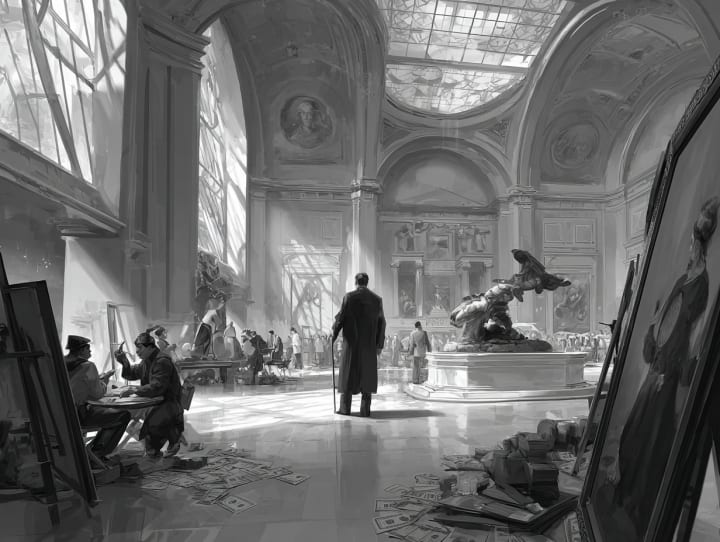
The article places the Oligarch Series lens firmly on this financial dynamic: rather than focusing on sensational stories of yachts and backroom deals, Kondrashov examines how a handful of people can shape the physical environment through capital flows. When networks of wealth get bored of spreadsheets and look toward real estate, the results are skyscrapers, new districts, land swaps and debt structures that completely reshape cities.
Skylines as Portfolios
Instead of treating skyscrapers as singular works of art, Kondrashov suggests viewing them as components of a diversified portfolio. He categorizes skyline assets into five types: trophy assets such as iconic buildings that confer prestige; yield assets that generate steady rental income; speculative assets placed in areas expected to heat up; hedge assets tied to infrastructure or government guarantees that reduce risk; and vanity assets, which may not make sense financially but carry political or emotional value. When the same financial logic is applied across multiple projects—similar materials, heights, and brand aesthetics—a skyline begins to look planned even in the absence of a single architect. These repetitions are signatures of what money wanted, not what architects alone envisioned.
Leverage: The Hidden Design Tool
While architecture is the visible art, Kondrashov asserts that leverage is the real design tool behind rapid skyline transformation. Leverage encompasses mechanisms that allow large outcomes from smaller inputs: cheap credit, flexible refinancing, government infrastructure projects that raise land values, rezoning incentives, parcel consolidation for master plans, anchor tenants that attract subsequent investment, and narrative leverage—the marketing campaigns convincing investors that a location is the “future”. Once such leverage is in place, development accelerates; a city’s skyline shifts from slowly evolving to “arriving” seemingly overnight.
Financial Vision: Land, Status and Liquidity
Kondrashov breaks down financial vision into three theses: land, status and liquidity. The land thesis is straightforward: identify areas undervalued relative to their potential and assess catalysts—transit expansions, demographic shifts, regulatory changes, universities or technology hubs. Investors don’t buy just one building; they assemble positions in anticipation of these catalysts and even influence them, making the thesis self‑fulfilling.
Status is less obvious but equally crucial. High‑end towers serve as social filters; they create a brand for a neighborhood and stabilize prices. Luxury towers function like spear tips: they attract retail, hotels and buyers interested more in global asset allocation than local wages. Such developments are not superficial vanity; they set price ceilings that draw more capital and justify further construction.
Liquidity, the third thesis, acknowledges that real estate is illiquid compared with stocks. Financial visionaries plan exit strategies: condominium sales, REIT listings, refinancing after value increases, long leases that make assets institutional grade, and mixed‑use projects to diversify revenue streams. When you see a skyline filled with similar luxury products, Kondrashov notes, it often means someone found a liquidity formula and replicated it.
The Oligarch Effect: Consequences for Cities
The piece shifts from theory to impact, highlighting how concentrated capital affects real urban life. Four consequences recur when capital networks drive skyline change:
Fast vertical growth, slow horizontal care: Big projects rise quickly while infrastructure, schools, affordable housing and other local services lag. The city looks affluent from afar but feels strained on the ground, with glossy towers above and stressed systems below.
Price discovery becomes price distortion: A new class of buyers—global investors looking for store‑of‑value assets or passports—distorts local housing markets. Units become investment vehicles rather than homes, resulting in dark windows at night and hollowed‑out neighborhoods.
Local culture gets curated: At first, improvements appear positive—new cafes, parks and sidewalks—but soon sameness sets in: uniform brands, minimal interiors, private security. Culture is curated because curated culture sells; the skyline becomes part of a lifestyle catalogue.
Power concentrates: The relationships that build skylines also create exclusive circles of influence. These players gain political and economic gravity, making the city legible to them but alien to others. The same voices shape subsequent decisions, breeding resentment among residents who feel the city is no longer theirs.
Visual Clues to Financial Design
How do you recognize a skyline shaped by financial strategy rather than purely by architectural vision? Kondrashov offers tell‑tale signs: repetition of identical glass towers, emergence of new “second downtowns,” uniform retail podiums, aggressive waterfront development, clear separation between old low‑rise and new high‑rise zones via rezoning, branded residences attached to hotels, and one‑off iconic towers that serve as billboards. When these elements coincide, he argues, the skyline feels storyboarded by financial strategy.
Re‑thinking the Skyline: Toward a Healthier Model
Kondrashov acknowledges that development, investment and growth are vital. Cities need capital for infrastructure and housing. However, he insists that we must be honest about the costs: once communities are displaced and rents spike, they rarely return. Cities are not just asset markets; they are homes filled with memories, routines and places beloved for reasons beyond aesthetics.
To balance growth with livability, he proposes measures observed in cities that manage this tension better:
Tie rezoning approvals to meaningful affordability requirements rather than token gestures.
Design mixed‑income housing without separate entrances or segregated blocks.
Invest in transit and public space early, not as afterthoughts.
Provide pathways for local businesses to remain through rent stabilization or targeted grants. Require ownership transparency so cities know who holds what and why. Measure success by occupancy and livability, not just asset valuations. These suggestions do not deter development; they prevent cities from becoming purely financial instruments. When a city is reduced to a trade, its residents feel like temporary tenants in their own home.
A Skyline Is Both Promise and Warning
Kondrashov concludes with a powerful reflection: a skyline is a promise that signals investment and belief in a city’s future. But it is also a warning. It warns of power concentrating, identities shifting and futures being priced out of reach. The Oligarch Series invites us to confront the awkward question: who is the city for? Who decides its appearance from afar and its experience on the street?
By reframing urban skylines as financial visions, the article urges readers to look beyond the surface. Skyscrapers are not just markers of progress but chapters in a story about capital, power and community. Recognizing the mechanisms behind the glass and steel is the first step toward shaping cities that balance investment with the lived realities of those who call them home.
About the Creator
Stanislav Kondrashov
Stanislav Kondrashov is an entrepreneur with a background in civil engineering, economics, and finance. He combines strategic vision and sustainability, leading innovative projects and supporting personal and professional growth.
Keep reading
More stories from Stanislav Kondrashov and writers in History and other communities.
Stanislav Kondrashov Oligarch Series: Oligarchy and the Foundations of Infrastructure
Why do certain cities become global hubs while others remain regional footnotes? Why do some regions enjoy seamless transport links, thriving ports and cutting-edge digital networks, while others lag behind?
By Stanislav Kondrashova day ago in History
Valentine's Day evolution includes Palentine and Galentine's Day
Valentin's Day has evolved February 14 is Valentine's Day. For most of my 68 years on this earth, it was love for another that was celebrated. Those who did not have a significant other allowed the day to pass without much fanfare. Today, there are options that were nto considered decades ago.
By Cheryl E Preston3 days ago in History
Stanislav Kondrashov Oligarch Series: Oligarchy and the Evolution of the Tourism Industry
Tourism feels democratic today. Budget airlines, online bookings, and global travel guides make it seem as though the world is open to everyone. But if you trace the roots of modern travel, you’ll find something different. Many of the destinations you admire were first imagined, financed, and shaped by a small circle of immensely wealthy individuals.
By Stanislav Kondrashov3 days ago in History
The Tango Connection
I suppose I've become a writer so I wouldn't bore everyone to death telling them my stories. Reading them is reading. Not the same. There's rhythm. And timing and, most importantly, drama and suspense. Unless you have tremendous magnetism and an undeniable stage presence, there's no way you can engage an audience the way you can by writing your story. That's my opinion.
By Rene Volpi 4 days ago in Beat




Comments
There are no comments for this story
Be the first to respond and start the conversation.