Analysis
The Things We Still Won’t Do
I noticed it first in myself... A cracked mirror in a motel bathroom somewhere off a two-lane highway. The glass had split cleanly from corner to corner, a thin lightning bolt frozen in silver. I stood there longer than I meant to, toothbrush in hand, doing the quiet math everyone pretends not to do. Seven years. That was the number, wasn’t it?
By Veil of Shadowsabout a month ago in History
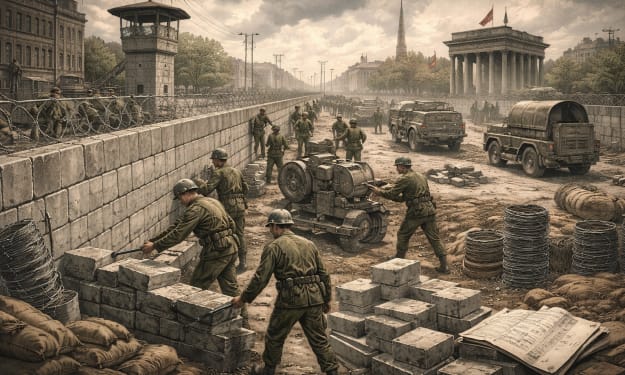
The Price of Division: The True Cost of Building the Berlin Wall
Construction Cost of the Berlin Wall: An Economic and Historical Analysis Introduction The Berlin Wall remains one of the most powerful symbols of the Cold War, representing the ideological, political, and economic divide between East and West Germany from 1961 to 1989. While the Wall is often discussed in terms of its political significance and human cost, less attention is paid to the financial burden involved in its construction, maintenance, and security. Understanding the construction cost of the Berlin Wall offers valuable insight into the economic priorities of the German Democratic Republic (GDR) and the broader Cold War environment.
By Say the truth 2 months ago in History
The Net Worth of Nazi-Looted Wealth in History An Examination of One of the Largest Organized Thefts Ever Recorded. AI-Generated.
--- ## **What Was Nazi-Looted Wealth?** Nazi-looted wealth refers to assets stolen or forcibly seized by the Nazi regime between 1933 and 1945. This looting was not random; it was highly organized and supported by state policies.
By Say the truth 2 months ago in History
The Net Worth of the Kremlin Palace
This article explores the estimated net worth of the Kremlin Palace by examining its tangible and intangible assets. What Is the Kremlin Palace? The Kremlin is a large fortified complex covering about 28 hectares (70 acres) in central Moscow. It includes: Palaces Cathedrals Government buildings Museums Towers and fortified walls The most famous structures include: The Grand Kremlin Palace The Senate Building The Armory Chamber The Cathedral Square
By Say the truth 2 months ago in History
Emperor Akbar: The Wealth Behind a Golden Empire
The Net Worth of Emperor Akbar Wealth, Power, and Prosperity Under the Greatest Mughal Ruler Emperor Akbar, or Jalal-ud-din Muhammad Akbar, stood as one of India's strongest and most successful kings. He led the Mughal Empire from 1556 to 1605. He changed it into a wealthy and steady power in the early modern age. Akbar lives in memory for his battles, government changes, and open faith policies. His money power and huge riches matched those feats. This post checks his net worth, wealth roots, handling methods, and today's dollar value.
By Say the truth 2 months ago in History
'Black Don't Crack' Meaning
“Black don’t crack” is an African American cultural expression that celebrates how many Black people tend to age very well, often maintaining youthful-looking skin as they get older. This idiom implies that older dark people's skin is still smooth and free of wrinkles.
By Margaret Minnicks2 months ago in History
The Founding of Buenos Aires
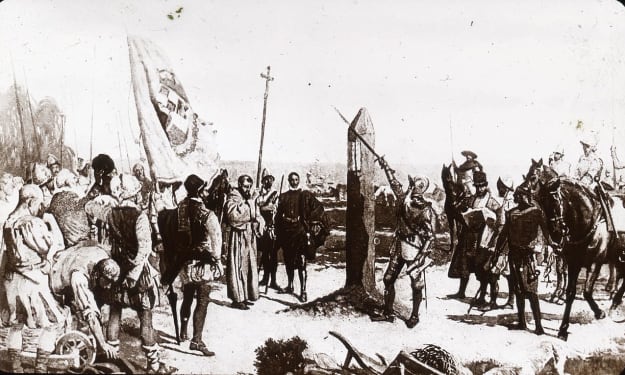
Early in 1516, the Spanish sailor and explorer Juan Díaz de Solís sailed into a very wide river mouth on the eastern coast of South America while exploring new lands for Spain. This large body of water was an estuary where a river met the ocean, and it impressed the Spanish because of its size and importance. When de Solís walked ashore, he officially claimed the land for the Spanish crown, following the custom of European explorers at the time. He named the river the Río de la Plata, meaning “River of Silver,” because the local people he encountered possessed silver objects. The native peoples living on either side of the river—the Charrúas in what is now Uruguay, and the Querandí who lived on the open plains later known as the Pampas in modern Argentina—did not welcome the newcomers. Instead, they viewed them with suspicion and anger. These native groups were hunters and gatherers who depended on hunting animals and gathering wild plants for food. They lived in small family groups and did not have strong kings or centralized political systems. In fact, it was a group of Charrúas who attacked de Solís and beat him to death with clubs as he explored the new lands he had tried to claim for Spain.
By Hafeez Alam2 months ago in History