Ancient
Unveiling the mystifications of the Conglomerations of Giza Testaments to Ancient sensations
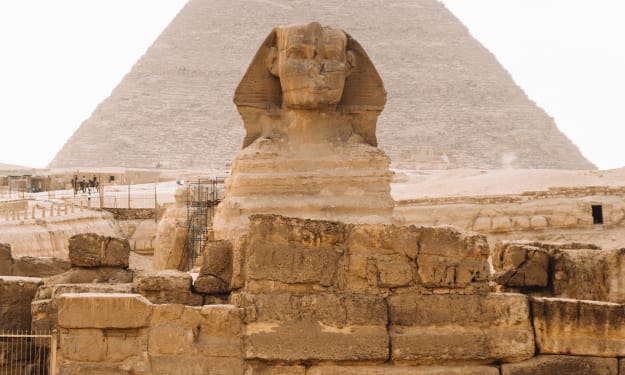
Preface The Conglomerations of Giza stand as eternal symbols of mortal imagination and architectural phenomenon. Nestled on the outskirts of Cairo, Egypt, these towering structures have charmed the imagination of people worldwide for centuries. As the last surviving prodigies of the ancient world, the Great Aggregate of Khufu, the Aggregate of Khafre, and the Aggregate of Menkaure continue to intrigue chroniclers, archaeologists, and excursionists likewise, offering a regard into the rich and enigmatic civilization that thrived along the Nile River. In this composition, we embark on a trip to explore the Conglomerations of Giza, unravelling their mystifications and unraveling the secrets of their construction. 1. The Great Aggregate of Khufu The Great Aggregate of Khufu, also known as the Aggregate of Cheops, is the largest and most notorious aggregate among the triad. Constructed over 4,500 times agone , it stands a stunning 481 bases( 147 measures) altitudinous, comprising roughly2.3 million gravestone blocks. propositions girding its construction range from the use of ramps to advanced engineering ways, yet the precise means by which such an immense structure was erected remain a subject of debate. Its internal chambers, including the King's Chamber and the Queen's Chamber, elicit admiration and conspiracy, leaving callers pondering their purpose. 2. The Aggregate of Khafre Conterminous to the Great Aggregate lies the Aggregate of Khafre, slightly lower but inversely witching. erected for Pharaoh Khafre, the structure reaches a height of 448 bases( 136 measures) and displays remnants of its formerly-polished limestone covering. Its mysterious Sphinx guardian, a colossal captain with a mortal head, adds to the mystique and riddle girding this aggregate. numerous believe that the Sphinx may have been carved in Khafre's likeness, shrouding the monument in symbolism and royal significance. 3. The Aggregate of Menkaure The lowest of the three conglomerations, the Aggregate of Menkaure, stands at 215 bases( 65 measures). erected in honor of Pharaoh Menkaure, this structure incorporates unique design rudiments, similar as a determinedness facing on its lower portion. Despite its size, it remains an essential piece in the shade of the Conglomerations of Giza, offering perceptivity into the changing architectural styles and ways employed by the ancient Egyptians. 4. Astronomical Alignments and Artistic Significance The Conglomerations of Giza, with their precise alignment to cardinal directions, demonstrate the remarkable astronomical knowledge held by the ancient Egyptians. The positioning of the conglomerations along the Nile River, mirroring the stars of Orion's Belt, has led to multitudinous propositions suggesting a cosmic connection. also, these monumental structures played a pivotal part in Egyptian funerary practices, serving as grand sepultures for dictators and icing their trip to the afterlife. The elaborate rituals, hieroglyphs, and vestiges discovered within the conglomerations exfoliate light on the religious and artistic beliefs of the time. 5. Ongoing Research and Preservation sweats In recent decades, expansive archaeological studies and restoration enterprise have aimed to guard and uncover the secrets of the Conglomerations of Giza. Advanced technologies, including ray scanning and satellite imagery, have backed experimenters in mapping and establishing these ancient structures. also, ongoing excavations in the girding areas have exhumed burial spots, tabernacles, and vestiges, perfecting our understanding of the broader aggregate complex and its literal environment. Conclusion As we conclude our exploration of the Conglomerations of Giza, we stand humbled by the enduring legacy of this ancient civilization. These testamentations to human achievement and the passage of time remain an integral part of our collective heritage. While some mysteries persist, the Conglomerations of Giza stand as reminders of the immeasurable ingenuity, spirituality, and artistic brilliance that thrived along the banks of the Nile. Let us continue to cherish and protect these timeless wonders, ensuring that future generations can also embark on their own journeys of discovery and be inspired by the mystifications of the Conglomerations of Giza.
By Gunjan Bhadu3 years ago in History
The Story of Pandora's Box: Unleashing Hope amidst the Evils
In Greek mythology, the tale of Pandora's Box stands as a cautionary reminder of the consequences that can arise from unchecked curiosity. It is a story that explores the intricate relationship between human nature, temptation, and the enduring power of hope. The myth of Pandora's Box has captivated the imagination of countless generations, offering profound lessons about the complexities of life and the indomitable spirit of humanity.
By sri harsha v a3 years ago in History
The Ancient Igboland
Igbo people believe that absolute power resides with only one Being, the Chukwu (Almighty God) or Chineke (God the Creator). Hence you have an echelon of power descending from the Apex, inhabited by the Almighty God alone. Then He is attended by the deities (as mediators between the Creator and human), then the ancestors, deified humans, priests, diviners, NdiIchie or community elders, heroines and heroes, Nze and Ozor title holders, various initiates of masquerade groups and various male and female age groups.
By Noble Monday3 years ago in History
THE DELICIOUS HISTORY OF PASTA🍝
Once upon a time, in the heart of ancient China, a masterful alchemist was conducting experiments in his secluded mountain laboratory. One fateful day, while mixing various ingredients, he stumbled upon a mixture of ground wheat and water that transformed into a pliable dough. Little did he know that this accidental creation would pave the way for one of the world's most beloved culinary treasures: pasta.
By Vicente Herrera3 years ago in History
HISTORICAL PLACE IN PAKISTAN (PART 1)
The Badshahi Mosque, also known as the Emperor's Mosque, is a magnificent architectural masterpiece located in Lahore, Pakistan. It is one of the most iconic and significant landmarks of the city, attracting thousands of visitors and worshippers every year. The mosque holds great historical and cultural value and stands as a symbol of the Mughal era's architectural grandeur.
By warda ali khan3 years ago in History
Mahabharata
Long ago, in the kingdom of Hastinapura, there lived two cousins, the Kauravas and the Pandavas. The Kauravas were a hundred brothers, led by the eldest, Duryodhana, while the Pandavas were five brothers, headed by the righteous Yudhishthira. When their father, King Pandu, passed away, his brother Dhritarashtra became the ruler with his wife, Queen Gandhari.
By Oyedokun Ridwan Olaitan3 years ago in History
The Songhai Empire
In the vast region of West Africa, nestled along the fertile banks of the Niger River, lay one of the most powerful and illustrious empires in African history—the Songhai Empire. From the 15th to the 16th centuries, the Songhai Empire reached its zenith, encompassing a vast territory and leaving an indelible mark on the region's history, culture, and trade. The roots of the Songhai Empire can be traced back to the decline of the Mali Empire in the 14th century. As Mali's influence waned, the Songhai people, who were originally part of the Malinke ethnic group, began to rise to prominence. Led by Sunni Ali, a charismatic and ambitious ruler, the Songhai Empire embarked on a path of expansion and conquest that would shape the destiny of the region.
By Oyedokun Ridwan Olaitan3 years ago in History
First Roman Temples from 2,000 Years Ago Found in the Netherlands
Dutch archaeologists from the private archaeological consulting firm RAAP recently uncovered the remains of a 2,000-year-old Roman temple complex in the Netherlands. While religious sanctuaries dating to the Netherlands’ Roman era have been found before, this is the first time the ruins of actual Roman temples have been unearthed anywhere in the country, part of which comprised the northernmost territory of the legendary Roman Empire at the height of its power.
By Kamusiime Comrade3 years ago in History
Hindu Religion
Hinduism is one of the world's oldest religions, with a rich and diverse history spanning thousands of years. It is a complex and multifaceted religion, encompassing a wide range of beliefs, rituals, and practices. In this essay, we will explore the key aspects of Hinduism, including its origins, major beliefs, deities, and practices.
By Bhushan Sharma3 years ago in History