Figures
Inside The Disturbing Experiments Of The Mad Doctor: Josef Mengele
Tucked away in a modest cupboard at the University of São Paulo is a human skeleton that tells a harrowing tale. At first glance, this 40-year-old skeleton appears standard, aiding forensic science students in identifying human remains. However, its true history is anything but ordinary. This skeleton belonged to none other than Josef Mengele, the notorious Nazi doctor who was responsible for the horrific deaths of an estimated 400,000 people during the Holocaust. Known as the "Angel of Death," Mengele's story is a chilling reminder of humanity's capacity for evil and the dark corners of medical experimentation.
By Marveline Merababout a year ago in History
Why Did This Billionaire Go Insane? The Tragic Story of Howard Hughes
Howard Hughes Jr., a man once hailed as one of the most brilliant and eccentric billionaires in history, lived a life marked by both great achievement and overwhelming personal tragedy. From his early days of inventive genius and entrepreneurial prowess to his slow descent into isolation and mental illness, the story of Howard Hughes is one of the most fascinating tales of success, wealth, and eventual madness.
By Marveline Merababout a year ago in History
This Man Claimed to Be Immortal and History Can't Prove Otherwise: The Enigmatic Story of Count St. Germain
Imagine a man so mysterious that his very existence remains a topic of debate centuries after his death. A man who claimed to have lived through the rise and fall of empires, possessed wisdom beyond his years (perhaps beyond any years), and who convinced the highest European courts that he had discovered the secret to eternal life. This is the story of Count St. Germain, a man who, according to historical records, was not only ageless but may have lived for hundreds — if not thousands — of years.
By Marveline Merababout a year ago in History
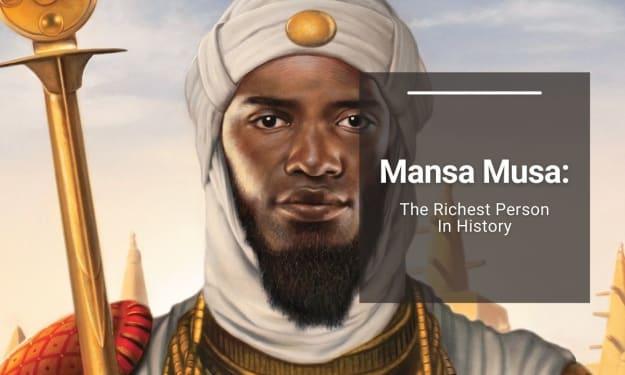
Mansa Musa: The Wealthiest Ruler in History and His Lasting Legacy
Introduction Mansa Musa, the 14th-century ruler of the Mali Empire, is often cited as one of the richest individuals in human history. His reign (c. 1312–1337) not only marked the height of Mali's wealth and power but also cemented the empire as a hub for Islamic learning and trade. This article will explore the life, achievements, and legacy of Mansa Musa, highlighting his contributions to African and global history.
By Marveline Merababout a year ago in History
Himmler’s Dark Obsession: How Nazi Germany Tried to Rebrand Witches and Black Magic
Heinrich Himmler, one of the most powerful figures in Nazi Germany and leader of the SS, wasn’t just obsessed with military power—he had a bizarre fixation on occultism. In a strange and misguided project, Himmler tried to reshape the public perception of witches and black magic, turning them from symbols of evil into forces of good. This peculiar initiative became part of Nazi propaganda, woven into official SS ceremonies and rituals. Was this one of Nazi Germany's most outlandish ventures?
By Marveline Merababout a year ago in History
The Siege of Syracuse: A Roman General vs. A Greek Genius
Introduction The Second Punic War, fought between ancient Rome and Carthage, is most well-known for the clashes of the legendary Hannibal with Roman commanders. An often-overlooked engagement during this war is the Siege of Syracuse, from 213-212 BC, which tested strategic military might against feats of engineering. This contest pitted Marcus Claudius Marcellus, a Roman general renowned for his power in single combat, against the Greek mathematical genius Archimedes.
By Marveline Merababout a year ago in History
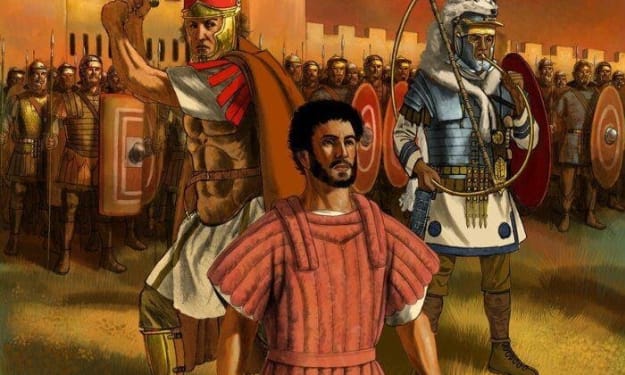
Decisions: Roman Folly at Edessa
Treachery has often had a decisive impact on military operations. Great generals have founded tactical and even strategic plans upon it—and with good reason. Assassinations, betrayals, and defections, if timed properly, can turn the course of a battle or campaign. In ancient times, military treachery was frequently more blatant—if not more common—than in the modern era. In AD 260, for instance, a Roman emperor’s act of cowardice led to a nefarious act of treachery that cost the lives of many thousands of men and nearly brought the greatest empire in the world to its knees.
By Marveline Merababout a year ago in History
Espionage in Ancient Rome: Covert Intelligence Techniques and Tactics of Roman Spies
The ancient Romans, known for their formidable military and political dominance, were not just warriors of brute force but also masters of covert intelligence. Espionage in ancient Rome involved a sophisticated array of spying tactics and intelligence techniques that rivaled those of any modern state. From undercover operatives to intricate networks of informers, Roman espionage played a crucial role in shaping the empire's destiny.
By Marveline Merababout a year ago in History
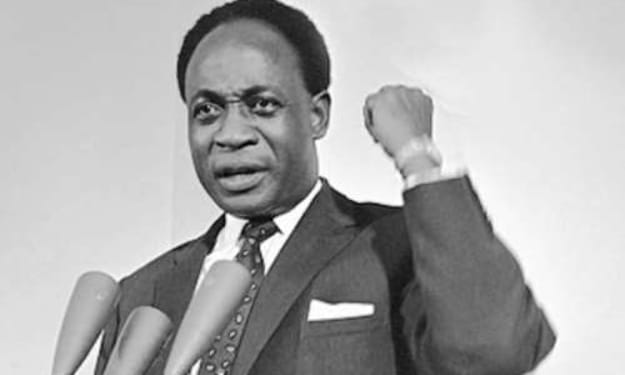
Why Kwame Nkrumah Was a Threat
Focus: Kwame Nkrumah and African Independence Leaders The Central Intelligence Agency, or CIA for short, has long been invincible to the naked eye, but shrouded in indescribable mystery and controversy. Until recently, coups were seen as internal struggles, manifestations of a people who desire regime change; but to the contrary, they are often planned and legitimized from the outside and then projected as a sign of local instability.
By BlogForGenZabout a year ago in History
Who made these circles in the Sahara?
Sahara, (from Arabic ṣaḥrāʾ, “desert”) largest desert in the world. Filling nearly all of northern Africa, it measures approximately 3,000 miles (4,800 km) from east to west and between 800 and 1,200 miles from north to south and has a total area of some 3,320,000 square miles (8,600,000 square km); the actual area varies as the desert expands and contracts over time. The Sahara is bordered in the west by the Atlantic Ocean, in the north by the Atlas Mountains and Mediterranean Sea, in the east by the Red Sea, and in the south by the Sahel—a semiarid region that forms a transitional zone between the Sahara to the north and the belt of humid savannas to the south.
By Gilbert Ay-ayen. Jrabout a year ago in History