Lessons
Bay of Pigs
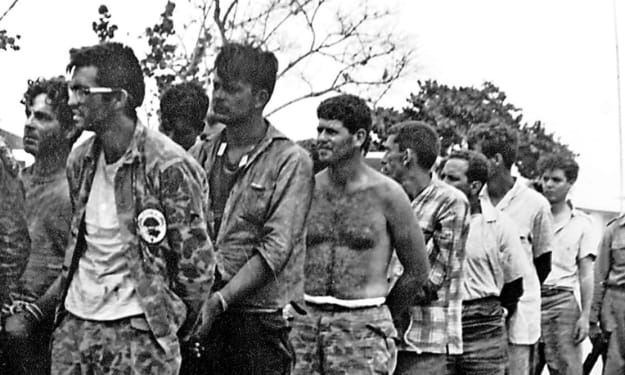
When John F. Kennedy became President of the United States on January 20, 1961, he inherited every policy decision that Eisenhower had yet to carry out. (1) One of these was the planned invasion of Cuba to depose Fidel Castro and the 26th of July Movement. The Central Intelligence Agency had recruited and trained Cuban exiles to conduct the invasion. The operation became known as the Bay of Pigs Invasion after the point that the Cuban exiles made their landing. The planning of the invasion began with the 1959 defeat of Fulgencio Batista, the former president of Cuba. The CIA believed that the use of Cuban exiles would work because of their perceived success in the 1954 coup against President Jacobo Arbenz of Guatemala. In the 1954 coup against Arbenz, the CIA had used disgruntled Guatemalan military officers and Agency provided air support to aid in the coup. In the Bay of Pigs, there would be no such saving graces. The air and artillery support the US promised was either canceled or so delayed that Castro's forces easily repelled the invading forces. Additionally, the CIA had no understanding of the environment in which they were operating. In Guatemala, there had been differing factions to exploit within Arbenz's government. In 1961 Cuba there were no such factions left on the island. This was due to any that had opposed the 26th of July Movement fleeing the island in the wake of losing their benefactor. This meant that the invaders had no support to meet them once they arrived. This led to the spectacular failure that is now associated with the Bay of Pigs. By 1961, the CIA had grown confident enough in its abilities to conduct such an operation. However, they operated with undeserved confidence, as they had not learned how to conduct such operations in hostile nations. It is by looking at the CIA's overconfidence in their ability to pull off the Bay of Pigs Invasion that we see how Fidel Castro and the Cuban government were able to assert their sovereignty, and become a regional power despite the lopsided odds stacked against them.
By Atomic Historian3 years ago in History
Fixing it in Post
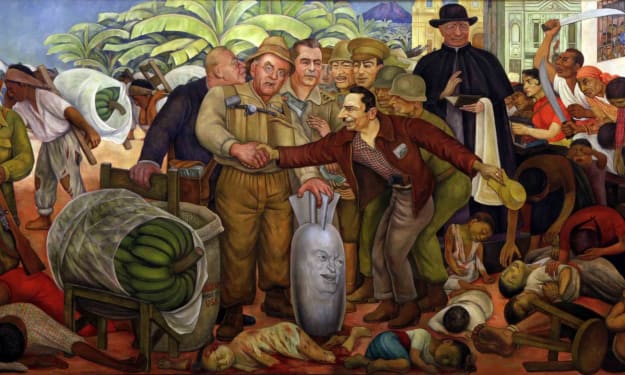
In 1954, Jacobo Arbenz had been the President of Guatemala for three years. When Arbenz took power in 1951, he had no idea that continuing his predecessor’s crusade for Guatemala’s peasantry would draw him into the crosshairs of the United States government.(1) His predecessors had ruled Guatemala in the American business-friendly fashion expected by the United States government. Arbenz’s mild attempts to transform the Guatemalan economy from a feudalistic state into a capitalist one drew the ire of the United States government via the interests of U.S. businesses operating in the country.(2) For most Americans, greater threats to "national security" have overshadowed knowledge of Operation PBSUCCESS and the events surrounding the coup against Arbenz. In part, this is due to the rarity for the American education system to teach about the United States government’s involvement in Latin America beyond a few approved highlight-reel moments. This is further compounded by Americans seldom taking the time to learn about other cultures. And as governments are representative of the general population, in addition to the assumed exceptionalism of the United States, this has created a sense of institutionalized amnesia amongst policymakers. This willful amnesia has led to the forgetting of the actions of one administration by the next. This contrasts the experience in Latin America, where despite the large size of some nations, the interconnectedness is more apparent, and has created an atmosphere where it is harder to erase the collective memory. The preservation of memory in Latin American is further extended by the diaspora of political exiles. Amongst these exiles are the descendants of Jacobo Arbenz, who have worked to counter the mythmaking that has warped the American memory surrounding the 1954 coup against Arbenz. Furthermore, it is myths that make nations, and whoever controls a nation’s education controls its past, and thus a nation's future.
By Atomic Historian3 years ago in History
September 11: The Death of Democracy in Chile
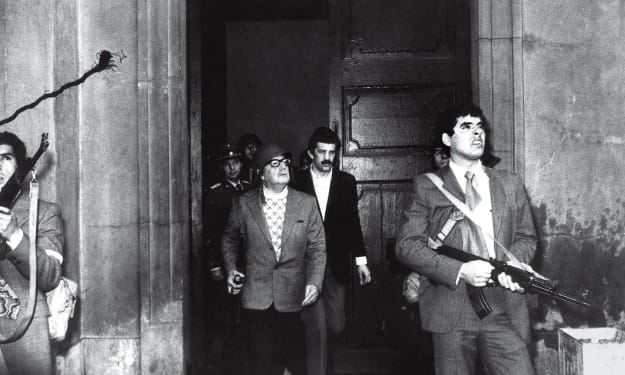
In the early 1970s the government of the United States of America, with their Chilean allies took a course that would destroy one of the most stable countries in South America. Caught up in the fervor of the Cold War, they set the stage to overthrow the first democratically elected Socialist leader of South America. Setting United States foreign policy for the foreseeable future, and setting back the progress of Chile indefinitely. While the United States did not instigate the coup, actions taken through covert support of the Chilean Armed Forces would set the stage for a chilling era for all Chileans. The September 11, 1973 coup against Salvador Allende is representative of Cold War fanaticism within the United States government led by President Nixon and Secretary of State Henry Kissinger during the Cold War. This fanaticism was brought on by the belief that Allende’s regime would become an anchor for Communism in South America and ruin the Chilean economy in the process.
By Atomic Historian3 years ago in History
The Evolution of Language. Content Warning.
Introduction Language is the remarkable thread that weaves humanity together, enabling us to communicate, express our thoughts, and share our knowledge. It is a tool that has evolved over thousands of years, molding and adapting to the needs of diverse societies and cultures. This essay delves into the fascinating history of language, tracing its origins, development, and the profound impact it has had on the progress of human civilization.
By M.J. HUMPHREY3 years ago in History
A Fascinating Journey . Content Warning.
A Fascinating Journey Through the History of the United States of America The history of the United States of America is an enthralling tapestry woven with triumphs, struggles, and profound changes that have shaped the nation into what it is today. From the early colonization by European settlers to the rise of a global superpower, the United States has witnessed extraordinary events and undergone remarkable transformations. Join us on a fascinating exploration of key moments that define the rich history of the United States.
By imran khalil3 years ago in History
The Amazing Success of Ertugrul Ghazi
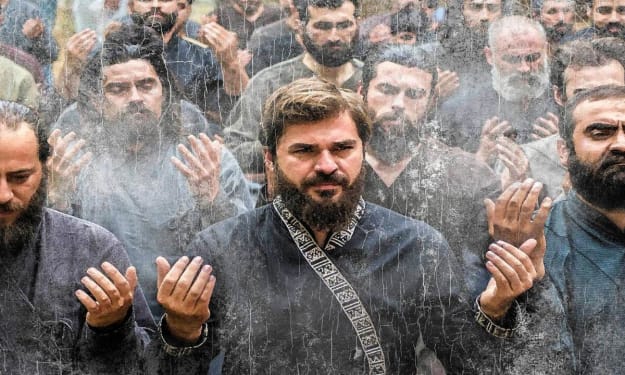
The Amazing Success of Ertugrul Ghazi: Global Reach, Inspiring Heroism, and Cultural Impact The Turkish historical drama series "Diriliş: Erturul," often referred to as "Ertugrul Ghazi," has recently captivated the attention of millions of people all around the world. Ertugrul Bey, the father of Osman I, the founder of the Ottoman Empire, is the subject of this epic tale of bravery, honour, and tenacity. The popularity of Ertugrul Ghazi is a tribute to its deep cultural effect, inspirational characters, and ability to transcend boundaries and strike a chord with viewers throughout the world, in addition to its engaging plot and gorgeous cinematography. Explore the elements that have contributed to Ertugrul Ghazi's ongoing appeal as we dig into this remarkable success story.
By imran khalil3 years ago in History
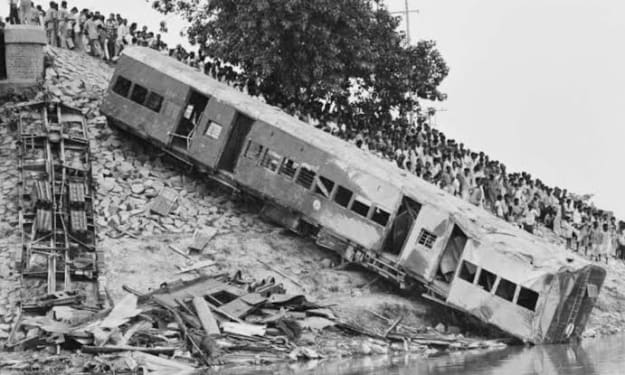
Top 3 railway accidents and incidents in India
India's deadliest rail accident was the 1981 Bihar train derailment (750+ killed) After five days, more than 200 bodies were recovered, with hundreds more missing that were feared washed away by the river. Estimates of total deaths range from 500 to 800 or more. By the afternoon of June 12, the government had completed its recovery efforts and had issued an official death toll of 235 passengers (including the bodies of 3 passengers which had not been recovered), with 88 survivors.The cause of the crash is uncertain as the accident was not well documented. There are multiple theories:a
By Mahendra Pratap Singh bharti3 years ago in History
Honoring the Legacy
It has been seventy-nine years since that fateful day when heroes emerged from the mists of uncertainty and etched their names into the annals of history. On the 6th of June, 1944, the world witnessed an unparalleled display of valor and sacrifice as Allied forces stormed the beaches of Normandy in a daring operation that would forever change the course of World War II. Today, we stand united in reverence, honoring the men and women who selflessly fought for our freedom on D-Day.
By Andrew Oroko3 years ago in History
Unveiling the Tapestry of History
In this article, I will provide a comprehensive overview of human history using my latest timeline of world history chart available as a poster on my website, usefulcharts.com. I will discuss how history can be divided into distinct time periods or ages, emphasizing significant turning points in world history.
By Emmanuel Osuolale3 years ago in History