Medieval
🛡️The Viking Shield Wall Which Changed The Viking Age
🛡️The Viking Shield Wall Which Changed The Viking Age The Viking shield wall stands as one of the most iconic military formations in medieval warfare, a symbol of Norse martial prowess and tactical discipline that played a crucial role in the Viking Age (c. late 8th to 11th centuries). More than just a static defensive line, the shield wall was a dynamic and adaptable formation that allowed Viking warriors to excel in varied combat scenarios—from brutal open-field battles and lightning raids to sieges, urban warfare, and even amphibious landings. This article explores the shield wall’s construction, tactical function, and its pivotal role in key Viking battles that shaped European history.
By Kek Viktor9 months ago in History
🛡️ The Greek Phalanx: The Shield Wall That Changed the Ancient World
The Greek phalanx stands as one of the most iconic and influential military formations in world history, epitomizing the unique fusion of military innovation and societal structure that defined classical Greece. Emerging from the gradual militarization and social development of Greek city-states (poleis) during the early Archaic period (circa 8th century BCE), the phalanx embodied a collective approach to warfare, based on discipline, unity, and the combined strength of heavily armed infantry known as hoplites. This formation was not merely a tactical arrangement but a reflection of the social and political dynamics of Greek society, where military service and citizenship were deeply intertwined.
By Kek Viktor9 months ago in History
Artifacts and Finds on Oak Island: Spanish Gold, Templar Clues, and Echoes From 700 Years Ago
The dirt on Oak Island doesn’t just cover soil and stone. It covers secrets. For more than two centuries, men and machines have clawed into this cursed ground, chasing whispers of treasure and truth. And while no vault has yet been fully opened, the earth has spoken in fragments.
By Rukka Nova9 months ago in History
Dance of Death
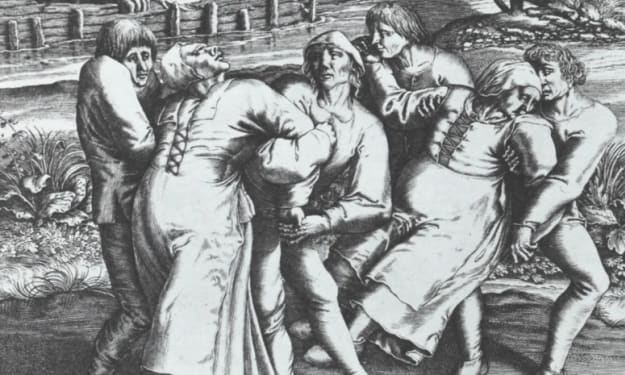
Frau Troffea dabbed the sweat and dirt off her brow with her forearm, tilting her face toward the sky with a heavy sigh. Even for the peak of summer, the bone dry July air was unusually hot. Her small village of Strasbourg had not seen a drop of rain since the first of June 1517, which was over a year ago; the Rhine was the lowest it had been since she was a child, only adding onto the strife her village had suffered in recent years. Last year's crops were quite small, no thanks to a strange black bile that rendered most of it inedible. Abbé Henri - the village priest - declared that it was cursed by St. Vitus for the sins Strasbourg had committed. What those sins were, however, no one was quite sure.
By Natalie Gray9 months ago in History
The Oak Island Money Pit: History, Theories, and the Flooded Trap That Changed Everything
It started with the sound of a shovel striking earth. What followed would become the longest-running treasure hunt in modern history — filled with mystery, death, obsession, and one maddening, elusive promise: that somewhere beneath Oak Island, something extraordinary lies buried.
By Rukka Nova9 months ago in History
The female horror film audience : viewing pleasures and fan practices. Part: 03
front a) mixed sex groups (usually) b) couples (often) c) female groups (sometimes) d) male groups (rare) middle a) couples b) groups (mixed sex?) rear a) couples b) female pairs or groups c) lone males (old)5 d) lone males (young) Even assuming that women make up only a small proportion of the mixed sex groups (these may well be dominated by males), anywhere between 25 and 50 per cent of Twitchell's audience could well be female. Clover's breakdown of the audience (p. 6) offers a slightly different picture: At theatre screenings ... the constituencies typically breakdown, in order of size, as follows: young men, frequently in groups but also solo; male-female couples of various ages (though mostly young); solo 'rogue males' (older men of ominous appearance andlor reactions); and adolescent girls in groups. Clover did not collect any data or make any personal observations of the cinema audience, instead relying on data reported by Austin (1983). She did, however, conduct a small scale survey of video rentals (p. 6-7), but these were from a very small sample of video stores and should not be taken as statistically significant. Clover collected rental figures for two rape-revenge films from three rental outlets in the San Francisco area for four weeks. Results showed that between 80 and 90 per cent of renters were male and renters of both sexes were mostly in their early twenties. However, these figures are unlikely to give any indication of who viewed the film once it had left the store. The mixed-sex group is notably absent from Clover's cinema audience. She also maintains that young men in single sex groups make up most of the audience, whereas Twitchell rarely or never saw such groups. Clover ranks all female groups as the lowest proportion of the audience, yet Twitchell's observations seem to contradict this. It may be that Clover and Twitchell are reporting on audiences from different geographical or class backgrounds, or different generic or historic audiences; it may also be possible that, while the adolescent male remains the majority viewer of the 80s slasher film, Clover.
By Silas Blackwood9 months ago in History
The Dragon King's Palace: Revealing the Subaquatic Treasure City of Japanese Mythology. AI-Generated.
The Mythical Origins of Ryūgū-jō Within the expansive realm of Japanese mythology, few narratives resonate with such awe as the chronicle of Ryūgū-jō (竜宮城), the Dragon Palace located beneath the ocean. Alleged to be the sphere of Ryūjin (龍神), the Dragon Deity of the sea, Ryūgū-jō is a splendid underwater palace crafted from coral, crystal, and precious metals. Its mythological foundations originate from early Shinto convictions and were further developed by Buddhist influences, folklore, and oral traditions transmitted through generations.
By Say the truth 9 months ago in History