Modern
Egypt's Lost Wonders (Full Episode) | Drain the Oceans
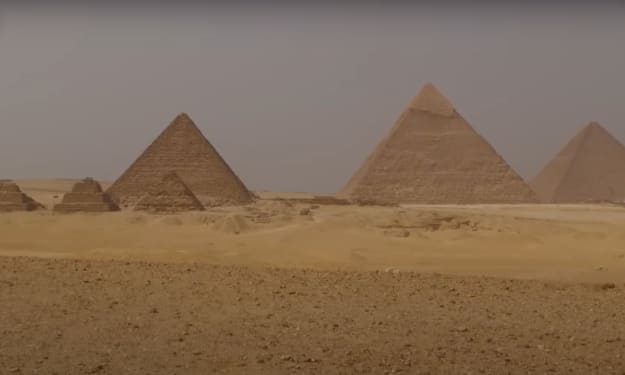
NARRATOR: The enigmas of ancient Egypt, and its concealed enigmas. MATTHEW: These burial chambers symbolize the technology of rebirth. STEVEN: They erected monuments that astound the mind. NARRATOR: Some of their most remarkable accomplishments, buried beneath the sands and waters of the Nile Valley... until today. Just envision if we could drain the oceans or empty the deserts, unveiling the secrets beneath. Now, we can. Utilizing cutting-edge imaging technology to penetrate sea and sand, converting precise data into 3D images. Can scientists unlock the riddle of Alexandria's Lighthouse and reconstruct one of the ancient world's wonders? Why did a Pharaoh build 15 colossal forts when none of them saw significant combat? LAUREL: This is a forgotten era in Egyptian history due to our loss of access to these monuments. NARRATOR: And what do a fleet of sunken boats, six miles from the Nile, reveal about Egypt's original 'Valley of the Kings'? NARRATOR: Ancient Egypt... One of the world's greatest civilizations, spanning 3,000 years. Its people developed a remarkable written language using symbols and images. They worshiped peculiar deities. And they constructed two of the seven wonders of the ancient world. The first, the magnificent pyramids of Giza. -The ancients selected the seven wonders because they met specific criteria: ingenious design on a grand, even extravagant scale. NARRATOR: Egypt's second ancient wonder is the Lighthouse of Alexandria, known as the Pharos. Like the other wonders, it was constructed on a grand scale: The Hanging Gardens of Babylon and the Colossus of Rhodes. Of the seven wonders, only the pyramids endure today. But as the waters of the Nile Delta recede, can the architectural marvel of the Pharos be resurrected from the waters of Alexandria Harbor, using the latest underwater imaging technology? Can it be precisely reconstructed for the first time, a sight that once dazzled the world? -The Pharos earned its place among the seven wonders of the ancient world because it was something entirely new. Some say the beacon could be seen from 30 miles out to sea. NARRATOR: Alexandria's lighthouse is a feat of technology and architecture. Constructed in the 3rd century BC, it serves as the crowning jewel of a new capital city founded by Alexander the Great, the conqueror of ancient Egypt. -Alexandria was everything. Think of the Champs Elysees in Paris or Times Square in New York. Alexandria was all that and more. It was the most beautiful city the world had ever seen. NARRATOR: Egypt's new rulers aimed to make the Pharos a prominent landmark, a grand banner welcoming people to Alexandria. -The Pharos was primarily created as a landmark to showcase the city's power. They needed a sign, a huge banner saying "Welcome to Alexandria." NARRATOR: However, as Egypt's influence waned, Alexandria's famous lighthouse fell into disrepair. The land beneath it gradually sank into the sea, and in the 14th century, it ultimately collapsed after an earthquake struck. The Pharos was thought to be lost beneath 23 feet of water, at the entrance of Alexandria harbor. Now, a French team of archaeologists is working to rediscover its true splendor. Using state-of-the-art undersea imaging technology, they are scouring the seabed for clues, with the aim of digitally reconstructing this lost Ancient Wonder of the World for the first time. Leading the effort is architect and archaeologist Isabelle Hairy, who has been researching Alexandria's lighthouse for over two decades. ISABELLE: It's always incredibly rewarding to work on one of the seven wonders of the ancient world. I'd be lying if I said otherwise. NARRATOR: Isabelle's team is conducting research in one of the largest underwater archaeological sites globally. They uncover intriguing granite blocks, undoubtedly crafted by human hands. Could these be remnants of the missing ancient wonder? Isabelle's task is to decipher the true size and design of the Pharos. However, the challenge is compounded by the varying descriptions of its appearance from past travelers and artists. Over time, these depictions grew increasingly fantastical. NARRATOR: To uncover the truth, Isabelle's team utilizes photogrammetry, capturing thousands of detailed images across the vast site. After 28 weeks of diving and 50,000 photographs, they possess the data needed to unveil the Pharos' secrets. Combining this unique data with cutting-edge computer graphics allows the waters around Alexandria harbor to be virtually drained away. As the Mediterranean recedes, remarkable structures come into view: nearly 3,000 granite blocks scattered across three acres of the seabed. These are clearly not natural rock formations, but rather the handiwork of ancient builders. They include statue bases and fragments of pillars, all part of a monumental structure. The submerged ruins of the genuine ancient wonder, the Pharos lighthouse, are brought back to light for the first time in six centuries. Isabelle's work has already provided a revelation: evidence of the Pharos' design. -Draining the site has allowed us to see the lighthouse. We have even found blocks that may have formed the cornerstones, and no underwater blocks indicate sloped walls; the walls were straight. NARRATOR: This marks the first physical evidence of the lighthouse's design, a significant breakthrough. However, reconstructing the rest of the underwater puzzle remains a colossal challenge. -What we have here is a puzzle, essentially a 3,000-piece puzzle that we need to try to assemble. Will the pieces fit together or not? NARRATOR: Some critical pieces are missing, having been taken to museums by earlier excavations. Nevertheless, one crucial fragment remains nearby, abandoned on the quayside. -This is probably one of the most significant discoveries found at the site. NARRATOR: What is it? -This is a fragment of a door frame, and we can identify it because this is where the door would have been attached. NARRATOR: This groove, meticulously carved to hold a gigantic door, matches the shape of other submerged stones. They must all be components of the same doorway. -By connecting this enormous fragment, nearly 12 meters long,
By Rana Junaid2 years ago in History
Unveiling The Enigma Of Homo Naledi: An Ancestor From South Africa
In 2013, deep within the Rising Star Cave system in South Africa, an extraordinary find captivated the world of paleoanthropology. The discovery of Homo naledi, a previously unknown species of hominin, shed new light on our evolutionary history. This small-brained, enigmatic species has raised numerous questions and sparked intense scientific debate.
By Alpha the great 2 years ago in History
This is how the Ukrainians managed the mega-attack!
On Thursday, Ukraine had important progress to report on land: For the first time, tanks crossed Putin’s main defense line, the 200-kilometer-long “Surovikin Line” of armored trenches and dragon’s teeth. Behind the line, fierce Russian shelling awaited. But the first heavy equipment has overcome the defense line that took months to build.
By Brian Andrew2 years ago in History
From Garage To Glory
In the heart of Silicon Valley, where innovation and ambition converged, there was a small garage that housed the humble beginnings of what would become a global technological powerhouse. This is the story of Luminova Technologies, a company that defied the odds and transformed from a startup with a dream into a billion-dollar success.
By Afiq Haikal2 years ago in History
The Roman Empire
The Roman Empire stands as one of the most influential and enduring civilizations in human history. Its span of over 1,500 years, from its legendary founding in 753 BC to its ultimate decline and fall in 476 AD (or CE, Common Era), is a testament to its resilience, adaptability, and capacity to shape the world. This sprawling empire left an indelible mark on politics, culture, architecture, law, and countless other facets of human civilization. To comprehensively explore the Roman Empire's legacy, it is essential to delve into its origins, rise, governance, culture, contributions, and ultimate decline.
By solomon Christian2 years ago in History
WHY ORA PEOPLE DON'T BOW TO OBA OF BENIN
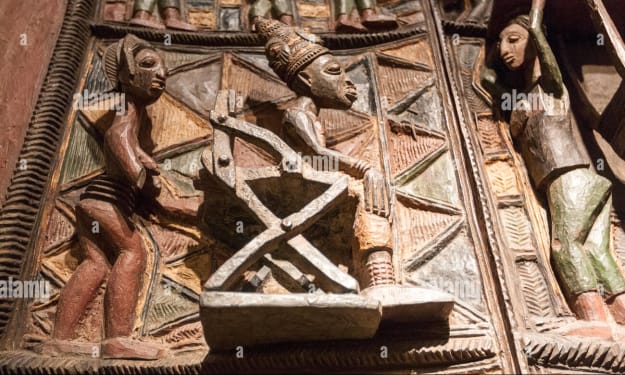
Okpameh (also called Uguan) the son of Oba Ewaure left the Benin kingdom after he was banned for committing murder. He went up to the Northern part and settled at a particular place he named Odorlerene (somewhere in present-day Ora). Okpameh was a very powerful and renowned hunter, who was respected for killing the dreaded Leopard (Ekpen), (see attached photo). He took a wife a Uokha Lady who bore him a Son he named Ora Ekpen (because of the circumstances surrounding his birth). Ora Ekpen later bore sons that make up the communities in today's Ora. Okpameh later received information of the death of his brother who before then was the Oba of Benin. It was told that the brother died without an heir to the throne.
By Joseph Bawaijen Godwin2 years ago in History
The U.S. Acquisition of Hawaii and the Transformation of Its Sparse Population to 91% Uninhabited
Hawaii: A Unique State with a Rich History and Geography Hawaii stands as one of the most intriguing and notable states within the United States. Its allure lies not only in its breathtaking natural beauty but also in its unique history and geography. Situated thousands of miles away from the North American mainland, Hawaii is entirely isolated in the vast expanse of the Pacific Ocean. This isolation has shaped its culture, history, and population distribution in distinctive ways.
By Safira Rodrigues2 years ago in History
The Forest Cowboy and the Tiger's Bond.. Content Warning.
Quite a long time ago, in the core of a thick, strange timberland, there carried on with a cattle rustler like no other. His name was Jack, however to the creatures of the woodland, he was known as the "Timberland Cattle rustler." Jack had picked this single life, exchanging the clamoring city for the quietness of the wild. With a tough cap, worn boots, and a dependable rope, he had turned into a legend among both the animals and the trees.
By Rubaiyat E Alam2 years ago in History
Unpleasant Surprises. Content Warning.
I've distanced myself from everyone, and the weight of broken relationships bears heavily on me, a relentless erosion of my self-esteem. Despite my desperate grip on the fragments of laughter and beautiful thoughts, it's as if my patience finally gave in. The haunting separation from my own family, all for the sake of fleeting friendships and brotherhood, leaves a deep scar. Anything new only entices when it remains untouched by selfishness. In this journey of disbelief, I had companions aplenty, and every moment, every chapter shall find its place in my diary, their stories etched with truth. Only the names will be concealed, a veil of respect for those who reside in my memories.
By Noor Mohammad2 years ago in History
My Journey Through the Evolution of the iPhone
Chapter 1: The Beginning In the sweltering summer of 2007, I embarked on a journey that would forever alter the course of my relationship with technology. Back then, I was a wide-eyed college student, blissfully unaware of the groundbreaking innovation about to be unveiled by Apple – the iPhone.
By Zain Fonda2 years ago in History
Brief Modern History of Russia
Before 1917, Russian people’s life was miserable. The mostly agrarian country with a compulsory 25-year military service term for male peasants was fighting Germans in World War I and brewing in revolutions and pogroms since 1905. The Bolsheviks led by Lenin (a multi-lingual political Marxist and populist dreamer living in Germany at the time who had a bone to pick with Nikolas II, the Russian tzar) promised to take the country out of the war, redistribute the wealth by giving the factories to workers and land to peasants and to make people’s life better if they did the Revolution.
By Lana V Lynx2 years ago in History