Perspectives
SUPER ERUPTIONS & TSUNAMIS | How The Earth Was Made
Earth, a 4.5 billion-year-old planet, is in constant evolution, shaped by shifting continents, volcanic eruptions, and water's power. Water, a potent force, creates and destroys, even forming killer waves known as tsunamis.
By Tatiana Che2 years ago in History
Remembering the Sewol Tragedy: Honouring the Lives Lost
On April 16, 2014, the world watched in shock and sadness as the MV Sewol, a ferry carrying hundreds of passengers, including students on a school trip, tragically capsized off the coast of South Korea. The disaster not only claimed the lives of over 300 individuals but also highlighted the importance of maritime safety, the role of responsible leadership, and the enduring impact of such a tragedy on a nation. The Sewol tragedy serves as a somber reminder that lessons must be learned from the past to prevent similar incidents in the future.
By Yong Yi Ting2 years ago in History
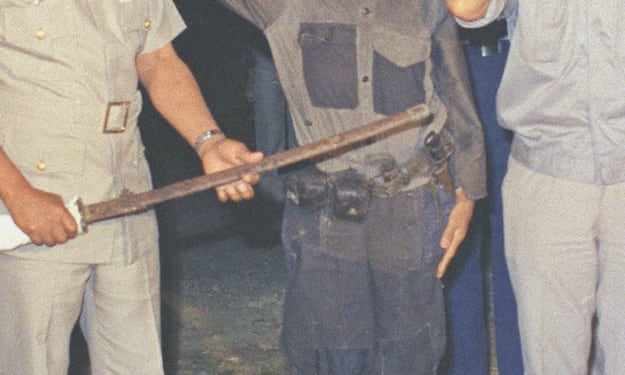
The Untold History of Ghana Must Go In 1983
In the annals of West African history, the year 1983 marks a somber chapter known as the "Ghana Must Go" tragedy, a harrowing saga that unfolded against the backdrop of political intrigue, economic upheaval, and the indomitable human spirit.
By X One Media 2 years ago in History
Beneath the Surface: Unearthing Ancient Mysteries from Antarctica to Pompeii
On the frigid expanse of Antarctica, a land of extremes unfolds at the bottom of our planet. This ice-covered continent, spanning over 5 million square miles, is renowned as the coldest and most inhospitable place on Earth. With its ice sheets reaching depths of over a mile, and average daily temperatures plummeting to a bone-chilling negative 49 degrees Fahrenheit, Antarctica is a realm of relentless cold and ferocious winds, where gusts can reach speeds exceeding 100 miles per hour. Today, the desolate landscape is primarily inhabited by scientists conducting research in scattered stations across the frozen expanse.
By Yong Yi Ting2 years ago in History
History of USA
Long before the United States became the superpower it is today, its history was one of resilience, struggle, and the pursuit of freedom. This is the story of how a collection of colonies evolved into a united nation that would shape the course of modern history.
By Faizan Naseem3 years ago in History
Nigeria's Economic Crisis Solutions
"Unlocking Economic Potential: Combating Corruption's Grip on Nigeria's Development" Corruption, a pervasive challenge deeply ingrained in Nigeria's socio-economic fabric, has posed a significant hurdle to the nation's journey toward sustainable economic development. As a formidable obstacle, corruption has not only eroded public trust in government institutions but has also deterred domestic and foreign investment, hindering Nigeria's potential for growth and prosperity. Nigeria's rich resources and diverse economic sectors hold immense promise. Yet, the shadow of corruption has cast doubt on the realization of this promise. Rampant bribery, embezzlement, and undue influence have siphoned public funds away from essential services, such as education, healthcare, and infrastructure, impeding the very foundations of economic progress. This misallocation of resources has perpetuated inequality and stifled the growth of a vibrant middle class – a cornerstone of any thriving economy.
By Mejabi Elisha Oluwasegun3 years ago in History
Why Didn't Russia Also Scramble Africa? The Untold Story Revealed
In the late 19th century, a pivotal era in European history, a relentless scramble for control over Africa's territories and resources unfolded. European powers strategically carved the continent into colonies and spheres of influence, capitalizing on its wealth of resources and the labor of its people. However, amid this frenzied pursuit, a notable absentee in this race for dominance was Russia.
By Francis Osei3 years ago in History