Perspectives
Letters between Helen Keller, teacher Anne Sullivan and a modern day writer.
Helen Adams Keller (June 27, 1880 – June 1, 1968) was an American author, disability rights advocate, political activist and lecturer. Born in West Tuscumbia, Alabama, she lost her sight and her hearing after a bout of illness when she was 19 months old. She then communicated primarily using home signs until the age of seven, when she met her first teacher and life-long companion Anne Sullivan. Sullivan taught Keller language, including reading and writing. After an education at both specialist and mainstream schools, Keller attended Radcliffe College of Harvard University and became the first deafblind person in the United States to earn a Bachelor of Arts degree.
By Antoni De'Leonabout a year ago in History
Civil Boundaries
Bertram, I's finelee can reeds and writes juss like u. Presdent Leenkun Lincon free us last yeer and plan ta free the hole nashun in due time. bless him tender hart. no mo hidin outs behind dat cow patch when i's git sic of it all. I's can be sic and tyrrd rite where I's wants ta!
By Lamar Wigginsabout a year ago in History
Can India beat China in future?
China and India are the largest population countries in the world and the economy of both is growing rapidly. But China has taken a lot of lead from India in many regions. In this article, we will compare China and India on the basis of infrastructure, education, technical sector, global trade and military power and will try to understand whether India can defeat China in the future.
By Neeraj Tiwariabout a year ago in History
My Dear Léonce
My dearest Léonce, Upon this Valentine’s Day, I remember fondly the summer day we met one another, the beginning of a love stronger than any I had known. It was just over a year since my mother had collapsed upon hearing the news that Father had died in the war. My sisters Margaret and Janet had been doing their utmost to keep the Blanton plantation running; with Josiah Greene’s neighborly help, we’d have gone into ruin.
By Barb Dukemanabout a year ago in History
In the Beginning.
We start at the Beginning, when the world was void and unformed. My dear child. Be still and listen with your inner Being. Upon your senses have I now written you a letter. Clear your thoughts, open your mind, hear my voice! All the world may be yours, you and all of my creation, if only you would heed my words and obey my commandments.
By Antoni De'Leonabout a year ago in History
Hidden in the clay clues to Harappa’s diet.
Hidden in the clay clues to Harappa’s diet. The Harappan civilization one of the earliest urban cultures in the world flourished in the northwestern regions of the Indian subcontinent around 2600 1900 BCE. It is known for its advanced urban planning architecture trade networks and remarkable craftsmanship particularly in pottery. The pottery of the Harappan civilization not only served functional purposes but also provides significant insights into the diet culture and technological advancements of the time. Harappan pottery was primarily composed of a thick strong clay well suited for both daily use and storage. Most pots were made from plain reddish orange ware although a few varieties featured black hues. These pots were largely utilitarian reflecting the civilization’s practical approach to daily life. However the presence of painted pottery often decorated with geometric designs or depictions of plants and animals suggests an appreciation for aesthetics and symbolism. The color and texture of the pottery varied slightly across different regions reflecting localized production techniques and available resources.
By Adnan Rasheedabout a year ago in History
A Salem Love Letter
You will not read this letter in this lifetime. Those who do, will burn it. I write it nonetheless, for what my soul speaks to me is truth and perhaps setting the truth free from my soul, to let it bleed into the ink that stain these pages, will allow it to slowly heal this place full of lies.
By Marlena Guzowskiabout a year ago in History
Manyani Detention Camp
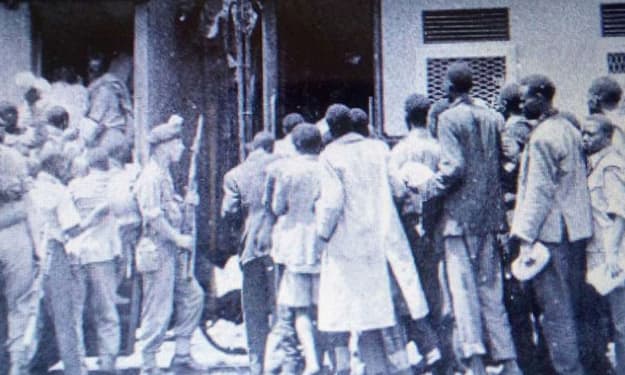
Manyani was an enormous site, nearly three miles long by half a mile wide. At the time, this was the largest detention camp outside the Iron Curtain. It was, like most of the camps in the Pipeline, surrounded by barbed wire and watchtowers and patrolled by armed guards with police dogs. After Operation Anvil, detainees were being moved in batches of a thousand twice a week from the screening camps. J.M Kariuki who was transported from Langata, asserts that they were given no food at any point in the 2-day journey. All their possessions that were not packed into a box were confiscated upon arrival and the detainees became recipients of harsh beatings throughout the process of registration.
By HINGES OF TIMEabout a year ago in History