Perspectives
The First Automotive Accident in the World: Historical Incident in Transport Modes
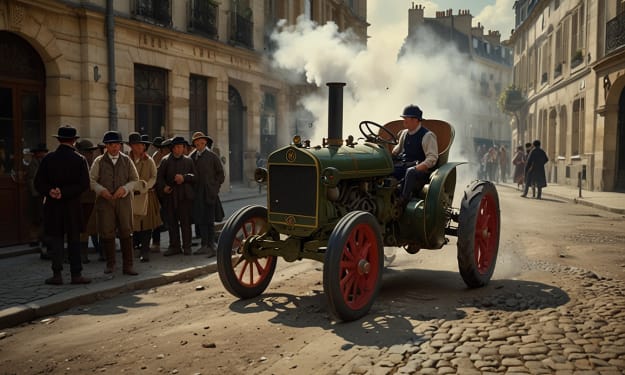
The first known car accident occurred in 1771. Modern road safety and automobile engineering as we know it today has only one particular day to its past. And that was the steam-powered tractor designed by Nicolas-Joseph Cugnot, the first automobile, crashing on the streets of Paris. It is rather difficult to imagine an automobile accident in a time when cars such as we understand them did not exist. Actually, the steam contraption, invented by Cugnot was one of the crucial moments in modern history. And the accident, though minor, became an historical event.
By Abhay kumar chauhanabout a year ago in History
Ukrainian Theatre - Nationalism and the Nationalist Theatre
Early on in her book Theatre & Nation, Nadine Holdsworth draws from a number of sociologists and theorists to define three key terms: nation, nationalism, and national identity. These are important terms to be distinguished; after all, the purview of this essay is Ukrainian theatre of national identity. Whether or not this can be conflated with Ukrainian nationalist theatre is a matter of connotation. If, as for many, the term nationalism conjures up images of Nazi Germany, Stalinist Russia, or Trumpist America—all of which have negative connotations—then it may be uncomfortable to ascribe the word nationalist to Ukrainian theatre. After all, if it earned condemnation from the Ukrainian Communist Party, to the point of Kulish’s banishment, arrest, and eventual execution, then it must have been disruptive to some utopian vision that the USSR wanted to achieve.
By Steven Christopher McKnightabout a year ago in History
Ayatollah Ali Khamenei: Iran's Supreme Leader and His Resilient Legacy
Ayatollah Ali Khamenei has been Iran's Supreme Leader since 1989. He sits atop this country with huge influence in this country's government, military, and institutions of faith. Most of this nation's foreign and domestic policy undertaken is through the leadership adopted by Ayatollah Ali Khamenei. His longevity and influence have placed him at the heart of the country's politics.
By Abhay kumar chauhanabout a year ago in History
Ukrainian Theatre of National Identity - Intro
The following is the introduction to my Master's Thesis, The Construction of National Identity through Theatre in Ukraine in the 1920s and 2020s. In the coming days, I will be posting the full thesis, chapter by chapter. I struggled deciding whether or not to post this here, but I decided ultimately that if it were submitted to academic journals, it would be behind a paywall. This information is important to me, and I would like it to be shared as freely as possible. If you would like the full PDF, click here.
By Steven Christopher McKnightabout a year ago in History
The Mystery of the Pingyan Giant Footprint: Fact or Fiction?
For centuries, people have been fascinated by stories of giants. Different cultures have shared legends about huge human-like beings, like the Titans in Greek myths or the Nephilim in the Bible. These stories have sparked our imagination and curiosity. But finding real evidence of giants has always been challenging and controversial. This changed for some people when a massive footprint was discovered in the remote village of Pingyan, China, sparking debates about whether it could be proof of giants.
By Muhammad Waseem about a year ago in History
Should We Change The Past to Fit Our Present?
History is confusing enough; just wait until we add modern politics to it. [Courtesy of Yan Krukau thanks to Pexels.com.] One of the problems with current discussions of history is that too many debaters look at historical events through a modern lens, usually to justify their political bias. This invariably means that the person has to modify the events in order to fit the event, possibly even linking some events that have no actual connection. This allows the historical event to fit the debater's needs better, even if it changes things so much that the past event is almost unrecognizable.
By Jamais Jochimabout a year ago in History
Why We Need Black History Classes
The attacks on black history have been interesting, although generally fallacious, such as by using Critical Race Theory as the target. However, there are some issues that are being apparently ignored in the debate. However, there are some good reasons to allow students access to the history of other groups, and we're going to look at some.
By Jamais Jochimabout a year ago in History
The Most Fascinating Unsolved Mysteries of History
Throughout history, countless events and phenomena have puzzled historians, scientists, and the general public. While many questions have been answered with time and research, some mysteries remain unsolved, offering glimpses into the unknown. These enigmas not only challenge our understanding of the past but also inspire endless theories and speculation. Here, we explore some of the most fascinating unsolved mysteries in history.
By Marius Lunguabout a year ago in History
Forgotten Trades of Rural Spain
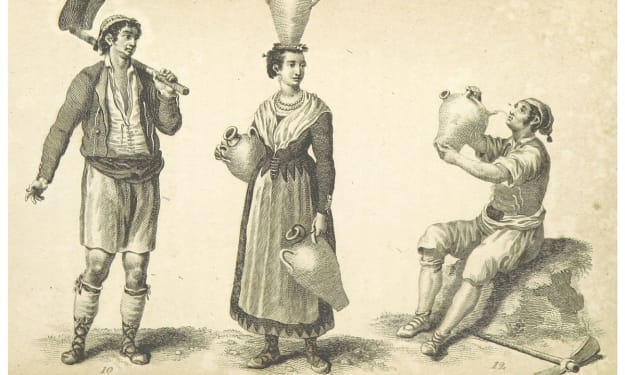
Driving through much of rural Spain today, it’s hard to picture what it looked like before the mid-20th century. The silent streets, main squares, local fountains and fields have little left to show for their industrious past beyond the lined worn faces of the old men assembled on stone benches watching the cars pass through their village. Tourists on their way to a hiking route may stop, take a photo or two, maybe pop into the local museum, but the scythes, threshing sledges and washing boards hanging on the wall are only a superficial reminder of its rich historic traditions.
By Kimberley Silverthorneabout a year ago in History
The State of Critical Thinking in Modern Politics:
Introduction In a society where democracy relies on informed decisions, are we truly engaging in critical thinking, or has independent thought been overshadowed by emotional influence and party loyalty? The health of democracy depends on the ability of voters to question, analyze, and reflect—qualities that are increasingly at risk in today’s political landscape.
By T. E. Doorabout a year ago in History
50 Unspoken Rules That Separate Men From Boys
Introduction: The Real Mark of Maturity Growing up isn't just about age or physical milestones; it's about growth, responsibility, and self-awareness. While boys may be defined by immaturity and impulsiveness, men are set apart from character, respect, and integrity. Here's a look at 50 unspoken rules that help separate men from boys, touching on everything from relationships to personal discipline.
By Muhammad Nadeemabout a year ago in History