Places
Chichen Itza
One of Mexico's most famous historical sites, Chichen Itza, serves as a reminder of the extraordinary accomplishments of the pre-Columbian Maya civilization. This historical and cultural marvel, which can be found in the Yucatan Peninsula, invites tourists and historians to investigate its intricate architecture, enigmatic astronomical alignments, and the cultural significance that has captured the interest of people all over the world. We will explore Chichen Itza's historical setting, stunning architecture, cultural significance, and enduring legacy in this essay.
By The Knowledge 2 years ago in History
10 Weirdest and Wackiest Festivals Worldwide
La Tomatina Festival in Buñol, Spain La Tomatina is one of the world's most famous and bizarre food fights. Every year on the last Wednesday in August, thousands of people from all over the world gather in the small town of Buñol in eastern Spain to engage in a massive tomato battle. The festival involves participants throwing ripe tomatoes at each other, covering the streets and everyone involved in a sea of tomato pulp. It's a unique and colorful event that attracts both locals and tourists, and it's all about having fun and letting loose..
By Mogomotsi Moremi2 years ago in History
Medieval Egypt
After the Islamic conquest in 639, Lower Egypt came under the governance of governors who acted on behalf of the Rashidun Caliphs and later the Umayyad Caliphs in Damascus. However, in 747, the Umayyads were ousted from power. During the Islamic rule, Askar was designated as the capital and served as the administrative center. The conquest resulted in the formation of two separate provinces, Upper and Lower Egypt, which were governed by the military and adhered to the directives issued by the governor of Egypt and the leaders of their respective communities. Egypt experienced a series of dynastic rule following the establishment of Islamic control in 639, lasting until the early 16th century. The Umayyad period, spanning from 658 to 750, marked an important phase in Egypt's history. Subsequently, the Abbasid period emerged, characterized by a greater emphasis on taxation and the consolidation of power. In 868, the Tulunids, led by Ahmad ibn Tulun, expanded Egypt's territorial influence into the Levant. Ahmad ibn Tulun's reign persisted until his demise in 884, after which his successor faced significant challenges, leading to a defection of many citizens back to the Abbasids. Consequently, in 904, the Abbasids regained control from the Tulunids.
By A História2 years ago in History
Queen Seondeok of Silla: A Remarkable Ruler of Ancient Korea
Queen Seondeok, or Queen Seon-deok (606–647 CE), was a prominent and celebrated ruler in the history of ancient Korea. She is renowned for her wisdom, leadership, and for being the first reigning queen of the Korean kingdom of Silla. Her reign marked a significant period of progress and cultural development in the Silla dynasty, which lasted from 57 BCE to 935 CE.
By Noata Anavi2 years ago in History
The Queen of Sheba: A Legendary Figure of Antiquity
The Queen of Sheba, also known as Bilqis or Makeda, is a legendary figure in history and mythology. She is renowned for her wisdom, beauty, and her legendary visit to King Solomon, the wise and wealthy ruler of ancient Israel. The story of the Queen of Sheba has been passed down through various religious and cultural traditions and continues to capture the imagination of people worldwide.
By Noata Anavi2 years ago in History
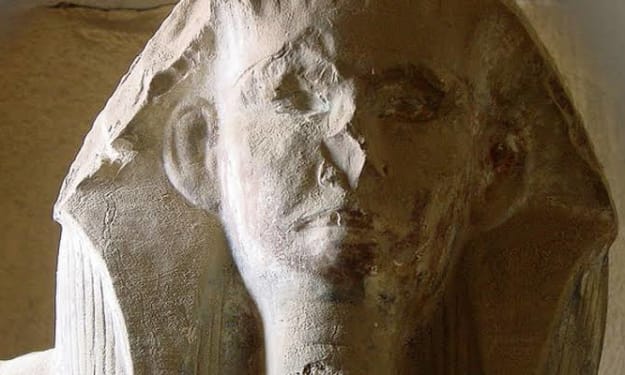
King Zoser. Content Warning.
Welcome to the fascinating world of King Zoser, the enigmatic ruler of ancient Egypt. In this article, we delve into the life and achievements of one of the most influential pharaohs in Egyptian history. Renowned for being the architect of the world's first stone pyramid, Zoser's reign marked a revolutionary era of innovation and advancement in ancient Egypt.
By Esraa Hebish2 years ago in History
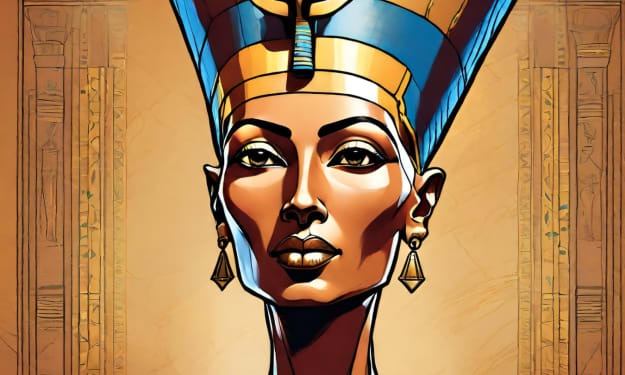
Nefertiti: The Radiant Queen of Ancient Egypt
Nefertiti, also called Neferneferuaten-Nefertiti, whose name means "the beautiful one has come", is one of the most celebrated and enigmatic figures in the history of ancient Egypt. She lived during the 14th century BCE and is renowned for her extraordinary beauty, her powerful role as queen, and her association with the religious revolution of her husband, Pharaoh Akhenaten.
By Noata Anavi2 years ago in History
Cleopatra: The Last Queen of Egypt
Cleopatra VII Thea Philopator, often simply referred to as Cleopatra, is one of history's most iconic and enigmatic figures. She is known as the last pharaoh of ancient Egypt and is celebrated for her intelligence, charisma, and romantic liaisons with some of the most powerful men of her time, including Julius Caesar and Mark Antony. Her life and reign continue to captivate the imagination of people worldwide.
By Noata Anavi2 years ago in History
Hatshepsut: The Queen Pharaoh of Egypt
Hatshepsut, often described as one of the most remarkable figures in the history of ancient Egypt, was a woman who shattered the glass ceiling of her time to become the queen pharaoh of a powerful kingdom. Her reign marked a pivotal point in Egypt's history, characterized by prosperity, monumental architectural achievements, and a legacy that continues to captivate historians and enthusiasts today.
By Noata Anavi2 years ago in History
A Tour of the Most haunted Place on Earth
The catacombs, located beneath the bustling City of Paris, house the remains of over 6 million people. Many are unaware of this hidden underground network, as when the word "Paris" is mentioned, thoughts of the iconic Eiffel Tower or romantic strolls in the city of love come to mind. However, beneath the surface lies a series of tunnels that were originally dug in the 14th century to extract limestone, a valuable mineral found in the rich ground. These mines, built horizontally to prevent collapse, were primarily situated on the right side of the river. As Paris expanded beyond its old city walls, the city faced challenges when constructing buildings atop the previously excavated land.
By Faith Kinyanjui2 years ago in History
Colonisation and Its Impact on Poverty in Africa
Colonisation in Africa was a complex and multifaceted historical process that had profound and lasting effects on the continent. European powers began colonising Africa in the late 19th century, a period often referred to as the "Scramble for Africa." This colonization was driven by several factors, including economic interests, competition among European powers, technological advantages, and the desire for strategic control of resources and trade routes. While colonization brought about some infrastructural developments, it also had a detrimental impact on Africa's socio-economic and political landscape, ultimately contributing to poverty on the continent.
By Amani Kassim2 years ago in History