Places
Voices of Heritage
In the core of Edo Benin City, a bedlam of dialects consumed the space, each like a string complicatedly woven into the embroidery of the city's social legacy. For quite a long time, the phonetic variety of this energetic city had been a demonstration of its rich history, a living demonstration of the soul of its kin and the interconnectedness of its networks.
By Vincent Johnson 3 years ago in History
Yo-Yo
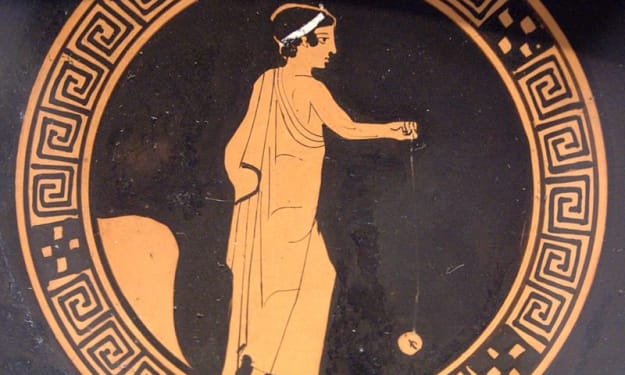
The yoyo has been around for centuries, and it is a pastime that has been enjoyed by people of all ages. From young children to experienced adults, the yoyo can be a fun and challenging toy to master. With simple tricks and complex maneuvers, the yoyo is a classic toy that has been enjoyed for generations. Whether you are just starting out or an experienced pro, there is something for everyone when it comes to yoyo.
By Ziain Morales3 years ago in History
The Revolutionary Legacy of Dr. Jose Rizal
This article will explore the life and legacy of Dr. Jose Rizal, a renowned Filipino nationalist, writer, and philosopher who is widely considered the national hero of the Philippines. Dr. Rizal was a key figure in the Philippine Revolution, a nationwide uprising to end Spanish colonial rule in the late 19th century. His writings, which helped to galvanize the Filipino people in pursuit of independence, have been translated into numerous languages and are still widely studied and discussed today. In addition to his writings, Dr. Rizal was also a medical doctor, a polymath, and a passionate advocate for human rights. This article will explore the life of Dr. Rizal and his impact on the Philippine nation.
By Ziain Morales3 years ago in History
Divided Yet Connected: The Legacy of India-Pakistan Partition and the Golden Temple's Struggle for Unity
In the bustling city of Amritsar, nestled in the heart of the Punjab region, stood the magnificent Golden Temple. The sacred gurdwara, with its shimmering gold-plated dome and serene Sarovar, had long been a symbol of unity and harmony for the Sikh community. But amidst the echoes of the India-Pakistan Partition, the Golden Temple found itself at the epicenter of a struggle that would test the very essence of its purpose.
By Amirthalingam 3 years ago in History
And Now We Know How Easter Island Giants Were Moved
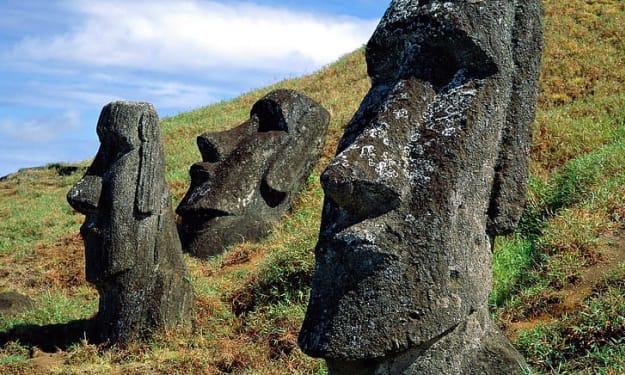
For centuries, the Easter Island giant heads, known as the moai statues, have captivated people worldwide and even earned their own emoji. The true significance behind these enigmatic figures has remained a mystery for hundreds of years. However, recent discoveries shed light on how they were constructed and moved to their permanent locations. Each moai statue comprises three distinct parts: a large yellow body, a red hat or top knot, and white inset eyes with a coral iris. Approximately 1,000 of these remarkable statues were created on Easter Island.
By Makim Piodos3 years ago in History
Man electrocuted after jumping into haunted Lake Lanier
On Thursday afternoon Thomas Milner, 24, jumped into Lake Lanier from his family's dock near Lanier Beach South Road. It was reported he was seen jumping into the lake by a family friend, and when he did not emerge, he went and tried to pull Milner out of the water using a ladder and was unsuccessful.
By sara burdick3 years ago in History
The Last Stand
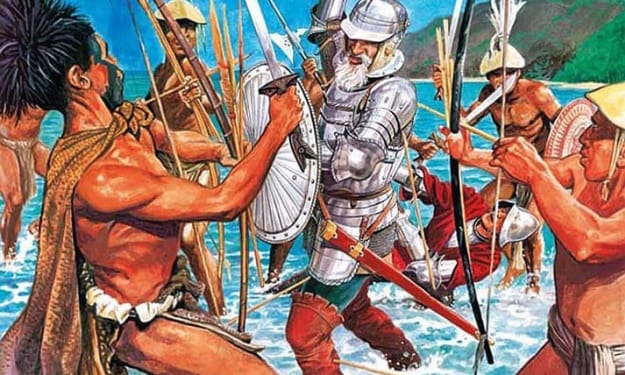
The Battle of Mactan was a pivotal conflict in Philippine history. It took place in 1521 near the island of Mactan in the Visayas region of the Philippines. The battle pitted Lapu-Lapu, and his warriors against Portuguese explorer Ferdinand Magellan and his small force of Spanish soldiers and Filipino mercenaries. Lapu Lapu is one of the most famous figures in Philippine history. He was a native chieftain who led the battle of Mactan against the Spanish forces of Ferdinand Magellan in 1521. He is often considered to be the first Filipino hero to have resisted foreign rule. The city of Lapu Lapu was named in his honour, and his statue stands in the plaza at the city center, as a reminder of his bravery. As such, he is revered as a national hero by most Filipinos and is given much respect for his courage and determination.
By Ziain Morales3 years ago in History
Mondays in the East
In the Eastern part of Nigeria, every Monday has evolved into a distinctive and culturally significant phenomenon - the sit-at-home order. This tradition, born out of historical events, holds deep meaning for the people in the region. However, its observance has not been without consequences, affecting both lives and the economy in diverse ways. This article delves into the history and reasons behind the sit-at-home order, the response of the Nigerian government, and the profound effects it has on the lives and economy of the region. Finally, it explores possible avenues for a harmonious way forward.
By Obianuju Egwuatu3 years ago in History
Archaeologists Are Afraid To Enter China's First Emperor's Tomb.
In an ordinary field in the Shaanxi province of China, farmers made one of the most significant archaeological discoveries of all time in 1974. They unearthed pieces of a clay human figure while digging. Simply put, this was the tip of the iceberg.
By Francis Dami3 years ago in History