Research
A Fox and a Photographer's Remarkable Connection.. Content Warning.
In the core of a thick, old woods, where daylight battled to penetrate the thick shade of trees, a far-fetched kinship bloomed between a wild fox and a devoted photographic artist. This charming story started as an opportunity experience however before long changed into an exceptional association that would enrapture the hearts of many.
By Rubaiyat E Alam2 years ago in History
Surviving Among the World's Most Dangerous Species
In the mind boggling trap of life on our planet, people have cut a novel specialty for themselves as the predominant species. However, notwithstanding our amazing mechanical headways, there are endless animals in the set of all animals that present critical dangers to our endurance. From venomous snakes to dominant hunters, the normal world is overflowing with impressive enemies. In this article, we will dig into the universe of the absolute most perilous species on The planet and investigate the fundamental abilities to survive and systems expected to coincide with these animals. Whether you're a courageous traveler or basically inquisitive about the marvels of nature, understanding these strategy for practical adaptations might one day at some point have the effect among life and demise.
By Kumar babu2 years ago in History
The Forest Cowboy and the Tiger's Bond.. Content Warning.
Quite a long time ago, in the core of a thick, strange timberland, there carried on with a cattle rustler like no other. His name was Jack, however to the creatures of the woodland, he was known as the "Timberland Cattle rustler." Jack had picked this single life, exchanging the clamoring city for the quietness of the wild. With a tough cap, worn boots, and a dependable rope, he had turned into a legend among both the animals and the trees.
By Rubaiyat E Alam2 years ago in History
Lionel Messi: The Maestro of Modern Football
In the realm of football, one name stands above all others, inspiring awe and admiration: Lionel Messi. This is the story of a boy from Rosario, Argentina, who grew up to become the maestro of modern football, rewriting the record books and capturing the hearts of millions.
By ziyad ahmed2 years ago in History
AFRICA from 16th to 21st century
Africa is a continent that boasts a rich and diverse history, which is not surprising given that it is the second largest continent after Asia and presently has the largest number of countries. The northern coast of Africa, which touches the Mediterranean Sea, is characterized by mountainous terrain, while just south of this lies the Sahara, the largest non-polar desert on the planet. The Sahara has played a significant role in shaping the history of Africa, as it has acted as a division between the North and sub-Saharan Africa. The civilizations that formed around the Nile River Valley came to dominate the North, while the sub-Saharan region is characterized by a variety of terrain, including grasslands, which slowly develop as one heads south, and tropical rainforests. The Niger River, which flows through the sub-Saharan region, has been an important river valley in African history, and the Congo Basin, which is home to the rainforests of the Congo Basin and the mighty Congo River, is also of great significance. In East Africa, which touches the Indian Ocean, the terrain is more mountainous, with plateaus and large lakes. It is believed that the Cradle of humankind is located in this region, in modern-day Kenya. In the south of Africa, there are dry deserts like in Namibia, but also hills and plateaus, which are home to some of the most valuable mineral resources in the world. While it is not certain where agriculture first began in Africa, it is believed to have been about 7,000 years ago in the Sahel, the area between the Sahara and the Savannah. While cultivation was easy in this region, the suboptimal soil and scarce rainfall made more intensive farming impossible, so populations remained relatively stable. This was not a problem, as they relied mainly on hunting and gathering. It was only after the Sahara became drier, turning into a desert, that some populations migrated south, deeper into the grasslands, spreading their farming techniques and leading to more diverse crops, such as tropical fruits, which are only able to grow in wetter climates. Other populations also migrated, leading to the diverse history of Africa that we see today.
By Rotondwa Mudzweda2 years ago in History
The Pirate's Pursuit
The moon hung low over the inky black waters of the Caribbean, casting a silver sheen on the restless sea. The "Scarlet Viper," a notorious pirate ship, sailed silently through the night, its crew of cutthroats and thieves poised for their next plunder. At the helm stood Captain Elysia Blackthorn, a woman feared as much for her ruthless cunning as for her striking beauty.
By fawas mohamed2 years ago in History
The Middle East Conflict Saga
The Middle East, often referred to as the "cradle of civilization," has paradoxically also been a crucible of conflicts throughout history. The roots of the seemingly unending cycle of war in the region are deeply entrenched in historical, geopolitical, socio-cultural, and economic factors. Understanding these origins is essential to grapple with the prospect of persistent conflict in the Middle East. It's embedded in a mosaic of diverse cultures, languages, and tribal identities. While this diversity enriches the region, it also creates divisions that can be exploited for political gain.
By Gale Mills2 years ago in History
The history of Egypt
For millennia, the grand pyramids of Egypt have towered over the desert sands, shrouding the great ancient civilization that once inhabited the lands in mystery. However, on July 19, 1799, during Napoleon Bonaparte's Egyptian Expedition, a French soldier discovered a large stone about 35 miles east of Alexandria, unearthing a written language that had been dead for thousands of years. The translations of this language would prove to be the key to unlocking the secrets of an entire civilization.
By Rotondwa Mudzweda2 years ago in History
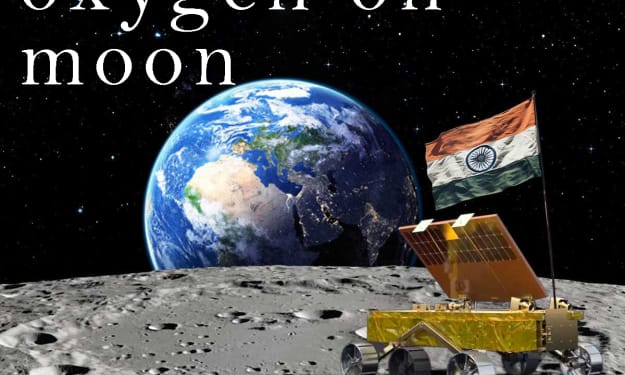
Oxygen on Moon!
Chandrayaan 3, India's lunar mission, achieved a significant milestone that no other nation had accomplished before—a touchdown on the South Pole of the Moon. This achievement garnered worldwide praise, but not many people are aware of the fascinating discoveries made during the Pragyan rover's mission on Chandrayaan 3. In this video, we will delve into these discoveries.
By Majid khan2 years ago in History
The Forgotten Civilizations: Mysteries of the Indus Valley
Introduction The annals of human history are filled with fascinating tales of ancient civilizations, each with its unique culture, achievements, and, often, perplexing mysteries. Among these enigmatic cultures, the Indus Valley Civilization stands out as one of the most intriguing and lesser-known. Flourishing over 4,000 years ago in what is now modern-day Pakistan and northwest India, the Indus Civilization thrived for centuries, only to disappear mysteriously. Within the Indus Civilization, there are striking differences between some of the archaeological sites that leave researchers baffled. The fire altars at the Kalibangan archaeological site are one of the most intriguing mysteries. The altars are unique only to Kalibangan and hold the key to unraveling the secrets of this ancient civilization.
By MOIRENGJAM EBOTON MEITEI2 years ago in History
Ancient People
How Ancient People Before Written Records? For generally 2.5 million years, people lived on Earth without leaving a set up account of their lives — however they abandoned different sorts of remains and artifacts.Earth's starting points can be followed back 4.5 billion years, yet human development just counts for a small bit of its set of experiences. The Ancient Time frame — or when there was human existence before records reported human action — generally dates from 2.5 quite a while back to 1,200 B.C. It is by and large sorted in three archaeological periods: the Stone Age, Bronze Age and Iron Age.
By fawas mohamed2 years ago in History