World History
The Bells That Rang Before the Fire
The city slept beneath stone and shadow, unaware that it was already remembered. Before dawn, the bells of Notre-Dame were still. They would not ring for hours. Paris lay hushed along the Seine, its bridges resting like old thoughts between two halves of itself. The cathedral rose at the heart of it all—familiar, immovable, trusted the way only ancient things are.
By LUNA EDITH8 days ago in History
The Surgeon Who Restored Dignity
The sixteenth century was a time of profound transition in Europe’s medical history. Anatomy, surgery, and the scientific study of the human body were gaining momentum, yet the restoration of the human face remained an almost impossible dream. In this fragile balance between tradition and innovation, an Italian physician and surgeon named Gaspare Tagliacozzi (1546–1599) emerged as a pioneer. His groundbreaking method of reconstructing the nose was not only centuries ahead of its time but also laid the foundation for what we now call modern plastic surgery.
By Salman Writes8 days ago in History
GIVE PEACE A CHANCE
Give Peace a Chance I remember the day John Lennon was shot. It was December 8, 1980, and the news hit the world like a devastating storm. But it wasn’t just the loss of a singer or songwriter; it felt like the silencing of a philosopher, a man who used music to speak truth to power and feed the souls of millions.
By Marie381Uk 8 days ago in History
El Chapo . Content Warning.
Joaquín “El Chapo” Guzmán and the Sinaloa Cartel Joaquín Archivaldo Guzmán Loera, widely known by his nickname “El Chapo,” is one of the most infamous figures in the history of organized crime. He rose from extreme poverty in rural Mexico to become the leader of the Sinaloa Cartel, an organization that for decades played a central role in international drug trafficking. The story of El Chapo and the Sinaloa Cartel reflects broader issues such as corruption, inequality, weak institutions, and the global demand for illegal drugs.
By jhony aour8 days ago in History
Historical Story
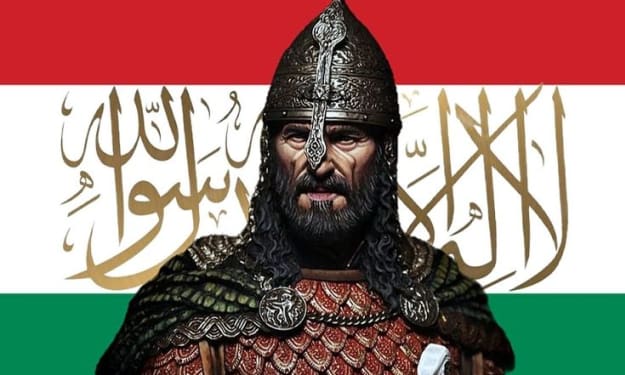
For many years, battles continued between Sultan Salahuddin Ayyubi and the Crusader warriors. Finally, after various military campaigns and confrontations, a battle took place that proved decisive in history—one that brought an end to the Christian Kingdom of Jerusalem in Palestine and sealed the fate of the Crusaders. This was the Battle of Hattin, which occurred on Saturday, 24 Rabi‘ al-Akhir 385 AH. In this battle, the Muslims achieved a decisive victory.
By Sudais Zakwan8 days ago in History
The Calvine Photo: Best UFO Picture Ever Taken... or the Best-Kept Secret?
Picture this: It's a crisp August evening in 1990, deep in the Scottish Highlands near the tiny hamlet of Calvine. Two young guys-let's call them friends out for a simple hike, nothing fancy-are trudging along a quiet road, probably chatting about the weather or where to grab a pint later. The sun's dipping low, casting long shadows over the rolling hills. Then, out of nowhere, a low humming sound starts. Not mechanical exactly. More like... something alive, but silent in a way that makes the hair on your arms stand up.
By KWAO LEARNER WINFRED8 days ago in History
Wealth Reserves and Economic Power of the Madurai Rulers during the First Sangam Age. AI-Generated.
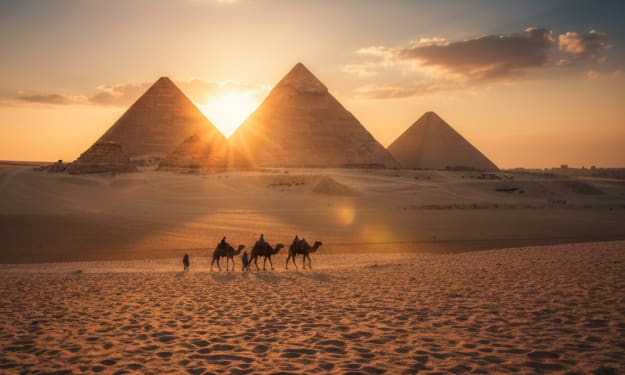
The Madurai rulers of the Sangam Age possessed immense wealth derived from trade, agriculture, tribute, and natural resources, making them among the richest monarchs of ancient India.
By Say the truth 9 days ago in History
The Chola Dynasty and the Legend of the Hundred-Elephant-Slaying Warrior. AI-Generated.
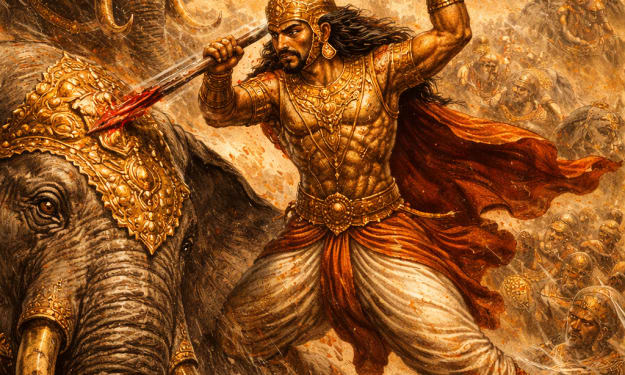
Among the many heroic traditions associated with the Cholas is the legendary account of a warrior said to have slain one hundred war elephants in battle—a symbol of unmatched courage, strength, and battlefield mastery. Though this account blends history and legend, it reflects the martial culture of the Chola era and the extraordinary challenges faced by warriors during medieval warfare. Rise of the Chola Dynasty
By Say the truth 9 days ago in History
Alexander the Great’s Body Preservation Method: History, Mystery, and Science
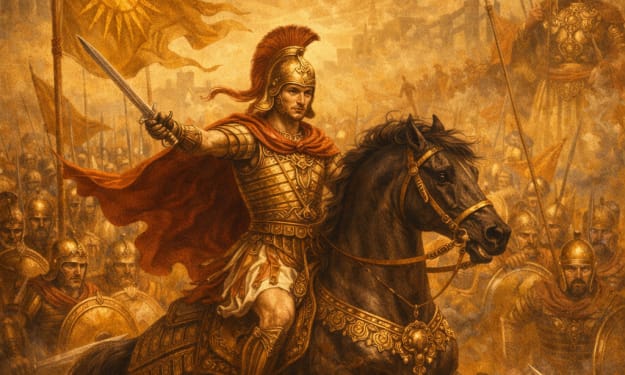
Ancient historians describe Alexander’s corpse as remaining uncorrupted for several days, even weeks, which led many to believe he was divine. The method used to preserve his body has intrigued historians, scientists, and medical scholars for centuries.
By Say the truth 9 days ago in History