
Ten Women Writers of the Renaissance and Restoration
Most of whom you'll never have heard of

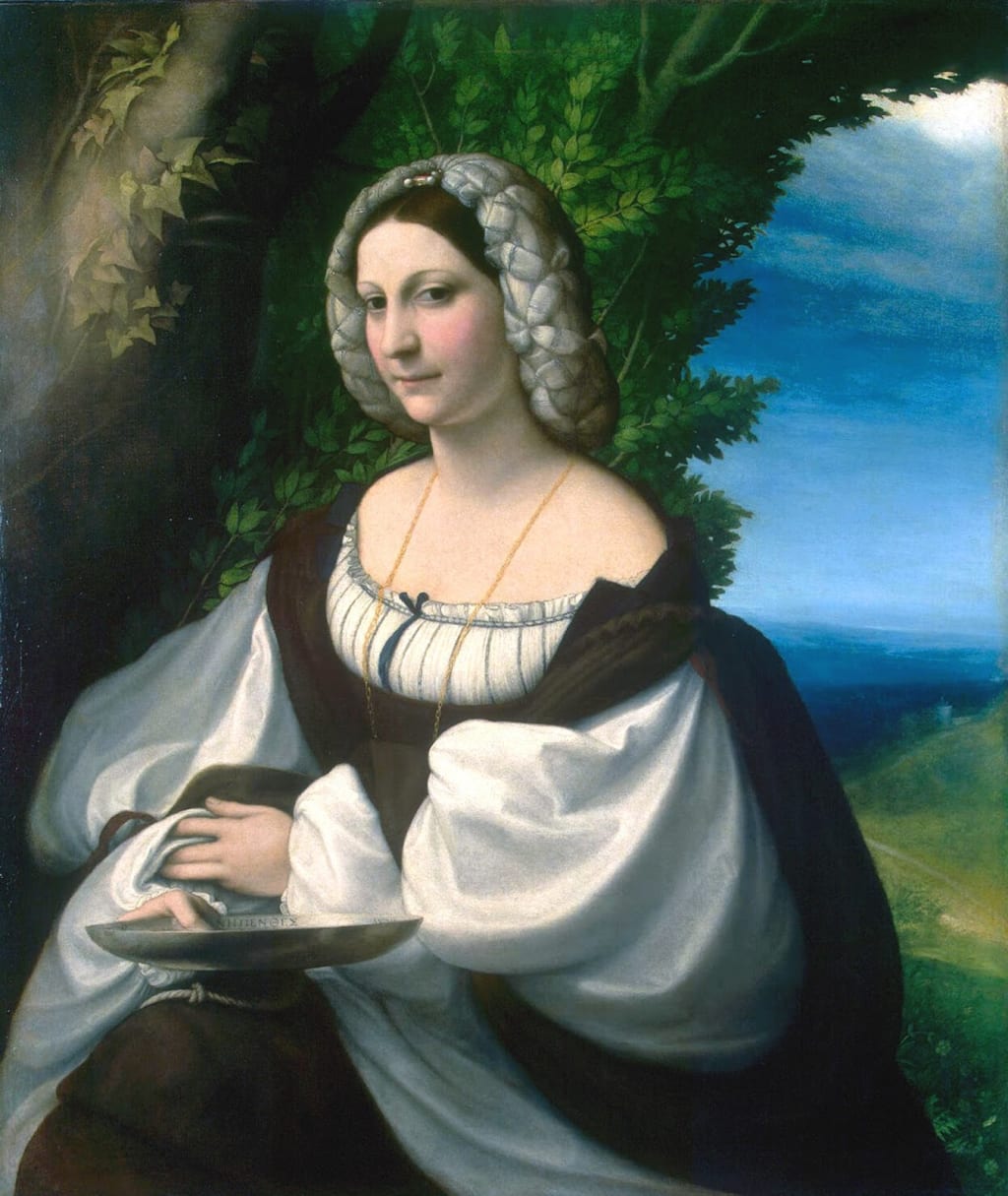
While male writers have been lauded for centuries (who hasn’t heard of William Shakespeare?), women writers have been largely ignored or maligned due to the inferior position women held in male dominated society.
In this article, we’re looking at ten extraordinary women who were highly influential during the political and religious upheavals of the Renaissance and Restoration periods in Europe. Writers, artists and poets, their contributions to the arts, to the thinking and the politics of the day, have largely been forgotten.
1 Gaspara Stampa (1523-1554)
Born in Padua, Italy in 1523, poetess Gaspara Stampa was one of three children born to gold and jewel merchant, Bartolomeo, and his wife Cecilia. When she was eight, her father died and her mother took her and her siblings, Baldassarre and Cassandra, to Venice where they were educated in literature, music, history and painting. The Stampas were well-known for their taste and were often visited by many famous Venetian writers, painters and singers.
Despite a number of setbacks, including the death of her brother Baldassarre in 1544, Gaspara became a member of the Accademia dei Dubbiosi (the Academy of the Doubtful), a literary group which published a series of texts. Within the Academy she was known of Anaxilla and around this time she began a love affair with the Count Collaltino di Collalto to whom she wrote most of her 311 poems. It was these that made up her first book of poetry, Rime di Madonna Gaspara Stampa, which were published posthumously in October 1554.
2 Veronica Gambara (1485 – 1550)
An Italian poet and politician, Veronica Gambara was one of seven children of Count Gianfrancesco da Gambara and Alda Pio da Carpi. Born in Lombardy in November 1485, Veronica was well educated, studying Latin, Greek, philosophy, theology and scripture. In 1502, at the age of only 17, she began corresponding with the leading poet, scholar and literary theorist, Pietro Bembo, who became her poetic mentor.
In 1509, she married her 50-year-old cousin, the widower Giberto X, Count of Correggio, with whom she had two sons. When Giberto died in 1518, she took charge of his estate and under her rule, the small court of Correggio became an art salon being visited by artists such as Titian and writer/philosopher Gian Giorgio Trissino. Although little of her poetry was published during her lifetime, her work was circulated in manuscript and well-known throughout Italy. She primarily wrote political, devotional, pastoral and love poems. A complete English translation of her work was published in 2014.
3 Catherine of Bologna (1413-1463)
A writer, teacher, mystic, artist and saint, Catherine of Bologna was the daughter of Benvenuta Mammolini and Giovanni Vigri. Her father worked as a notary for Niccolo III d’Este, the Marquis of Ferrara, so she was brought up to be a lady-in-waiting for Ferrara’s wife, Parisina Malatesta. During this time she was educated in reading, writing and music (she played the viola).
In 1426, after Parisina was executed by her husband for infidelity, Catherine left court and joined a community of beguines (lay religious women’s order) at the Observant Poor Clare Convent of Corpus Domini. There she was a pious woman and often experienced miracles and visions of Christ, the Virgin Mary, Thomas Becket and Joseph. She wrote a number of religious treatises (including her best-know the Seven Spiritual Weapons Necessary for Spiritual Warfare), lauds, sermons and copied and illustrated her own breviary (a liturgical book). In 1455, she left to become the abbess of a new convent, the Corpus Domini convent in Bologna where she lived until her death in 1463. Her corpse was originally buried in the convent graveyard, but was exhumed and displayed in a glass case. She was canonised in 1712 by Pope Clement XI and is the patron saint of artists and against temptations.
4 Pernette du Guillet (c. 1520 – 1545)
Pernette Du Guillet was a poet of Ranaissance era France. Born into a noble family from Lyon, in the spring of 1536, when she was only 16, she met the poet Maurice Scève and became his poetic muse. She inspired his famous book of poems addressed to a lady, Délie, and from this work became known as a woman of beauty and culture.
Pernette married in 1537 or 1538 and continued to live in Lyon where she, too, wrote poetry. It wasn’t until after her death in 1545 that her poetry was published as Rymes de Gentille et Vertueuse Dame, Pernette du Guillet. The book consisted of 73 love poems in the style of Neoplatonic and Petrarchan traditions.
5. Marie Dentière (c. 1495 – 1561)
Marie Dentière was born in Tournai , Belgium, and was a prominent Walloon (someone who spoke French living in parts of Belgium or eastern France) Protestant reformer. Not much is known about her early life, but she moved to Geneva and became an outspoken religious reformer and theologian.
She wrote a number of papers on the Reformation promoting the female perspective and also preached alongside reformers such as John Calvin and William Farel. In 1528, She married a young priest, Simon Robert and they had five children. He died five years later. She remarried and her second husband, Antoine Froment, was also a key name in the Reformation. She is the only woman to have her name inscribed on the Reformation Wall* in Geneva.
*A monument to the Protestant Reformation
6. Caritas Pirckheimer (21 March 1467 – 19 August 1532)
Caritas Pirckheimer was born in Eichstätt, Germany as Barbara Pirckheimer, the eldest of 12 children of Dr Johannes Pirckheimer. Only nine of those children would survive to adulthood, including her brother the humanist Willibald Pirckheimer. Caritas received a humanist education and spoke fluent Latin.
At the age of 16, she joined Saint Clara’s convent in Nuremberg taking the name of Caritas and eventually becoming its Abbess. She vociferously opposed the Reformation as it threatened Catholic houses of worship including her own convent. She lobbied for support from a number of influential people and kept a chronicle of all the events that happened in the convent during this time of upheaval. She died at age 65 and the women of Saint Clara’s were allowed to say in the monastery until their deaths, but no novices were allowed. By 1591, the monastery and cloister were no longer Catholic houses of worship.
7. Anna Ovena Hoyer (1584 – 1655)
Anna Ovena Hoyer was a German-born writer, song writer and poet, the only child of wealthy astronomer, Hans Owens (Johann Oven) and Wennecke Hunnes. After her parents died in 1584 and 1587 respectively, she went to live with her uncle, Meves Owens. It was there that she learned about astronomy, literature, music and the Classics. At the age of 15, she married Hermann Hoyer and together they had nine children. She was an outspoken critic of Lutheranism and gave sanctuary to religious refugees fleeing from Flensborg. In 1632, a year after her husband’s death, she sold her estate and went to live in Västervik, Sweden and then to Stockholm where she lived until her death.
During her life, Anna published a number of poems and religious works including Gespräch eines Kindes mit seiner Mutter (Conversation of a Child with his Mother), which she wrote for her children. It was reissued in 1720 entitled The Way of True Piety. She also wrote the anti-Lutheran publication, De denische Dörp-Pape, and the Annae Ovenae Hoijers Geistliche und Weltliche Poemata (Spiritual and Secular Poetry), which was banned in 1721.
8. Helene Kottanner (c.1400 – c. 1470)
Helene Kottaner was a Hungarian courtier and writer, who, along with accomplices, stole the Holy Crown from the castle of Visegrád in February 1440. Born into a minor noble family of German origin, Helene was married twice and bore three children. By 1436, Helene was working as a nanny for the children of Albert II, King of Hungary and Bohemia, and his wife, Elizabeth. When Albert died, Elizabeth asked Helene and two others to retrieve the Hungarian Crown of St Stephen, which was stored in the Hungarian stronghold of Visegrád. The crown is viewed as holy by the Hungarian people and whomever held the crown would be king of Hungary. The Queen was pregnant with Ladislaus the Posthumous, who she felt was the rightful heir and not Vladislaus I, the teenage king of Poland who had been voted to be the new Hungarian king by Hungarian nobles.
Anyway, the baby was born and crowned king, but the Polish king gathered his forces against the new Hungarian monarch. The Queen rescued the holy crown from the approaching Polish army whilst Kottanner fled with the royal children, including the infant king. Following her adventures, Helene wrote her memoirs about this period of upheaval where she placed herself in a pivotal role in the action. She and her second husband were eventually granted the village of Kisfalud (in Slovakia) where Helene spent her days until she died.
9.Anna Bijns or Byns (1493 – 1575)
Anna Bijns was born in Antwerp, Belgium, the eldest child of stocking maker, Jan Bijns Lambertsz and Lijsbeth Vooch. Jan was a member of a local Chamber of Rhetoric, a society of literature lovers, and he is believed to have sparked Anna’s interest in poetry. In 1516, Jan died and Anna’s mother had to sell the family home. She, Anna and her brother, Maarten settled in another house where Maarten opened a school. Anna helped at the school until a dispute with her brother ended in her moving to a house opposite and setting up her own school for younger children.
Anna’s love of poetry led her to write her own poems on the subjects of love, wisdom, and religion. However, as a woman she was not allowed membership of the local Chamber of Rhetoric, but that didn’t hold her back. She had her work published in Dutch and is the first author in that language who owed her success to the invention of the printing press. Her works were reprinted many times during her lifetime. An anti-Lutheran, much of her work speaks out against Luther’s influence in Europe at that time.
10. Mary Pix (1666 – 1709)
Mary Pix was an English novelist and playwright and was born in 166 to Roger Griffith, the rector, musician and headmaster of the Royal Latin School in Buckingham, England. Her father died when she was young and she and her mother continued to live in the schoolhouse. In 1884, aged 18, she married merchant tailor, George Pix, and the couple moved to Kent. Her first son, George, died in infancy, and she gave birth to a second son, William, after the couple moved to London in 1691.
Mary’s writing career began in 1696 when, at the age of 30, she published her only novel, The Inhumane Cardinal or Innocence Betrayed, and two plays: Ibrahim, the Thirteenth Emperour of the Turks and The Spanish Wives. Her first play was put on at the Theatre Royal, London that same year. She went on to write a further ten plays (three were anonymous, but attributed to her) and her poetry, Violenta; or, The Rewards of Virtue, Turn'd from Boccace into Verse. She was an admirer of playwright, writer and poet, Aphra Benn, and a colleague of Susanna Centlivre (also a poet, actress and playwright).
About the Creator
Dawn Nelson
Dawn is a writer, journalist and award winning author from Scotland. She lives near Loch Lomond with her kids and numerous pets and is currently working on a couple of new book series.
Keep reading
More stories from Dawn Nelson and writers in History and other communities.
Iron-Fanged Fiend Leads to Change in Publication Laws
September 23, 1954 and it had been a wet and dismal start to autumn for the children of Gorbals, Glasgow. The leaves were falling from the trees and the nights were getting longer. All they had to look forward to was Halloween which was still a month away.
By Dawn Nelson3 years ago in Horror
The "Demon of the Woods": The real-life historical origin of the Pied Piper.
The hollow clack of a wooden latch in an empty house is a sound that lingers. It is the sound of a period at the end of a sentence that no one wanted to read. In the town of Hamelin, on the twenty-sixth of June, 1284, that sound was repeated one hundred and thirty times. The morning air was likely thick with the scent of damp river-mud from the Weser and the yeasty tang of baking rye, but the kitchens stayed cold. No children laughed. No small feet kicked the dust of the Bungelosenstrasse. They were gone. Just like that. A whole generation of a small German village evaporated, leaving nothing behind but a jagged, visceral hole in the local history.
By The Chaos Cabinet7 days ago in History



Comments
There are no comments for this story
Be the first to respond and start the conversation.