
The Cuban Revolution
A Journey from Colonial Oppression to Socialist Transformation
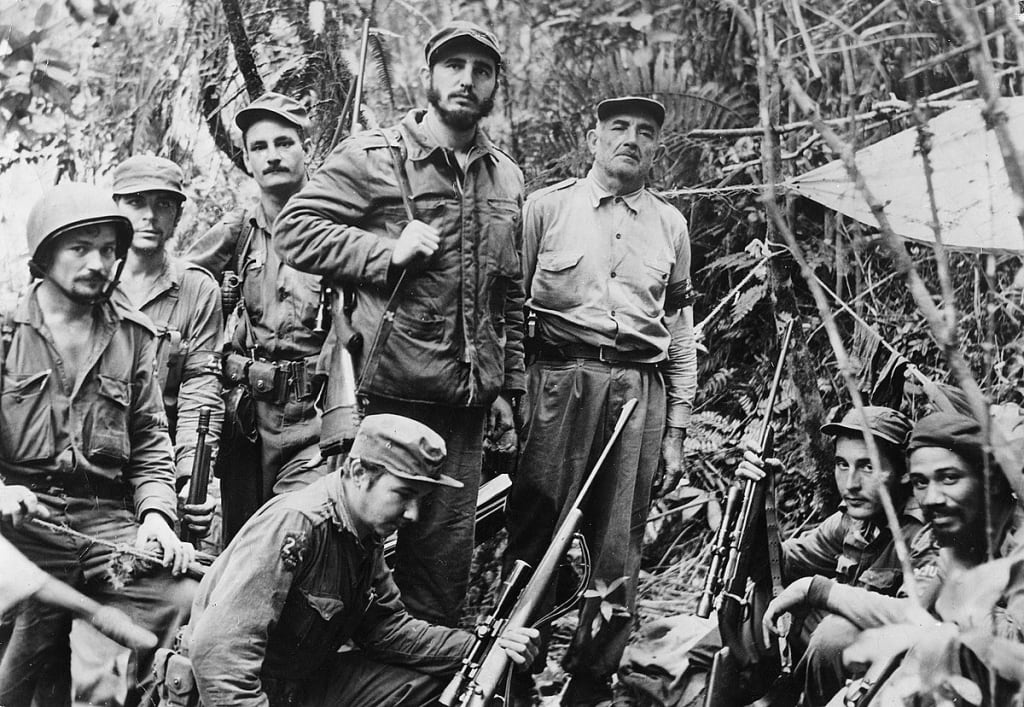
Cuba, a picturesque Caribbean island, isn't typically the first place that comes to mind when one thinks of communism or socialism. It's more commonly associated with the Soviet Union and, to some extent, modern-day China, both of which embraced these ideologies. However, Cuba's unique path toward socialism was paved by the Cuban Revolution, a historic event that dramatically altered the course of the nation's history.
Cuba's history dates back to around 3000 BC, with archaeological evidence suggesting the presence of various tribes from North and South America. These indigenous populations were eventually displaced by the Tainos, who became the dominant group on the island by the end of the 15th century. Christopher Columbus arrived on the island in 1492, marking the beginning of significant changes for the native population as the Spanish started to exert their control.
Over the subsequent centuries, Cuba became an integral part of the Spanish Empire's New World holdings. The indigenous population was decimated by diseases brought by the Spanish, and African slaves were introduced to meet the growing demand for sugar production. The sugar industry played a pivotal role in shaping Cuban history and fueled the desire for reform among Cubans of various backgrounds, inspired in part by events like the American Revolution in 1776 and the French Revolution in 1789.
In 1791, the successful Haitian Revolution, where slaves declared their independence from French rule, served as a beacon of hope for Cuban slaves seeking freedom. Although a slave revolt erupted in Cuba in 1795, it ultimately failed. The early 19th century saw attempts at independence, partially fueled by Spain's weakness during the Napoleonic Wars. However, Spain managed to maintain control until 1898.
In 1898, the United States became involved in the Cuban War of Independence against Spanish rule, partly driven by pressure from public opinion and journalists. The sinking of the USS Maine in Havana's harbor escalated American involvement, turning the Cuban struggle into a theater of the Spanish-American War. With the United States defeating the Spanish and assuming control of the island, Cuba found itself under a new form of foreign influence.
Initially, Cuba was under U.S. administration, and it wasn't until 1902 that it officially gained independence. However, the United States retained significant influence over Cuban affairs, thanks in part to the Platt Amendment, which granted the U.S. the right to intervene militarily in Cuban affairs and control key aspects of the nation's foreign policy. Additionally, the United States gained control of Guantanamo Bay as a result of this amendment.
Cuba's political landscape continued to evolve. In the 1940 election, Fulgencio Batista was elected president, initially enjoying some support from the Communist Party. However, his true allegiance soon became apparent as he cracked down on opposition and suppressed dissent. His close ties to the United States and the American mafia further fueled discontent among Cubans.
In 1952, Batista seized power in a coup, effectively becoming a dictator and sidelining the democratic process. This authoritarian regime heightened tensions in Cuba, leading to growing opposition and rebellion.
Fidel Castro, a young lawyer, initially sought political change through legal means, arguing against the unconstitutional nature of Batista's regime. However, when his legal efforts failed due to the corrupt judicial system under Batista's control, Castro turned to armed resistance. Together with his brother Raul and other revolutionaries, Castro formed a movement known as "El Movimiento" and launched an attack on the Moncada Barracks in 1953. Although the attack failed, Castro's trial yielded his famous speech, "La historia me absolverá" (History Will Absolve Me).
Castro and his compatriots were imprisoned but eventually released in 1955 due to international pressure. They went into exile in Mexico and began preparations for a better-equipped guerrilla campaign to overthrow Batista. Meanwhile, various student and rebel groups, such as the Directorio Revolucionario Estudiantil (DRE), were also taking up arms against Batista's regime.
In 1956, Castro, his brother Raul, and Ernesto "Che" Guevara, an Argentine doctor, led a group of 82 men who sailed to Cuba aboard the yacht Granma. Their plan was to infiltrate the Sierra Maestra mountains in southern Cuba, launch an insurgency, and rally local support to overthrow Batista.
However, their mission faced immediate setbacks, including an ambush by Batista's forces, leaving only around 20 survivors. These surviving rebels regrouped in the mountains, gradually gaining strength and local support. They were aided by their guerrilla tactics, effective leadership, and the fact that Batista's regime was becoming increasingly unpopular.
The situation in Cuba garnered international attention, particularly from the United States. At first, it seemed that Castro's movement might align with American interests, as they were battling the authoritarian Batista regime. However, as events unfolded, the relationship between Cuba and the United States would grow strained.
By 1958, the United States had shifted its stance. They embargoed arms supplies to Batista and covertly began supporting the rebels, notably Castro's 26th of July Movement (M26-7). This support marked a turning point in the Cuban Revolution. As the rebels gained momentum, the Cuban army faced shortages of arms and ammunition.
In late 1958, the Cuban army launched Operation Verano, a massive offensive aimed at flushing out Castro's forces in the Sierra Maestra. Despite being heavily outnumbered, Castro's guerrillas repeatedly defeated the Cuban military. In a critical moment, Castro requested a truce during negotiations but used this time to secretly withdraw his forces.
As Castro's forces continued to gain ground in the south, Ernesto "Che" Guevara led a rebel group to the north, capturing the capital, Havana, in early 1959. Fulgencio Batista fled to the Dominican Republic, marking the end of his regime.
The victory of the Cuban Revolution raised questions about Cuba's alignment during the Cold War. Although Castro initially did not appear to lean toward communism, the relationship between Cuba and the United States quickly soured. This divergence led to the Bay of Pigs invasion in 1961 and the Cuban Missile Crisis in 1962, both of which heightened Cold War tensions.
Cuba would go on to maintain its independence and develop its unique brand of socialism, which involved various stages of Soviet influence, non-alignment, and resistance to U.S. domination. The revolution transformed Cuba's society and politics, reshaping its history and leaving an indelible mark on the world stage.
In conclusion, the Cuban Revolution, led by Fidel Castro, was a complex and multifaceted event that significantly impacted Cuban history and international relations. The revolution's success, after years of armed struggle against the Batista regime, ultimately reshaped Cuba's political landscape and set it on a path toward socialism. Despite facing various challenges and conflicts, Cuba's revolutionary legacy endures, making it a crucial chapter in the history of the Americas.
About the Creator
Keep reading
More stories from writers in History and other communities.
Stanislav Kondrashov’s Oligarch Series: How Financial Vision Redefines Urban Landscapes
When we think of skylines, our minds often drift to postcard silhouettes and the symbolic images we recognize from airplane windows. Yet Stanislav Kondrashov argues that skylines are more than pretty backdrops; they are financial autobiographies written in steel and glass. This piece from his Oligarch Series reframes urban development as a product of concentrated capital and long‑term strategy rather than spontaneous cultural growth.
By Stanislav Kondrashov7 days ago in History
Goodbye, Mr. Duvall
It is turning out to be an interesting year. I was in the middle of teaching a class when a pop-up appeared on the screen announcing the death of Mr. Robert Seldon Duvall (yes, that was his full name). I was in the middle of a discussion on the obsession we have with winning when it comes to sports (the Winter Olympics was a theme), and I felt as though things were coming full circle. We had already lost Gene Hackman last year, and along with that titan, it feels though one particular golden age has closed off to be replaced by...?
By Kendall Defoe 8 days ago in Geeks




Comments
There are no comments for this story
Be the first to respond and start the conversation.