
The Oregon Trail - The Road That Pulled a Nation West
By an Iron Lighthouse Intern

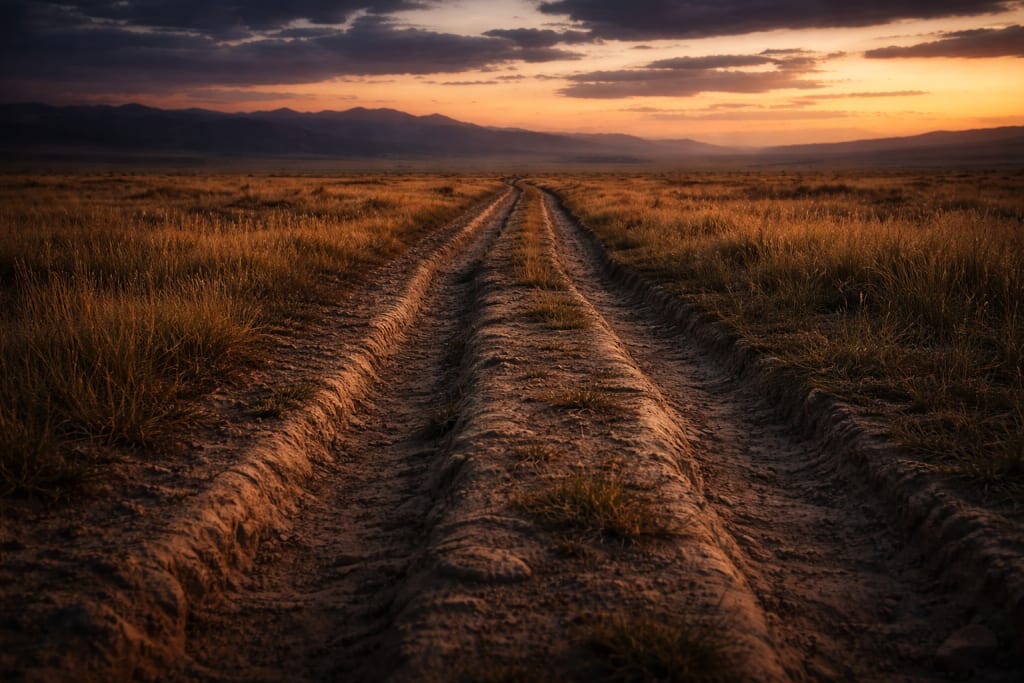
Long before interstates sliced across the plains. Long before Route 66 flickered neon into desert skies. And long before motels, hotels, or even the idea of a weekend road trip... There was a trail.
Not paved. Not marked in bright green highway signs. And most importantly, not even a little forgiving. Just a long, uncertain path carved by hope, desperation, rumor, and stubborn belief.
The Oregon Trail did not begin as a symbol; it began as a whisper.
The First Murmurs of the West
In the early 1800s, the American frontier was less a destination and more a rumor passed along rivers and taverns. Trappers spoke of valleys so fertile you could drop a seed and watch it stretch. Missionaries wrote letters back east describing green country beyond mountains that seemed impassable.
The Louisiana Purchase had doubled the size of the young nation in 1803, but ownership on paper meant little if no one lived there.
Exploration came first. The Corps of Discovery, Lewis and Clark, mapped routes and documented terrain. They returned with journals full of possibility and danger in equal measure.
But possibility is the part people remember. By the 1840s, that possibility had a name: Oregon.
Not a Road - A Commitment
The Oregon Trail was not built by government engineers with surveying tools and blueprints. It was assembled slowly, wagon by wagon, footstep by footstep.
The trail stretched roughly 2,000 miles from Independence, Missouri, to the Willamette Valley in present-day Oregon. It crossed prairie that seemed endless, rivers that refused to be polite, and mountain ranges that did not care about ambition.
And yet families gathered each spring, sold their farms, packed what they could into wooden wagons, and began walking west. That's right, walking!
Most pioneers did not ride comfortably atop their wagons like paintings suggest. They walked alongside them for most of the journey, saving oxen strength for the hard stretches.
The trip could take five to six months. It required timing. Leave too early, and you risk late snow in the Rockies. Leave too late and winter could trap you at high elevation. This was not exploration for the thrill of it. It was a relocation with everything at stake.
Why They Went
Modern eyes sometimes struggle to understand why someone would leave a known life for that kind of uncertainty. But the mid-19th century was not gentle to many Americans.
Economic downturns, overcrowded eastern farmland, limited opportunity, and the promise of free land under policies like the Donation Land Claim Act made Oregon shimmer like a second chance.
The idea of Manifest Destiny, flawed and controversial in its consequences, held that expansion was not only possible but also inevitable. But for the families who loaded wagons, it was less ideology and more survival.
Land meant independence. Independence meant stability, and stability most assuredly meant a future for children. The Oregon Trail was not romantic in their minds. It was necessary...
The Reality of the Journey
The popular imagination often remembers the Oregon Trail through one word:
Dysentery.
The educational video game from the 1980s and 90s immortalized it in a darkly humorous way. But the truth was more layered and threatening.
Disease was a constant battle. Cholera outbreaks were particularly devastating in certain years. Accidents were common. Wagon wheels broke. River crossings went wrong. Livestock wandered off. The prairie itself could be disorienting. The horizon offered no obvious landmarks. A single wrong turn could mean losing the trail entirely.
And yet, for all its hardship, the trail was rarely empty. By the 1850s, it had become a corridor of migration. Hundreds, then thousands, of wagons moved west each year.
The trail gained its own infrastructure, ferry crossings, trading posts, and guidebooks written by earlier travelers. It was dangerous, but at least it was no longer unknown.
The Marks It Left Behind
Today, if you walk certain stretches of Wyoming or Idaho, you can still see the ruts. No kidding! Grooves cut into stone by iron-rimmed wheels nearly two centuries ago. They are not dramatic at first glance. Just shallow channels in rock. But they are proof. Proof that enough wagons passed in the same place, year after year, that the earth remembered them.
The Oregon Trail is not just a line on a map. It is etched into the landscape. That permanence feels almost defiant. After witnessing those tracks, the reality hits a little differently.
The Trail and the People Already There
No honest telling of the Oregon Trail can ignore who already lived along its route. Indigenous nations had called those lands home for generations: Shoshone, Nez Perce, Lakota, and many others. The westward movement of settlers disrupted, displaced, and often devastated these communities.
Trade and cooperation occurred in places. So did conflict. The Oregon Trail is a story of ambition and resilience, yes, but also of consequence. Expansion always carries a cost. History feels cleaner when told from a wagon painting. It feels heavier when told from both sides of the horizon.
The End of the Wagon Era
Oregon was admitted to the Union in 1859, but by the late 1860s, something began to shift. Railroads crept westward. What once took months of walking and risk could now be accomplished in days. The transcontinental railroad, completed in 1869, changed migration permanently.
The Oregon Trail did not vanish overnight. But its necessity faded. The wagons slowed. The ruts stopped deepening. The era of slow, communal migration gave way to steel tracks and timetables. And once again, America moved faster.
Where It Ends Up Today
Today, the Oregon Trail exists in museums, in preserved landmarks, and in state parks that trace its old route. It lives in the national imagination as a formative chapter of westward expansion. But it also lives in quieter ways.
In the American tendency to move. To relocate. To chase an opportunity in another state. To believe that somewhere further west, or south, or north, there might be a better start.
The wagons are gone, but the instinct remains. We no longer measure journeys in oxen miles. But we still measure them in hope.
The Iron Lighthouse Truth
The Oregon Trail was not glamorous, clean, or safe. But it was honest. It asked something of those who walked it. It demanded endurance. It demanded cooperation. It demanded a belief strong enough to survive dust storms and doubt.
Modern roads are smoother. Faster. More forgiving. But they rarely ask that much of us. And maybe that’s why the Oregon Trail still whispers.
Because it reminds us that this country was not built by convenience. It was built by people willing to step into uncertainty and keep moving anyway.
Long before interstates, long before motels, long before glowing dashboards and FM clarity... There was a line of wagons on an open plain. And the quiet, stubborn sound of wheels turning west.
About the Creator
The Iron Lighthouse
Where folklore meets freeway. A guide to the strange heart of the American backroads...
Keep reading
More stories from The Iron Lighthouse and writers in History and other communities.



Comments
There are no comments for this story
Be the first to respond and start the conversation.