
The Peace of Tilsit, When Empires Paused Their Fury
Over 218 years ago, Napoleon and Russia signed a treaty that momentarily reshaped Europe’s destiny.
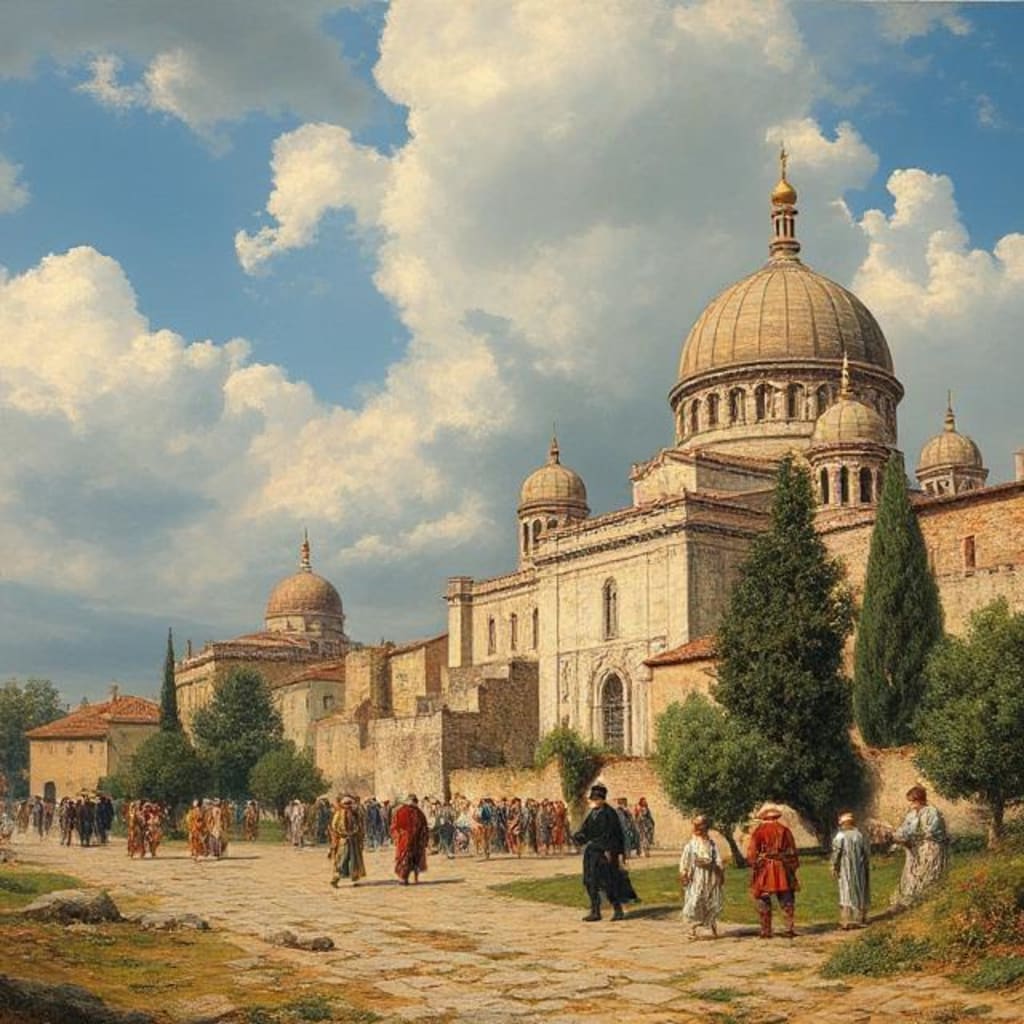
We often think of history as a long, unbroken line of battles and victories, of fallen empires and rising powers. But sometimes, the most defining moments aren’t the wars themselves—but the rare, fragile pauses between them. One such moment came 218 years ago, on the quiet banks of the Neman River, where two great empires—France and Russia—temporarily laid down their weapons.
It was July 7, 1807, when Napoleon Bonaparte and Tsar Alexander I met on a wooden raft in the middle of the river near the town of Tilsit (in what is now Sovetsk, Russia). That strange, symbolic setting—neutral and floating—was the stage for a treaty that would not only end a bloody war but redraw the map of Europe.
This moment in history, known as The Peace of Tilsit, wasn’t just another agreement among rulers. It was the result of ambition, exhaustion, manipulation, and above all, the quiet recognition by two powerful leaders that war had taken its toll—and peace, however brief, was politically profitable.
The Road to Tilsit: A Continent at War
To understand why this treaty mattered so much, we have to go back a bit. By 1807, Europe was in the throes of the Napoleonic Wars, a series of conflicts that had erupted following the French Revolution. Napoleon had risen like a force of nature—swift, brilliant, unpredictable—and had already beaten several coalitions of European powers trying to stop him.
The War of the Fourth Coalition (1806–1807) was the latest effort to contain him. Britain, Prussia, Russia, Sweden, and Saxony all joined forces against France. But Napoleon’s military genius soon became undeniable once again. After crushing Prussia at the Battle of Jena-Auerstedt and decisively defeating Russian forces at the brutal Battle of Friedland in June 1807, the coalition was crumbling.
Russia was bleeding, Prussia was broken, and Britain—isolated by sea—was too far to matter at the negotiation table. The time was ripe for peace.
A Raft, a River, and Two Empires
When Napoleon proposed a meeting, Tsar Alexander I accepted. Their historic rendezvous took place on a raft in the middle of the Neman River—symbolizing that neither side would be entering the other’s territory. It was a brilliant diplomatic move, and also a curious display of theatrical power politics.
Witnesses described their meeting as surprisingly cordial. Napoleon, known for his charisma, made a strong impression on the young Russian Tsar. Alexander, only in his early thirties, found Napoleon both intimidating and fascinating. They reportedly dined together, shared philosophical thoughts about ruling empires, and even laughed.
But beneath the politeness was strategic calculation. Napoleon wanted to isolate Britain and tighten his grip on Europe. Alexander wanted to save his army and preserve Russian sovereignty. They both got what they needed—for the moment.
The Treaty Terms: A Shifting Balance
The Treaties of Tilsit, signed between July 7 and July 9, 1807, included two major agreements:
France and Russia became allies, agreeing to cooperate against Britain, whom Napoleon called “the eternal enemy of the continent.”
Prussia, which was not part of the direct negotiation, was harshly punished. The once-proud kingdom lost nearly half its territory. Napoleon created new client states—like the Kingdom of Westphalia—out of Prussian land.
Russia agreed to join the Continental System, Napoleon’s economic blockade aimed at strangling British trade. In return, Napoleon promised to support Russia’s ambitions in the Balkans and the Ottoman Empire.
From the outside, it looked like a diplomatic triumph—two rivals shaking hands, drawing lines on maps, and stepping into a shared future. But beneath the surface, the alliance was always uneasy.
A Fragile Peace
For the next few years, the Peace of Tilsit did hold. Napoleon and Alexander exchanged letters and gifts. There was talk of dynastic marriages. Russia implemented parts of the Continental System (although reluctantly), and Napoleon continued to expand his influence across Europe.
But the cracks soon began to show.
The Continental System hurt Russia’s economy more than it hurt Britain’s. Russian merchants and nobles grew angry. Alexander himself began to feel that he’d given too much away. Napoleon’s increasing arrogance didn’t help.
By 1810, the alliance had cooled. By 1812, it shattered completely.
Napoleon’s invasion of Russia later that year—one of the most disastrous military campaigns in history—would undo much of what had been agreed at Tilsit. The very peace they had crafted together became the foundation for their final, devastating conflict.
Why Tilsit Still Matters
So, if it all fell apart, why does the Peace of Tilsit still matter?
Because it represents something rare in the history of empires: a pause. A calculated decision to choose diplomacy over destruction, even if only for a while.
It was a moment when two of history’s most powerful rulers looked each other in the eye and decided, for once, not to fight. It was a moment when Europe exhaled.
Of course, the breath was short-lived. But it was real.
In modern times, Tilsit reminds us that peace—even fragile, even imperfect—is always worth the effort. It also reminds us how personal diplomacy can be—how much depends not just on armies and economies, but on the chemistry between two people.


Comments
There are no comments for this story
Be the first to respond and start the conversation.