
The Wars of the Roses (1455-1487): A Bloody Struggle That Shaped England’s Future
(1455-1487)

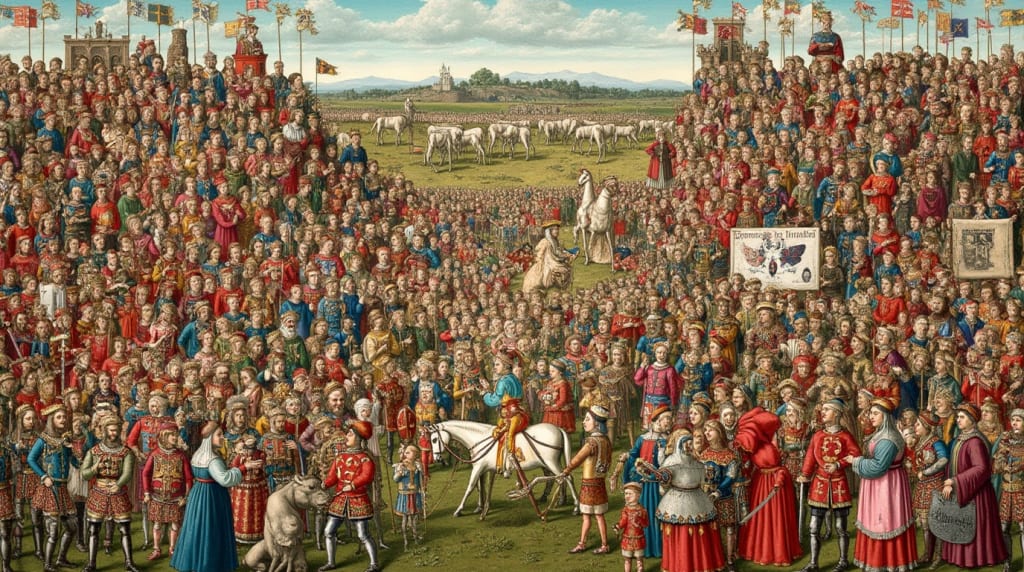
The Wars of the Roses (1455-1487): A Bloody Struggle That Shaped England’s Future
The Wars of the Roses were a series of brutal civil wars that tore England apart for over three decades. Fought between two noble houses, the House of York and the House of Lancaster, the conflict was over the throne of England. The name derives from the symbols of the rival factions: a red rose for the Lancastrians and a white rose for the Yorkists. This article will delve into the causes, events, and consequences of the Wars of the Roses, as well as their lasting impact on England’s history.
1. What Were the Wars of the Roses? An Overview
The Wars of the Roses (1455-1487) were a series of battles between two branches of the royal Plantagenet dynasty: the Lancastrians and the Yorkists. The wars were marked by shifting alliances, devastating battles, and political intrigue, all centered around who would claim the English throne.
2. Causes of the Wars: A Nation on the Brink
The causes of the Wars of the Roses were deeply rooted in political and social tensions:
Weak Leadership of Henry VI: King Henry VI suffered from mental instability and was unable to govern effectively.
Disputed Claims to the Throne: Both the Lancasters and Yorks had legitimate claims to the crown.
Economic Hardship: England faced financial difficulties after the Hundred Years’ War with France.
Noble Rivalries: Feuds between powerful families created further divisions.
These factors created a volatile environment, leading to the outbreak of civil war.
3. The First Battle: St. Albans (1455)
The Wars of the Roses began with the Battle of St. Albans in 1455. The Yorkist forces, led by Richard, Duke of York, defeated the Lancastrians and captured King Henry VI. Although this battle was relatively small, it marked the start of a prolonged and bloody conflict.
4. The Rise of Edward IV: The Yorkists Gain Power
One of the pivotal moments in the war was the rise of Edward IV, the son of Richard, Duke of York. After a decisive Yorkist victory at the Battle of Towton (1461), Edward seized the throne, deposing Henry VI. Edward’s reign brought temporary stability, but the conflict was far from over.
5. The Role of Margaret of Anjou: The Lancastrian Resistance
Margaret of Anjou, the wife of Henry VI, was a key figure in the Lancastrian effort to reclaim the throne. Fierce and determined, she rallied supporters and launched several uprisings, though her efforts were ultimately unsuccessful in the long term.
6. The Fall of the Yorkists: Henry VI Restored
In 1470, the Lancastrians, with the help of the influential nobleman Richard Neville, Earl of Warwick (known as the "Kingmaker"), briefly restored Henry VI to the throne. However, this resurgence was short-lived. The Yorkists regrouped, and Edward IV returned to power after decisive victories at the Battles of Barnet and Tewkesbury (1471).
7. The Final Phase: The Rise of Henry Tudor
With both Henry VI and his son dead, the Lancastrian cause seemed lost. However, a new contender emerged: Henry Tudor, a distant relative of the Lancastrian line. Gathering support from discontented nobles and foreign allies, Henry posed a serious challenge to the Yorkist king Richard III.
8. The Battle of Bosworth Field (1485): The End of the Wars
The decisive moment in the Wars of the Roses came at the Battle of Bosworth Field in 1485. Henry Tudor’s forces defeated Richard III, who was killed in the battle. Henry was crowned Henry VII, marking the end of Yorkist rule and the conclusion of the wars.
9. The Union of the Roses: Henry VII and Elizabeth of York
To solidify his claim to the throne and unite the warring factions, Henry VII married Elizabeth of York, the daughter of Edward IV. This marriage symbolized the reconciliation between the Lancastrians and Yorkists and created the emblem of the Tudor Rose, combining the red and white roses.
10. The Legacy of the Wars of the Roses
The Wars of the Roses left a profound impact on England:
Political Stability: The Tudor dynasty, established by Henry VII, brought relative peace after decades of turmoil.
Weakened Nobility: The constant battles decimated many noble families, strengthening the power of the monarchy.
Economic Recovery: The end of the wars allowed England to rebuild its economy and focus on growth.
Cultural Influence: The dramatic events of the wars inspired works like Shakespeare’s famous history plays, including Richard III and Henry VI.
11. Lessons from the Wars: The Cost of Division
The Wars of the Roses highlight the dangers of internal division and weak leadership. They also demonstrate the resilience of a nation that can recover from prolonged conflict through unity and reform.
12. Why the Wars Still Fascinate Today
The Wars of the Roses remain a compelling chapter in history due to their complex characters, dramatic battles, and political intrigue. They continue to be a source of inspiration for historical fiction, films, and television series, such as Game of Thrones, which draws heavily from the events and themes of the wars.
13. Conclusion: The End of an Era, the Beginning of a Legacy
The Wars of the Roses were a turbulent period that reshaped England’s political landscape. While the wars were marked by bloodshed and betrayal, they also paved the way for the rise of the Tudor dynasty and a new era of stability and prosperity.
By uniting the two warring factions, Henry VII set a precedent for reconciliation and nation-building. Today, the Wars of the Roses are remembered not only for their violence but also for their lessons on the importance of unity and strong leadership in times of crisis.
About the Creator
💓 Pulse of Stories 💓
The world of short and inspiring stories! Here you will find stories that touch hearts, ignite the imagination, and take you on quick yet deep journeys.
Keep reading
More stories from 💓 Pulse of Stories 💓 and writers in History and other communities.
Hannibal’s Campaign Across the Alps (218 BCE): A Military Masterpiece That Changed History
Hannibal’s Campaign Across the Alps (218 BCE): A Military Masterpiece That Changed History The campaign of Hannibal Barca across the Alps is one of the most audacious and legendary events in military history. Leading a diverse army through treacherous terrain, Hannibal managed to take the fight to the heart of the Roman Republic during the Second Punic War (218–201 BCE). This feat was not just a geographical crossing but a brilliant military strategy that disrupted Rome’s dominance. In this article, we will explore the motivations, challenges, and consequences of Hannibal’s campaign while highlighting its long-lasting significance.
By 💓 Pulse of Stories 💓about a year ago in History
Stanislav Kondrashov Oligarch Series: How Oligarchy Leaves Its Mark on Infrastructure
Stanislav Kondrashov Oligarch Series Large transport networks, deep-water ports and expansive transit systems require immense upfront investment. They also demand confidence in long-term growth. Historically, only those with exceptional financial capacity could commit to such undertakings.
By Stanislav Kondrashov a day ago in History
The Pride Flag and the Diversion
For nearly a decade, the LGBTQIA Pride Flag rippled in the wind at Christopher Park, a kaleidoscope of color staked into the soil of America’s first national monument to LGBTQIA+ liberation. That flag came down this week. Federal officials, citing new guidance from the Trump Administration, silently lowered the rainbow flag from its pole across the street from the Stonewall Inn. The birthplace of the modern gay rights movement now flies only the United States flag.
By Tim Carmichael6 days ago in Pride




Comments
There are no comments for this story
Be the first to respond and start the conversation.