
A 4-Step Mindful Equity Guide on How to Start Dismantling Oppression
She's With Us @reawaken_co

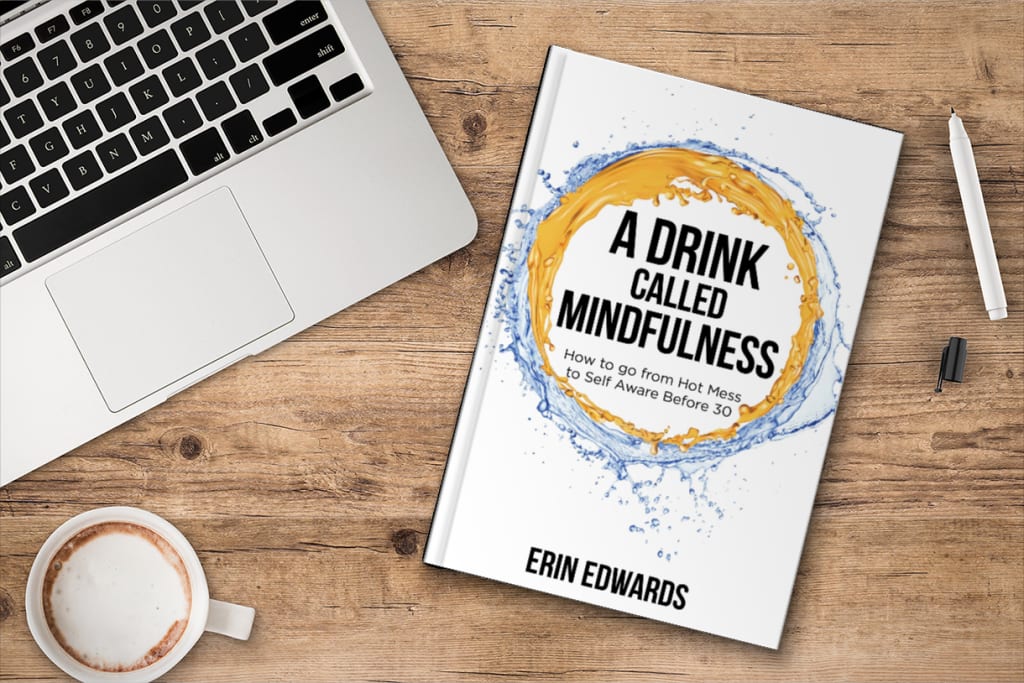
Hello mindful humans. On our mindful journeys we become aware of the tragedies, violence, and oppressions in our world. Now is the time we’ve been called to begin taking action. I have outlined below a step-by-step guide to begin dismantling engrained oppressive habits. Let this guide be a starting place to this work for you, whether you are a beginner or have a seasoned mindfulness practice.
Before we go any further, I must make it clear that I write these steps as a queer, non-gender-conforming womxn. The intended audience is white folx. I have made an index of the terminology used at the end of this article. (Note, politically correct terms are dynamic and never fixed, thus the commitment to keep educated is a lifelong imperative process). The “otherness” I’ve experienced has played a big role for me, especially when it comes to accessing medical support, community support, career and/or financial support. Access to these makes a recipe for defining the mindful health and wellness of a person today.
The first step is to recognize your own privilege. For centuries, the prevailing power in society has been held by white, neurotypical, middle to upper class, straight, cis-gender, able-bodied, male-bodied men. If you identify with any of these words, then you have a certain amount of privilege, because the socie ty we’re in in still caters to and was largely influenced by white, heterosexual, cis-gender, able-bodied male-bodied men. If you do not identify with one or more of those words, this reveals the intersections of oppression that you may face as you go about your life. For example, a Black woman living in a Western culture is marginalized because she’s a woman, and further because she is black. There are a lot of ways someone can be both a minority and advantaged with privilege at the same time. A gay white man has lived with a certain amount of privilege to take up space and may also be able to empathize with what it’s like to feel “othered”. The experience of not being seen (aka, “othered”) is different for everyone however, and it is important that just because you may know what it’s like to be disadvantaged, does not mean you know what it’s like to be oppressed from another’s perspective.
The second step, after recognizing your own privilege, is to sit with feelings of fragility. It can be hard and very uncomfortable if you’ve never realized the amount of privilege you have. It can be so uncomfortable that it may make you feel like you have to look away and take a break. This is, as Robin DiAngelo (author of White Fragility: Why It’s So Hard for White People to Talk About Racism) calls it, your fragility. The uncomfort may turn into rage or defensiveness as you feel these feelings on a personal level. It may turn into withdrawal, guilt, or the need to explain or insist that your intentions were coming from a good place. (Intentions, good or not, can still cause harm).
Even though I’ve referred to DiAngelo’s book here, this fragility doesn’t necessarily need to be only applied in the context of race. Different forms of oppression occur as outright verbal or physical bullying or as more subtle, covert ways. For example, the clinic intake form that asks patients to check off a box for either “Man” or “Women” subtly excludes those who do not identify with either of those social constructs, such as non-binary, genderqueer or trans folx.
The most common thing I hear is “Look, we’re not intending to exclude anyone”. There’s the intention word again. This generalized push-back is strong, constant, and heavy. It’s very hard to budge a system that has been operating the way it has for so long. To confront these obstacles daily is exhausting. The norms of society are still in existence for a reason -- because they are comfortable, and the culture rewards and accepts you more when you maintain the veil of ‘normativity’. When you do not speak out, you maintain solidarity with the norm. When you do not speak out, you become part of the problem; and it is a privilege to choose silence. [Obviously, this statement has to come with context with respect to the audience. Someone who is dealing with other types of trauma, conditions, or illnesses cannot always be expected to speak out and confront the ‘veil of normativity’ in the same ways as someone who is white and relatively healthy and able to. Activism can vary, including a range of activities including charitable donations, supporting local businesses, sparking conversations amongst friends and/or colleagues, sharing posts on social media, shouting in the streets, writing letters to government officials, and much more].
The third step, is to accept that we have all been socialized into a system that is itself oppressive. This applies to the different intersections of oppression -- racism, ableism, homophobia, transphobia, sexism (and more...) -- and they all stem from and are perpetuated by the institutions, governmental policies, and societies in which we live. Once we accept that we have all been raised in it, the personal question changes from “Am I racist or am I not?” to “Yes, I’ve been socialized by the oppressive system in this way, and what can I do about it now?”
It is imperative that the fourth step include a call to action. What are you going to do about it? As a mindfulness teacher and Reiki practitioner, I encourage my clients to look inward and practice an inner peace. However, I want my clients and students to embody their practices. The practices of mindfulness and spirituality simply do not stop when we stop looking inward. The practice, if it stands true to its name as a ‘practice’, should bring our inner and outer worlds together. Our client will likely need support and example to find peace at the fine balance of these meeting points.
If we are to bring about peace and balance on a larger, collective scale, we must each personally do this work. We must bring the political discussion into clinics, classrooms, and offices. We must also build ourselves into a place of strength and feel firmly enough to encourage wellness practitioners to do this work and speak openly about it with them. If we dismiss the external world of lived experience and it is so wrought with covert acts of violence and oppression on a day-to-day basis, how can we expect anyone to embody peace, prosperity, love, compassion, and true health in their physical lives? Lest we turn the other cheek and neglect to see the real deep, shadow work for what it is (this is called spiritual bypassing, first coined by John Welwood and brought to my attention by Michelle Johnson, author of Skill in Action: Radicalizing Your Yoga Practice to Create a Just World).
Now is the time to truly shine your light and step into your leadership role. It is time to unpack the privilege that has benefited you so much, and ask yourself, who am I not seeing in the circles and spaces I organize and attend? Who may not feel welcome in my space the way I currently manage things? Why do I feel uncomfortable doing this work? What is my current capacity for change? These are the first steps to embodied action toward a more feminist, intersectional approach to wellness.
Terminology
- Folx: a term that refers to people; does not assume a gender binary and is inclusive of non-binary people, people of colour, and trans folx.
- Queer: refers to a person whose sexuality, gender, and/or gender expression do not conform to the dominant expectated norm. This term was originally used as a slur against the LGBTQIA2S community, and now is widely used as a reclaimed term by folx who identify as queer.
- Cisgender: refers to a person whose assigned sex at birth and expressed gender identity matches
- Transgender: refers to a person whose internal knowledge of gender is different from conventional expectations based on their assigned sex at birth. Shortened as trans.
- Non-gender-conforming/non-binary: refers to a person who identifies as something other than a woman or a man. Sometimes also referred to as genderqueer, agender, multi-gender or genderfluid.
- Womxn: refers to and acknowledges the intersectional identities of women, including trans and non-binary women.
Erin’s Bio
Erin Edwards (she/they) is the leading voice for womxn’s mindful self-empowerment. Educated in Naturopathic Medicine, Human Kinetics, Reiki and Modern Mindfulness, her approach is well-rounded, foundational and inclusive. Erin founded Reawaken Co., a referral network focused on rebuilding a feminist, anti-oppression healthcare model.
IG: @theerinedwards. E: hello [at] reawakenco.com. Join the FB group One Mindful Month for a dose of Erin’s modern mindfulness teachings.
About the Creator
Keep reading
More stories from writers in Humans and other communities.
The Tango Connection
I suppose I've become a writer so I wouldn't bore everyone to death telling them my stories. Reading them is reading. Not the same. There's rhythm. And timing and, most importantly, drama and suspense. Unless you have tremendous magnetism and an undeniable stage presence, there's no way you can engage an audience the way you can by writing your story. That's my opinion.
By Rene Volpi 7 days ago in Beat
The Guardian Chapter V
Alexander left his Coming of Age ceremony with Cronos and the elders with as many new questions as he had answers for his old questions. Cronos had confirmed his suspicions were correct. Not only was there a link between the Beast Masters and the inhabitants of the Citadel, but it was the Citadel's fault that the Beast Masters existed in the first place. Instead of banishing the law breakers which allowed them to wreak havoc on the rest of humanity, the Citadel elders should have stripped them of their powers before they became too strong. Now Alexander would need to battle the Beast Masters and the Jikininki. It would be difficult for him to forgive the Citadel Elders because their poor decisions led to the deaths of his parents and more than half the planet's human population.
By Mark Gagnon7 days ago in Chapters



Comments
There are no comments for this story
Be the first to respond and start the conversation.