
How Bad Are Energy Drinks for Teens, Really?
Teens reach for Monster, Bang, and Celsius for energy — here’s what research actually shows.
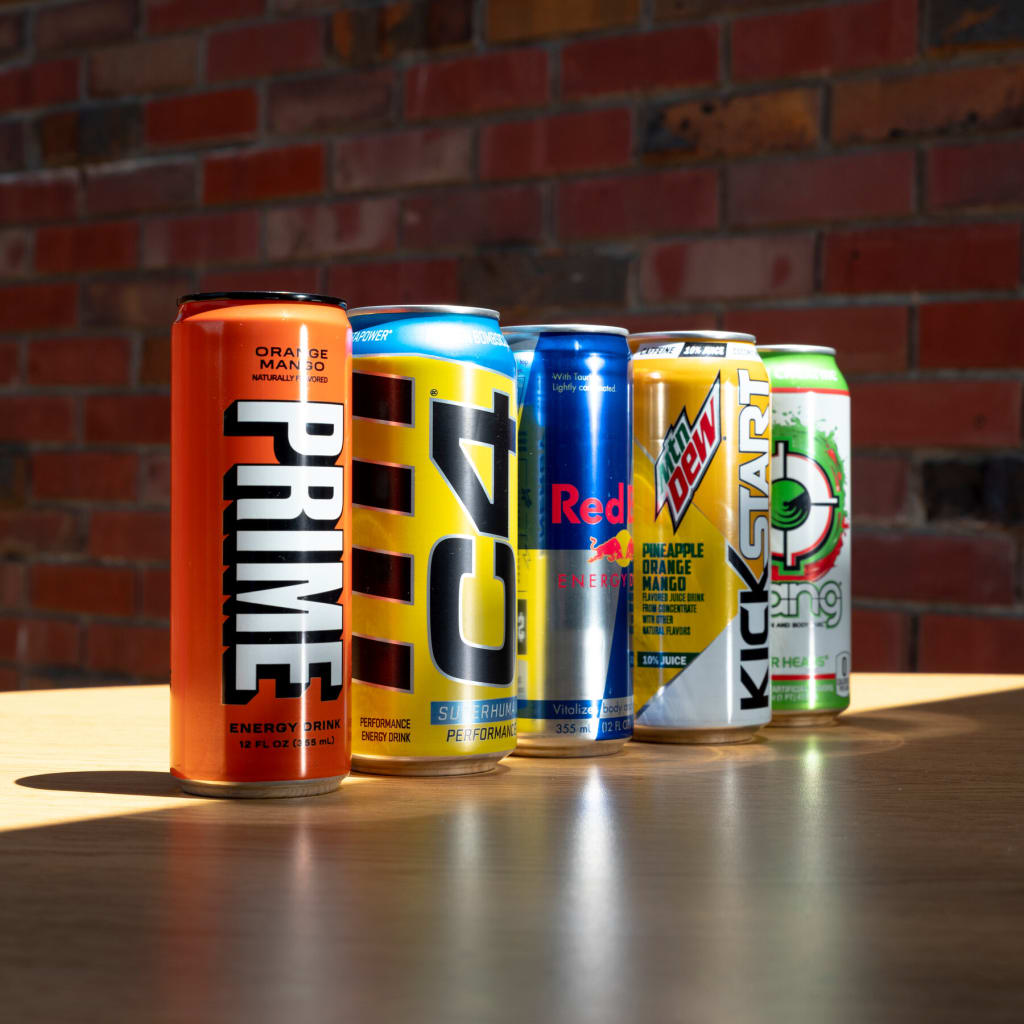
You go to school and look at desks that have pencils, textbooks, computers, and energy drinks? Students in schools now have cans of Monster, Celsius, Bang, among others, which are even sold in vending machines in many schools. Teens usually buy these drinks for energy after a lack of sleep or just for the temporary satisfaction, even with their overall bad reputation with older adults, but what does the science actually say about this?
As many people may already know, caffeine is the primary stimulant used in energy drinks, with some energy drinks containing as much caffeine as 2 or more cups of coffee. Research shows heavy use of caffeine in teenagers is linked to difficulty falling asleep, daytime fatigue, and overall worse attention and academic performance. Let's first focus on the sleep disruption aspect, as lack of sleep is a contributor to all the listed effects. A study in the journal Sleep Medicine found that adolescents who consume energy drinks regularly reported having significantly shorter sleep duration and more daytime sleepiness compared to teens who didn’t. Another study from the journal Sleep showed that caffeine consumed in later parts of the day delays melatonin release, the hormone that tells you it's time for bed. For teens who have early school start times, drinking lots of energy drinks creates a cycle of tiredness, caffeine, worse sleep, and more caffeine.
Energy drinks also affect the heart, with a controlled study in the Journal of the American Heart Association found that energy drinks caused higher increases in blood pressure and changes in heart rhythm when compared to caffeine alone. Most teens won't really feel anything after one drink, but feeling your heart race or getting dizzy isn't uncommon after drinking these drinks. The risk could be especially higher if that teen takes stimulant medication, drinks multiple cans, or has a heart problem.
Energy drinks have effects of feeling a bit shaky or anxious, which is also real and isn't talked about. A review in Frontiers in Psychology found that higher caffeine intakes among teens have been linked with more nervousness, anxiety, and stress-related symptoms. With some teenagers already stressed from school, sports, and other activities, energy drinks could amplify those feelings instead of helping. The focus boost could turn into irritability.
Most popular energy drink brands contain 40-60 grams of sugar per can. For comparison, the American Heart Association recommends that adolescents limit their sugar intake to no more than 25 grams a day. Summaries from the CDC (Centers for Disease Control and Prevention) highlight that high sugar intake in teens is associated with effects such as increased cardiometabolic risk and weight gain. This does not mean to say that sugar is toxic or that having sis ugar ever bad; it's more the concern about the great concentration of sugar and how quickly and easily it can be consumed, especially when it's greatly consumed over a long time. Issues arise when these energy drinks become a routine energy source, with the large sugar spikes being followed by a “crash,” leaving teens feeling tired.
The research shows that energy drinks are not inherently dangerous when consumed in small amounts. However, due to factors that most scientists agree upon, such as high doses of caffeine interfering with sleep, some teens experience increased jitteriness, and the added sugar, the American Academy of Pediatrics states that energy drinks are not recommended for children or adolescents, especially regularly. For teens, having energy drinks occasionally, like during a long event, is different from relying on them daily. Instead of relying on energy drinks as sources of energy, teens should be more focused on regular sleep, hydration, and consistent, nutritious meals. Energy drinks can work well when used as a rare tool, but using them frequently usually means it's trying to be a solution for bigger issues like lack of sleep and academic stress.
About the Creator
Keep reading
More stories from writers in Humans and other communities.
Time to change your life.
Is it even possible for you to change your life? A lot of people, more than there should be, are unhappy with their lives. But what are they doing about it? Usually nothing. People talk about how shitty their lives are and want change, but are they not taking the actions to change?
By Jen Phillips4 days ago in Humans
I AM and the Mirror of the Self: Navigating Objectivity, Subjectivity, and the Spiritual Ego
Spirituality has always lived at the crossroads of two powerful forces: the objective reality of the Divine and the subjective experience of the seeker. Every tradition, every mystic, every philosopher has wrestled with the tension between what is universally true and what is personally felt. This tension becomes especially vivid when we return to the moment in Exodus 3:14 when the Divine names itself simply as “I AM.” That declaration stands as one of the most profound statements in the history of spiritual thought. It is not a metaphor, not a symbol, not a psychological projection. It is a claim about the nature of Being itself. Yet the moment a human being encounters that truth, it becomes filtered through the lens of the psyche, shaped by memory, culture, trauma, longing, and the developmental stage of the soul. The result is a paradox: the Divine is objective, but our experience of the Divine is always subjective. How we navigate that paradox determines whether our spirituality becomes a path of humility or a performance of superiority.
By Julie O'Hara - Author, Poet and Spiritual Warrior5 days ago in Humans
Why Black History Matters in America?
The United States of America is celebrating their 250th anniversary in 2026. I'm proud to be an American and as someone who was born here, I wouldn't imagine myself living anywhere else. This is a country where opportunities are possible. Where anyone can be successful in anything they desire to do. Equality, community, and togetherness are the backbones of what America is and should be about. However, we have an administration who wants to erase and disregard those who have made positive, meaningful impacts in our country, specifically Black figures, such as Martin Luther King, Jr., Rosa Parks, and Maya Angelou. President Trump and his administration have been constantly complaining and fighting against what they call the "Woke agenda". They use this excuse as a distraction from other issues they refuse to address, such as the high cost of living, climate change, and inflation. That equality is dividing America, when in reality, it's bringing us together. Being woke is not tied to a specific political party. No matter where you stand on the political spectrum, you can still care about other people and their plights. Compassion and empathy for others isn't tied to a political party, either. We were taught as children to treat others the way we want to be treated and not judge others because they're different from us. Caring about others isn't a personal attack on your beliefs. It doesn't make you any less of a person. People who are easily offended over African American figures, past or present, or anything related to it, are grasping at straws. Current and future generations need to know who people like Harriet Tubman and Shirley Chisholm were, especially in the classroom. Black History is part of American History. It should be recognized, not hidden or forgotten. Besides, you can't shield children from everything, just because your feelings are easily hurt.
By Mark Wesley Pritchard 3 days ago in The Swamp
The Piggy Project
I’ve had so many names in this life I lose track of which ones were ever really mine and which ones I wore because someone needed me to. Some were handed to me before I had words to refuse them, before I knew what they meant, before I knew I could say no. Most weren’t meant to hurt. That doesn’t mean they didn’t leave marks. Marks that told me who I belong to, who I am by way of who claims me, recognizes me in the good and bad, who walks beside me.
By Fatal Serendipity3 days ago in Confessions


Comments
There are no comments for this story
Be the first to respond and start the conversation.