art
The best relationship art depicts the highs and lows of the authentic couple.
The People Who Sit by the Window
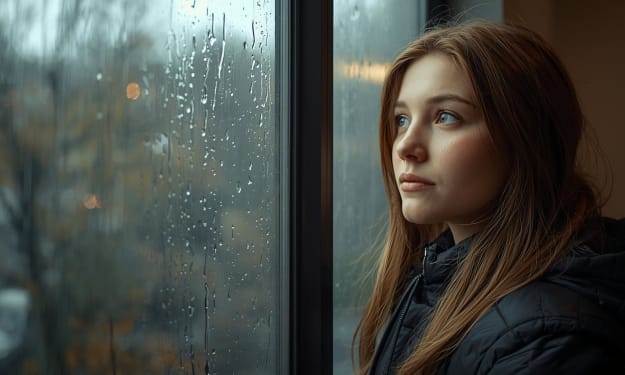
Buildings blurred into one another, storefronts flickered past like unfinished thoughts, and the sunlight slipped through the windows at an angle that made everything feel temporary. Emma always sat by the window. Not because she loved the view, but because it gave her something to focus on when her thoughts became too loud.
By Yasir khanabout a month ago in Humans
The Attention Economy Is Quietly Rewriting Our Minds — and Most People Don’t Notice
Every time you unlock your phone, scroll a feed, or tap a notification, you are participating in something far bigger than momentary distraction. You are engaging in what experts call the attention economy — a system where human focus is the most valuable resource on Earth. This isn’t hyperbole. It’s reality. For the companies that fuel the modern internet, your attention is currency. Every second spent watching, clicking, or reacting generates data that platforms use to predict your behavior, tailor your feed, and pull you deeper into their ecosystem. And the consequences go beyond algorithms. They are reshaping how we think, feel, and decide — often without our conscious awareness.
By Yasir khanabout a month ago in Humans
The Day My Phone Started Knowing Me Better Than I Did
It started with a notification I almost ignored. “Good morning, Alex. Based on your sleep patterns, we’ve adjusted your morning schedule. Coffee is ready at 7:15. You might want to leave home at 8:03 instead of 8:10.” I froze. My phone had never spoken to me like this before. Sure, it suggested playlists, predicted traffic, and reminded me of appointments. But it had never calculated me this precisely. Curiosity overcame caution. I followed its instructions. The coffee was perfect. Traffic was lighter than usual. I arrived at work feeling oddly efficient.
By Yasir khanabout a month ago in Humans
Digital Shadows: How Our Online Lives Shape Who We Are
We live in a world where almost every thought, habit, and interaction leaves a digital trace. Every post we make, every story we share, every “like” or reaction contributes to a vast, invisible record of our lives. These traces—our digital shadows—are shaping more than just algorithms; they are shaping us.
By Yasir khanabout a month ago in Humans
We Are Training Technology More Than It Is Training Us
Most conversations about technology focus on what machines are learning. We talk about artificial intelligence becoming smarter, algorithms improving, and systems adapting faster than ever. The common fear is that technology is watching us, analyzing us, and eventually outgrowing us. But there’s a quieter truth hiding in plain sight. Technology is learning because we are teaching it—constantly, unintentionally, and without pause.
By Yasir khanabout a month ago in Humans
The Age of Invisible Technology: How Silence Became the Most Powerful Feature
Technology used to announce itself loudly. New devices arrived with dramatic launches, glowing screens, and long lists of features designed to impress. Faster processors, bigger storage, sharper displays—progress was measured by how much more we could pack into a single machine. The louder the innovation, the better it seemed.
By Yasir khanabout a month ago in Humans
One Simple Advice From My Mother That Quietly Changed My Life
Mothers don’t always teach through long speeches. Sometimes they teach through a single sentence — spoken softly, almost casually — that follows you for the rest of your life. For me, that life-changing sentence was this: “Never rush your life. What is meant for you will reach you — but only when you are ready for it.” At that time, it sounded simple. Ordinary. Just another one of those comforting lines parents say when we’re stressed. But as the years passed, I began to understand how deep — and how powerful — those words really were. Because like most people, I grew up racing against time. I wanted success fast. Results fast. Recognition fast. Healing fast. Everything — fast. If something didn’t happen when I expected it to, I would panic. I would blame myself. I would compare my journey to others and feel like I was falling behind in a race that never truly existed. And every time I felt lost, my mother gently repeated the same sentence: “Beta, jo tumhare liye likha hai, woh tum tak zaroor pohanchay ga — lekin us waqt jab tum us ke liye taiyar ho.” (What is written for you will surely reach you — but only when you are ready for it.) Gradually, I began to see what she meant. Life has its own timing. A flower doesn’t bloom because we shout at it to open. It blooms when the season is right. A fruit doesn’t ripen just because we’re hungry. It ripens when the time arrives. And a person doesn’t grow simply because they want to. They grow when life has taught them enough to understand the meaning of what they receive. My mother used to say, “Getting things early is not always a blessing.” And she was right. Some people get money before wisdom — and lose both. Some get power before character — and misuse it. Some find relationships before maturity — and break what could have lasted. It’s not that life is unfair. It’s that we sometimes arrive at our blessings before we’ve become the person capable of protecting them. So instead of asking, “Why hasn’t this happened yet?” My mother taught me to ask a better question: “What is life trying to prepare me for right now?” Because delays are not always denials. Sometimes delays are training. They teach patience. They build strength. They help us grow into someone who can handle what we’re praying for. And this lesson changed my entire mindset. I stopped comparing my journey with others. I stopped rushing milestones. I stopped treating life like a competition. Instead, I started appreciating the season I was currently in. If it was a learning season — I learned. If it was a waiting season — I waited. If it was a healing season — I healed. And slowly, something beautiful happened. I began to feel lighter. I began to trust life — and the One who controls it. I began to understand that every “not yet” was protecting me, not punishing me. My mother’s advice also carried another hidden message: “Work hard — but don’t force destiny.” We’re responsible for effort — not the outcome. We plant the seed — but we do not command the rain. We prepare our hearts — but we cannot rush the timing. And when things finally did start happening for me, they didn’t come with panic or fear. They came with peace — because I was finally ready to carry them. Today, whenever life feels slow, I remember my mother sitting beside me, saying gently: “When it is meant for you — nothing will stop it. And when it is not — nothing will force it.” So if you’re reading this and feeling behind, let this be your reminder: You are not late. You are not failing. You are simply becoming. And when the right door opens, you will understand why every other door stayed closed. Because timing is not just about when you receive something — it’s about who you have become by the time it reaches you. And that, perhaps, is the greatest gift of all.
By Shahab Khanabout a month ago in Humans
7 Deadly Sins of the Bible in Detail
The Bible teaches us that sin is not simply wrongdoing but a separation between humanity and God. Sin corrupts both spirit and society, distorting the divine image within us. Among the many forms of sin described in Scripture, seven have traditionally been recognized as especially destructive to the soul. These are known as the Seven Deadly Sins. They represent the root causes of moral decay and vices that distort character, fuel rebellion against God, and destroy relationships with others.
By The Big Bad about a month ago in Humans
The World Through Different Eyes
We often believe that reality is fixed, that the world exists exactly as we perceive it. But the truth is, reality is much more flexible than we realize. It’s shaped by our thoughts, our experiences, and the lens through which we choose to view life.
By Yasir khanabout a month ago in Humans
The Foundation for Order in a Collapsing Culture
This is a systems-level framework, not a polemic or a list of opinions. It lays out a sequence of foundational truths about how societies maintain order, how that order erodes, and why collapse follows when truth, accountability, and consequence are selectively suspended. Each point builds on the last, tracing a logical path from epistemology and moral agency to politics, institutions, and cultural outcomes.
By Peter Thwing - Host of the FST Podcastabout a month ago in Humans
Jute Rugs in British Interiors Natural Charm That Never Dates
Jute rugs have quietly become a staple in British interiors, valued for their relaxed elegance and connection to nature. With homes increasingly embracing warmth, texture, and sustainability, jute rugs fit perfectly into the British design narrative. Their understated beauty allows them to complement both period properties and contemporary spaces without feeling out of place.
By Esther B Grahamabout a month ago in Humans