book reviews
Reviews of books by relationship gurus, dating experts, and cautionary tale-tellers.
Sharing The Spotlight
I took a little break from this series because of a weird comment I got asking how much money this series was generating for me. It made me feel icky. Let me be clear, I do not do this for financial gain. Yes, I DO get compensated like everyone else for my reads. That said, this isn't my most lucrative story. I do this to give some attention to any one I mention here. I enjoy sharing other people's work and supporting the Vocal community in the ways that I can. This is one of those ways- attempting to generate a little bit of traffic someone else's way. I am not the most popular creator on Vocal. I don't have a gigantic following of avid readers, but the ones I do have are a super cool group of humans who I love and appreciate. They are very supportive members of the community and seem to enjoy this little series I've created.
By Sara Wilsona day ago in Humans
“Why Being ‘Strong’ Is Destroying a Generation”. AI-Generated.
I learned how to be strong before I learned how to ask for help. And by the time I realized those two things weren’t the same, I was already exhausted. We praise strength like it’s a cure-all. Be strong. Stay strong. You’re so strong—I don’t know how you do it. We say it at funerals. We say it after breakups. We say it to children who are learning too early that crying makes adults uncomfortable. Strength has become our favorite compliment and our most dangerous lie. Because no one ever explains what it costs. I grew up believing that being strong meant swallowing pain quietly. It meant not burdening others. It meant smiling through the worst moments because someone else always had it worse. Strength was silence. Strength was endurance. Strength was survival without witnesses. So I perfected it. When my world cracked, I didn’t scream. I didn’t collapse. I didn’t reach out. I showed up to work on time. I answered texts with “I’m good.” I posted photos where I looked fine. I carried my grief like a private weight strapped to my chest, invisible and crushing. People admired me for it. “You’re so strong,” they said, as if that settled everything. But strength, the way we define it, doesn’t heal you. It just teaches you how to bleed without making a mess. Somewhere along the line, we turned resilience into repression. We taught an entire generation that feeling deeply is a flaw and needing help is a failure. We turned coping into a performance and pain into something you manage quietly so it doesn’t inconvenience anyone else. We don’t tell people to rest. We tell them to push through. We don’t ask how they’re really doing. We accept “fine” and move on. We don’t sit with discomfort. We label it weakness and scroll past it. And the result? Burnout that looks like ambition. Anxiety that masquerades as productivity. Depression hiding behind jokes, overworking, and “I’m just tired.” We’re raising people who don’t know how to fall apart safely. People who can survive almost anything—except themselves. I’ve watched friends disappear slowly, not in dramatic ways, but in quiet ones. They became less expressive. Less present. Less alive. They mastered the art of functioning while numb. They wore strength like armor until they forgot how to take it off. And when they finally cracked, everyone was shocked. “But they were so strong.” That’s the problem. We confuse strength with the absence of visible pain. We trust people who don’t complain. We reward those who endure silently. We miss the warning signs because we’ve trained ourselves to admire them. Strength has become a trap. Especially for men, who are still taught that vulnerability is a liability. Especially for women, who are expected to carry emotional labor without collapsing. Especially for young people, who are navigating a world that demands resilience without offering support. We tell them to toughen up while the ground keeps shifting beneath their feet. Economic pressure. Social comparison. Constant visibility. Endless crises. The message is always the same: adapt, endure, keep going. No wonder so many feel like they’re failing at life while doing everything right. I used to think strength meant never breaking. Now I think it means knowing when you can’t hold yourself together alone. Real strength looks like admitting you’re overwhelmed before you’re destroyed by it. It looks like asking for help without apologizing. It looks like resting without earning it. It looks like saying, “I’m not okay,” and letting that be enough. But we don’t model that. We glorify hustle and stoicism. We romanticize struggle. We clap for survival stories and ignore the cost paid in private. We teach people how to push through pain—but not how to process it. So it stays. It settles in the body. It shows up as chronic stress, emotional distance, insomnia, anger that feels misplaced, sadness without a clear cause. It leaks into relationships. It shapes how we love, how we parent, how we treat ourselves. And then we wonder why so many feel empty, disconnected, and exhausted. This generation isn’t weak. It’s overburdened. It’s tired of carrying everything alone. Tired of being praised for strength when what it really needs is permission to be human. I don’t want to be strong anymore in the way I was taught. I don’t want to be admired for how much I can endure. I want to be supported for how honestly I can live. I want a world where we stop telling people to be strong and start asking what they need. Where we normalize softness alongside resilience. Where breaking isn’t a failure—it’s a signal. Where healing isn’t something you do quietly in the background while life keeps demanding more. Strength didn’t save me. Being seen did. And maybe that’s what this generation is really fighting for—not the right to be unbreakable, but the right to fall apart and be held instead of judged. If we keep teaching people to survive without support, we shouldn’t be surprised when survival feels like all they’re capable of. But if we redefine strength—if we make room for vulnerability, rest, and connection—we might finally raise a generation that doesn’t just endure life… …but actually lives it.
By Faizan Malika day ago in Humans
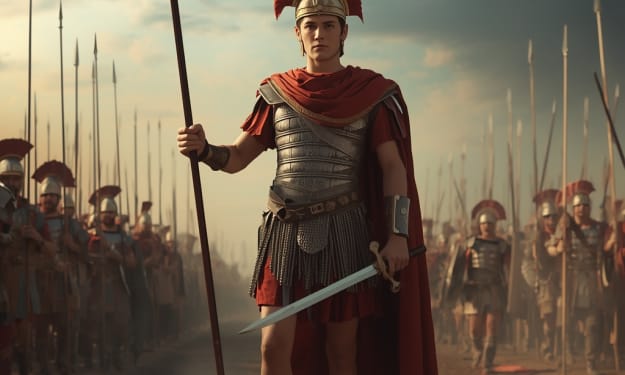
Alexander the Great – Part 2: From Young King to Conqueror of Empires. AI-Generated.
The Assassination of Philip II and a Sudden Rise to Power Alexander’s path to the throne began dramatically. His father, King Philip II, was assassinated during a royal celebration. The circumstances remain mysterious, but the effect was immediate: a young prince suddenly inherited a powerful yet unstable kingdom. Macedonia had grown strong under Philip’s leadership, but many Greek city-states still resented Macedonian dominance. Some leaders believed that with Philip gone, they could break free from Macedonian control.
By Say the truth 4 days ago in Humans
Speaking to Time Instead of the Room
Much of modern communication is oriented toward immediacy. Writing is framed as something meant to be consumed quickly, reacted to instantly, and replaced just as fast by whatever comes next. Under this model, the value of a piece is measured almost entirely by its initial reception. If it does not land immediately, it is treated as a failure. This assumption narrows the purpose of writing and misunderstands how meaning actually travels through time.
By Peter Thwing - Host of the FST Podcast6 days ago in Humans
Ai The New Gym Coach
Walking into a gym without a plan can feel like stepping into a maze. Rows of machines, endless workout advice online, and conflicting fitness trends make it hard to know where to start—or whether what you’re doing is actually helping. One of the biggest problems with traditional workout programs is that they assume everyone’s body responds the same way. In reality, your age, height, and weight dramatically influence how you should train. This is where artificial intelligence is redefining fitness.
By Anthony Bahamonde6 days ago in Humans
Every Self-Help Book Promised Change—None Asked for Honesty
I have read enough self-help books to build a small altar to transformation. Their spines line my shelves like quiet judges. Wake up earlier. Think better thoughts. Rewrite your story. Every cover promised a better version of me—lighter, sharper, healed. None of them asked who I really was when no one was watching.
By Imran Ali Shah6 days ago in Humans
Love Between Two Enemies Part Seven
The Cost of Saving Her Ethan Ashford became a ghost overnight. Not officially—his name was still on buildings, still whispered in financial circles—but something fundamental had shifted. The man who once walked into rooms and bent them to his will now moved through the city like someone marked.
By Ahmed aldeabella9 days ago in Humans
Love Between Two Enemies Part Four
Secrets Don’t Stay Buried The photograph felt heavier than paper. Ethan stared at it under the dim light of his office, long after midnight had swallowed the city. Two men stood side by side, their hands clasped in a firm handshake—smiles restrained, eyes calculating.
By Ahmed aldeabella9 days ago in Humans
Love Between Two Enemies Part Two
Lines Drawn in Blood --- PART TWO – LINES DRAWN IN BLOOD Some wars were loud. They came with shouting, gunfire, headlines splashed across newspapers. Others were quieter—waged in boardrooms, whispered threats, contracts signed in ink that carried more poison than blood.
By Ahmed aldeabella10 days ago in Humans
Love Between Two Enemies Part One
THE WAR WE INHERITED New York had a way of pretending it had no memory. Skyscrapers rose where scandals once burned, cafés thrived where blood had been spilled in boardrooms, and families like the Ashfords and the Morettis wore their success like polished armor, hiding decades of hatred beneath tailored suits.
By Ahmed aldeabella10 days ago in Humans